10 minutes ago
What is Bitco's halve, and why does it matter?

Periskopi(2 years ago)
(2 years ago)“Minators” extracting Bitcoin from complex mathematics is receiving a 50 percent reduction, effectively reducing the new product of the world's largest cryptomone. The last “for halves” of Bitcoin occurred on Friday evening. Immediately after the long-awaited event, the Bitcoin price remained stable at around $63,907. [...]
“Minators” extracting Bitcoin from complex mathematics is receiving a 50 percent reduction, effectively reducing the new product of the world's largest cryptomone.
The last “for the halve” of Bitcoin occurred on Friday evening. Immediately after the long-awaited event, the Bitcoin price remained stable at around $63,907.
Now all eyes are on what will happen on the road, reports Washington Post.
Beyond the long-term conduct of Bitcoin's price, which relies heavily on other market conditions, experts point to possible impacts on the daily operations of the miners themselves. But as with everything in unstable cryptoversis, the future is difficult to predict.
“in Bitcoin, a preprogrammed event that occurs nearly every four years, affects Bitcoin's production.
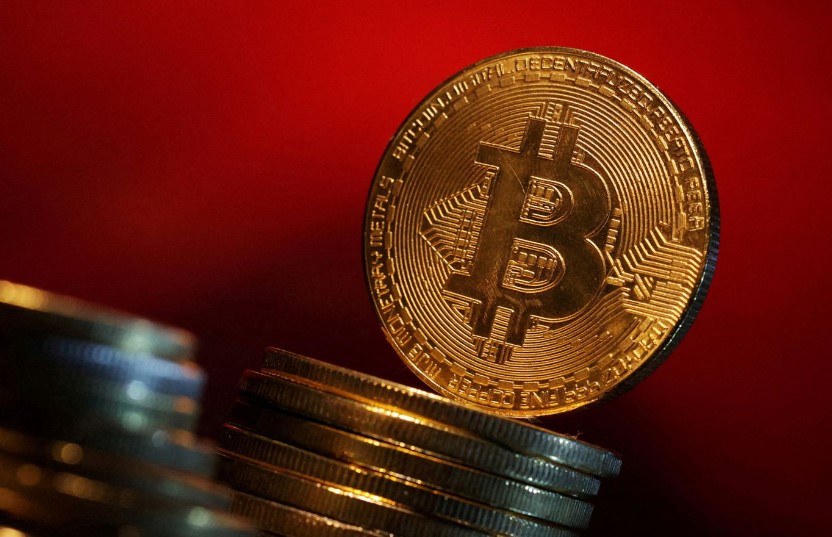
The miners use noisy and specialized farms to solve complex mathematical puzzles; and when they complete one, they receive a fixed number of Bitcoin in return.
Half of it does exactly what it sounds like to cut back in half. And when the reward of the mines decreases, so does the number of young Bitcoins that enter the market. This means that the offer of available coins to satisfy the demand increases more slowly.
Limited supply is one of Bitcoin's main characteristics. Only 21 million Bitcoin will exist and more than 19.5 million of them have already been mined, leaving less than 1.5 million left to withdraw.
As long as demand remains the same or increases faster than bid, Bitcoin prices should be raised because half the production limits. Because of this, some argue that Bitcoin may object to inflation, however, experts stress that future benefits are never guaranteed.
For Bitcoin code, halve occurs after creation of every 210 000 “lock” The recording of transactions during the mining process.
Otherwise, the event has no specific date, but it happens nearly once every four years. /Telegraphy/