3 minutes ago
Do the Albanians remain at the helm of Serb majority municipalities?
Periskopi(2 years ago)
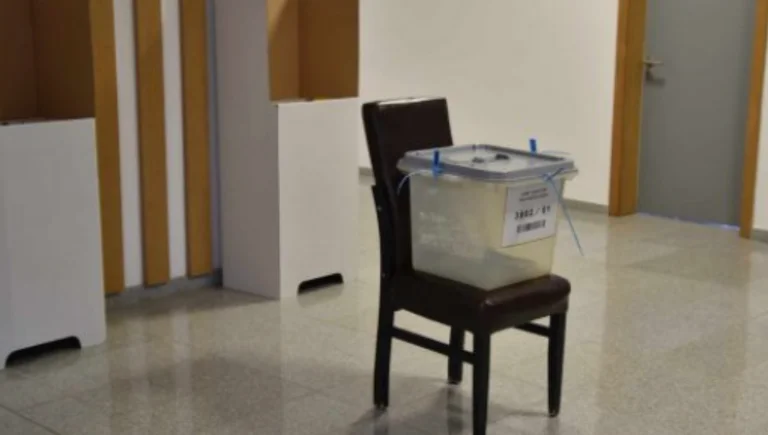
(2 years ago)All polling stations in four municipalities in northern Kosovo were closed Sunday at 7:00. The Central Election Commission (KQZ) said that by 15:00, 203 people voted in voting for the dismissal of municipal mayors or not. According to CEC spokesman Leposaviq, 122 people have voted in Zubin Potok [...]
All polling stations in four municipalities in northern Kosovo were closed Sunday at 7:00.
The Central Election Commission (KQZ) said that by 15:00, 203 people voted in voting for the dismissal of municipal mayors or not.
According to CEC spokesman Leposaviq, 122 people have voted in Zubin Potok 17, and 64 people in northern Mitrovica.
No one voted until 1500 in Zvecan.
This process is being held as the Serb List -- the main party of Serbs in Kosovo -- enjoys official Belgrade's support -- has called for boycotting the vote.
Earlier in the day, the network of nongovernmental organisations, Democracy in Action (DnV), said there has been minimal interest of citizens to participate in the vote.
Even Radio Europe Free Journalists' teams on the ground reported that at the first hour, after the opening of the deployments, no citizens were seen voting in northern Mitrovica, Leposavic and Zubin Potok.
Most of the polling stations opened at 7: 00 a.m., disfellowshipped some who opened for several minutes late for technical causes.
The network of nongovernmental organisations, DneV, has criticised the CEC for delaying to inform citizens where the polling stations are.
According to him, placing surveillance cameras in the polls could pose a violation of the voter's secrecy because of its position.
The CEC has said that for the first time in these polls, surveillance cameras have been placed, and such a practice will continue in future election processes.
CEC spokesman Valmir Elezi, during the conference for the media, said that as for the data recorded by the surveillance cameras, the same will be destroyed along with election material, following the polls.
“The CEC does not monitor, monitor the recording or functioning of these online. So there's no particular room where you look at the screens. Access to these videos can only be done with the decision of the CEC institutions, PZAP [The Electoral Panel for Ances and Parastres], the prosecution or courts if there is any case that is handled in these institutions”, he said.
The State Prosecutor, in co-operation with the Kosovo Police, is overseeing the voting process in the north.
This process is also being monitored by the European Union through 17 teams with 60 members.
Kosovo police told Radio Free Europe that the security situation in northern Kosovo is calm.
There has been no problem as far as the voting process is concerned. Even yesterday the situation is calm, and we haven't actually had any information that relates to destabilizing the situation. We have enough policemen if there is a need for reaction”, Deputy Director of the Kosovo Police for the north region Veton Elshani said.
For these votes, in northern Mitrovica, Zvecan, Zubin Potok and fair voter Leposaviq have 46.556 people, or 1,461 more voters compared to local elections held on April 23rd, when Albanian leaders were elected.
In northern Mitrovica, the vote rights have 18,796. In Leposavich, this number is 13,674. In fair Zvecan, there are 7,209 people, meanwhile in Zubin Potok 6,877 people. For the vote on the chairman's dismissal to be considered successful, 50 per cent plus one voter will have to vote in the respective municipalities.
In four municipalities in the north are 23 polling stations, with 63 polling stations and four polling stations on bail.
According to the CEC, there are eight polling stations in Leposaviq, meanwhile in Zvecan, Zubin Potok and North Mitrovica from five much lower numbers of polling stations in the north of 43 that were originally approved by the CEC.
At the last meeting of the CEC held a day before the polls, the directors of 33 schools in the north said that they work according to the Serbian system they have <x0 school activity “and cannot provide objects for the voting process. Therefore, the CEC has decided that some alternative objects will be converted into locations.
Why are the votes being held?
The extraordinary April 2023 elections, held after the withdrawal of Serbs from Kosovo institutions at the end of 2022, in recognition of the Kosovo government's decision to license plates, were boycotted by Serb parties and populations.
As a result, Leposaviqi's leadership took over Lulzim Hetemi from the Vetevendosje Movement, that of Zubin Potok Izmir Zeqi from the Democratic Party of Kosovo, Zvecan leadership was entrusted to Ilir Peci, also from the PDK, while at the helm of North Mitrovica, Erden Attic from the Vetevendosje Movement.
In May 2023, when these mayors expelled Atiqi and went to their offices to launch the mandate, they faced revolts from the local population, who protested in front of municipal buildings, which were at the same time objects of municipalities operating according to the Serbian system.
The situation escalated 29 May in Zvecan, following clashes between protesters and members of the NATO peacekeeping mission in Kosovo, KFOR. As a result, dozens were hurt by both sides.
The international factor called on Kosovo to organise new votes.
In September 2023, the Government of Kosovo issued an administrative directive enabling citizens to follow some procedures to dismiss the mayors.
According to the directive, Serbs, through petitions collected 20 per cent of the necessary signatures from the total number of registered voters, and the CEC set April 21st as the date of the vote.
Under the directive, it will take 50 per cent, plus one vote, from the voter's list to vote for the dismissal of the respective mayor. The result is then sent to President Vjosa Osmani, which has the deadline for 30 to 45 days to announce the elections.
While the CEC had already launched voting-building procedures, the Serbian List ʹ the largest Serbian party in Kosovo enjoying Belgrade's support on 7 April announced it would boycott the vote.
The leader of this party, Zlatan Elek, complained that authorities have placed “irreplaceable procedure” for the April 21st vote, and that voters' lists “do not reflect the real situation on the ground”, arguing that the number of Albanians on the voter lists “has increased”.
The Serb List's “position is not to participate in the referendum called by Albin Kurti [Kosovo prime minister], because he did everything he could to fail”, he said.
In the following days, the Serbian List drew its members from Municipal Election Commissions.
Serbian List's decision to boycott voting was criticised by European Union, who called on this subject to reconsider the decision and not call for boycott.
Local Power Management Minister Elbert Krasniqi visited the polls in Leposaviq on April 21st.
Speaking of boycotting the Serbian List, Krasniqi said this party wants to have “monopol” on the policy of Serbs in Kosovo.
Serbian “List wants to have the monopoly on the policy of Serbs in Kosovo. They view institutions only for themselves, not for citizens. They continue to have seats reserved for the Serb community in the Kosovo Assembly, and do not represent the interests of citizens, but receive the Kosovo Assembly salaries. Now citizens, even by vote, declare whether they are for the removal of the mayors or not”, Krasniqi said.
Kosovo Prime Minister Kurti, meanwhile, urged Serbs to vote on April 19th if they want to sack the mayors, arguing they can only be fired through the vote, “not gangs”. He said that if citizens decide to dismiss the mayors, the Government guarantees that this decision will be implemented “at speed”. /Radio Free Europe