a minute ago
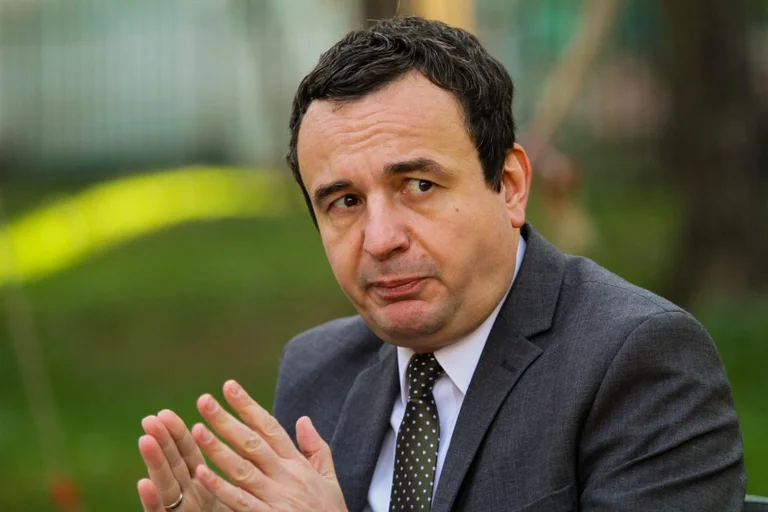
Kurt for the dinar case: There are no proposals that are accepted and contrary to BEC regulation
Periskopi(2 years ago)
(2 years ago)All the problems which Serbian citizens can face, we will address quickly, says Kosovo Prime Minister Albin Kurti says that from today's meeting in Brussels, concrete things are expected. But he points out that there have been constantly different options for the dinar issue. Kurt refused to talk about [...] proposals
Kurti says that concrete things await from today's meeting in Brussels. But he points out that there have been constantly different options for the dinar issue. Kurti did not want to talk about possible proposals for resolving the issue, as, according to him, Kosovo's negotiator position is damaged if they unfold prematurely, reports Radio Free Europe.
He, however, said this is an ongoing process, “but there are no proposals that are accepted on our part that are contrary to the new BQK regulation”.
Below, find the interview of Prime Minister Kurti:
REL: Mr. Prime Minister, meetings are under way in Brussels at the level of chief negotiators. He has been warned that he will discuss the dinar case. While, Kosovo president warned yesterday [March 18th] that there is a reconciliation for a part of the American proposal. Can you tell us what this is about?
Albin Kurti: Deputy Prime Minister Besnik Bislimi, as head negotiator of the Republic of Kosovo, is located in Brussels and there is holding the talks, with whom I do not know whether there will be a trilate meeting or just two bilateral meetings with the European mediator and the [EU's] special emissar, Lajcak. I believe he should inform us exactly what subjects were discussed and what conclusions might have been reached.
But I have to say that this is not a dinar issue, it is a question of the Central Bank of Kosovo, the independent institution of our Republic. So it's not about whether to have a badge or not, but whether the BQK should be an independent institution or not. I believe it must be and that is our constitutional and legal obligation. The dinar has not been banned in Kosovo, but the Constitution in its 11th article says there may be only one currency as a payment tool and that should be euros.
Meanwhile, all problems that Serbian citizens can face, we will address quickly. Again, the Kosovo Central Bank, which leads in this process since its new regulation of December 27th is the independent decision of the Central Bank. It addresses with them the ten steps it has envisioned in a three-month transitative phase plan.
Now, it's going to be three months on March 27th, and I believe that all those who have predicted the apocalypse on February 1st did not happen either February 1st or March 1st, and it will not happen on April 1st.
REL: What do you think [of Kosovo President Vjosa Osmani] was referring to when she said there was a reconciliation in what was said by Americans?
Albin Kurti: Now, I have the chief negotiator there and I believe that he will discuss it within the normalisation of relations between Kosovo and Serbia, where we are, [with] what we can move forward. But I also take responsibility that certain consequences, which could be caused on the ground, could be government issues. Not as such, which is sovereign of the Central Bank of Kosovo, but once again, we just do law enforcement and Constitution on the ground. If there are certain consequences that refer to our ministers on the dinar issue. But I believe that this round of meetings must be completed so that we can speak exactly.
REL: Do you expect something concrete today?
Albin Kurti: I always expect there will be something concrete.
What?
Albin Kurti: I expect that there will be in terms of normalisation of relations between Kosovo and Serbia because meetings, both of the level of top negotiators, and of the high level held in Brussels, are conducted precisely for this.
I want to go back to what I said earlier. The president has said there is some kind of reconciliation for this. Have you consulted the president?
Albin Kurti: There have been constantly different options for the dinar issue. I don't believe they should be discussed now, because Kosovo's negotiator position is damaged if they unfold prematurely. What I can say is that the Government is doing its best possible, with maximum dedication and of course we have this as support for the new regulation of the Kosovo Central Bank. There is no punishment for Serbs. So the new regulation is not punishment, but it's a very serious next-row attempt to form, legalize financial transactions.
You know we've shared a budget for Albanians in Presevo, Medvedja and Bujanoc. We send financial assistance to the euro there, meanwhile, to banks there in dinars. It could also be here. So that shipment that comes in dinars could be taken in euros.
REL: Will that happen in Kosovo?
Albin Kurti: Yes, that's what's going to happen and so it's already happening because we have about 33,000 Kosovo Serb accounts where they get the Republic budget euro as social aid, as pension, child additions in mother accounts and so on. And, we don't have any Serbs until today that I said I reject the euro. No. And there is no martyr. So, no Serb says nothing.
REL: But has Serbia agreed to make this payment in euros?
Albin Kurti: Serbia has the unique chance for the governor of the People's Bank of Serbia to respond to Kosovo Central Bank Governor Ahmet Ismaili '%s' and thus to regulate any uncertainty. So, one of the options for resolving this issue, which international partners have announced, is for Governor Ismaili to finally get the letter of response.
REL: Mr. Prime Minister, you told us that some issues were discussed with the international factor, but you can't tell us now. What proposals have been made by [ Washington's envoy for the Western Balkans, Gabriel] Escobar?
Albin Kurti: They constantly propose. I'm not saying that their proposals were publicly revealed by making embassy spokesman. I can't do this. I'm showing that we have offered a letter to the People's Bank of Serbia on the part of the governor, who in this case represents all of us as citizens of the Republic, you as journalists, me as prime minister, and we expect answers from the other side.
And, wait for answers...
Albin Kurti: For options given by Americans, Germans, others, I believe they should speak for themselves.
Does it mean that the proposals made by Escobar have not been rejected?
Albin Kurti: Look, there's a process going on and there's a proposal, some. But there are no proposals that are accepted by us that go contrary to the new BEC regulation, and at the same time we can only deal with the share of support on the ground if there are problems. Because problems that can be caused will not necessarily be able to solve all of Kosovo's Central Bank itself. In the democratic Republic are separate tasks and functions.
What changed in your government for this dinar issue to turn into dialogue?
Albin Kurti: By December 27th, the new regulation was adopted. No response. More than two weeks, no reaction.
By whom?
Albin Kurti: From Serbia and internationals, no response. By Kosovo Serbs, no response. A day before I go to Davos, at the World Economic Forum, the president of Serbia [Aleksandar Vuciq], who had arrived the day before, gives the statement -- the heavy news that on February 1st disaster will begin in Kosovo for the Serb community. He, when he saw that there was a reaction in the field to replacing the dinar with the euro as a means of payment, began making apocalypseic predictions.
Only then did foreign ambassadors begin to meet Governor Ismaili, the minister [of finance, Iron] Murati, Deputy Prime Minister Bislimi, me and so on. So, just after. Absolutely, unless the president of Serbia has spoken, there has been no problem in Kosovo. And he spoke because he noticed that preparations are going well. Serbia's president has hoped there will be reaction from the bottom. When he saw no reaction from below, he reacted from above. So when his infantry failed, he used artillery. So we're in this problem. The response and bowling from Belgrade is the cause of problems, not the Kosovo Central Bank regulator.
It became even more serious when at the end of January on the same issue, just as Vucinqi spoke [the Russian Foreign Ministry's spokeswoman] Maria Zakahova from the Kremlin. When Vuciqi joined Maria Zakharova, the international alarm became even greater.
Thus, no disaster has taken place either on February 1 or on March 1, nor on April 1. But, alarm, concern is taking place in Belgrade and Moscow, and then the echo of this concern is being heard in Kosovo as well.
REL: How do you respond to criticism from the international factor that says that sufficient time has been given to Serbs living in Kosovo to adapt to it means from the passage of the dinar currency to the euro?
Albin Kurti: First, it's about adapting, which is more than two decades old. From 1999 we have the German brand, and from January 1, 2002, we have the euro as currency in our country. By January 1, 2002, there has been a transitor phase of adaptation, adaptation. If more than two decades have not been enough, and I believe they've sufficed, then for any eventual disturbance they're three more months of the Central Bank of Kosovo with the ten steps she's seen.
Once again, there are no euro rejecters or martyrs of the dinar in our country.
REL: Has there been a hurry to this decision?
Albin Kurti: There has been no hurry, there has been a delay, it can be said, because Article 11 of the Constitution of Kosovo says there must be only one currency as a payment tool. On the other hand, the so-called Komercijalna Banka, which as a branch has operated in Kosovo, has been left without its mother, since it was sold to Nova Ljubianxa Banka, Slovenia's NLB.
And, three options have been made by Komercijalna Banka in Kosovo by the Central Bank of Kosovo and has chosen one of them, self-liculation. Self-liculation ended last year. Now, when they're out of Conerciylena Bank, those for their illegal financial activities, for the financing of terror, which was confirmed last year, they have only cash left, cash ready. So the whole problem is actually not Euro-dinary, but it's transparency or lack of transparency, official banking and nonbank financial channels or sacks of cash. They love this second because political pluralism in Kosovo among the Serb community is flooded with money coming from Belgrade. And money, we cannot afford it.
So, the dinar has come to Kosovo with sacks no longer entering, and Belgrade's embarrassment is not that Serbs cannot use the euro, but that they cannot send the dinar. Just notice the interviews of the president of Serbia or the ministers of government there. Every time they speak, they speak in euros. They speak in euros about capital projects, and they speak in euros even when they rent their apartments in Belgrade. So they always speak in euros. They want to have the dinar for cash bags that end up with people that report to Milan Radochisic.