9 minutes ago
Escobar: There's a lot of disappointment with this Vetevendosje Government.
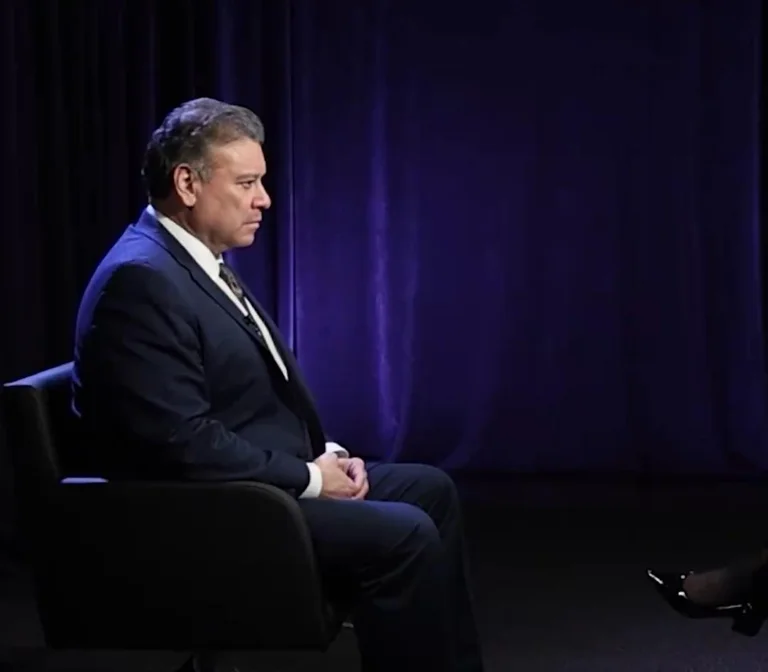
Periskopi(2 years ago)
(2 years ago)Photo: Radio Free Europe US Special Envoy for the Western Balkans Gabriel Escobar has said he has failed to convince Kosovo Prime Minister Albin Kurti of addressing Western concerns dealing with the ban on the use of the Serbian dinar in Kosovo. I [...]
Photo: Radio Free Europe
The United States special envoy for the Western Balkans, Gabriel Escobar, has said that it has failed to convince Kosovo Prime Minister Albin Kurti of addressing Western concerns involving stopping the use of the Serbian dinar in Kosovo.
I asked the prime minister to suspend the decision while we, along with the European Union, the United States and the Government of Kosovo, work on a longer-term solution that fits your needs, that is, electronic transfers to the euro through the Kosovo system. But now, we have to do something urgent. Unfortunately, I failed to convince him of this”, Escobar has declared.
Radio Free Europe: Mr. Escobar, thank you for talking about Radio Free Europe here in Pristina, at the end of your visit to Kosovo.
Before you traveled to Kosovo, you said the focus of the visit would be on a possible solution to, as you said, the uncoordinated decision to stop the Serbian dinar. Last night, after meeting with Kosovo prime ministerYou sounded a little optimistic about that meeting. You said you had a good, open discussion, where Prime Minister Kurti said he would consider some proposals you gave him. Did you get any answers from the prime minister?
Gabriel Escobar: We do, but let me tell you why this is important. The United States is very committed to ensuring that Kosovo remains a multiethnic civil democracy and, to happen, all ethnic communities must feel secure and live in security and dignity conditions. What's happening now with the Central Bank decision is that there are many of your citizens who are feeling a lot of pain, people who are not getting modest wages. We are talking about [persons] disabled, retired, students, the most vulnerable people, and this decision has touched them deeply. Now, the government has said there are many options for them, but the Government has not offered them an option. The government has said the option... [that] they have the responsibility to do so, and many people are having a hard time.
Some of the older people don't have proper documents. Some of the younger people... their documents are not being accepted. Some of the banks are saying it takes an average hour to open an account. Not everyone has an account. The banks themselves, no matter what your Ministry of Finance says... the banks themselves say they need between 30 and 400,000 accounts, with each account they receive from an hour. This is 400,000 hours of staff time. Considering that the average person works between 1,000 and 1,500 hours a year, imagine how long it will take to open these accounts.
So this move, which is uncoordinated and which has created divisions, is creating real difficulties for citizens, some of Kosovo's citizens. Now, for people who do not receive social aid from Serbia, they are not noticing how much it is affecting some. For those who work with euros and those who are paid in other ways, they do not realize that there are people among you who are suffering.
So it was good that the prime minister admitted that there are people who are suffering. But that is not enough. We need a solution. I asked the prime minister to suspend the decision while we, together with the European Union, the United States and the Government of Kosovo, work on a longer-term solution that fits your needs, so electronic transfers to the euro through the Kosovo system. But now, we have to do something urgent. Unfortunately, I didn't succeed in convincing her about this.
Radio Free Europe: This is the last news from the prime minister?
Gabriel Escobar: This is breaking news.
Radio Free Europe: Today?
Gabriel Escobar: I am still hoping that, as the chief negotiators meet in Brussels on Tuesday, they will find an immediate solution to allow cash transfers available to the euro for these people.
Radio Free Europe: What are the next steps, or was the reasoning you received from the prime minister?
Gabriel Escobar: Well, the prime minister said this is a decision by an independent institution in which he does not want to be involved. Or that this is a problem for people who can easily be overcome or can be replaced with payment from the Kosovo government. But none of this will happen soon. That's why we're asking for a delay in implementation. Now, I understand normally that a Central Bank and the Ministry of Finance do their best not to create instability and unpredictableness in the economy. They did just that.
Now there are some outside who believe this was done to punish Serbs. I don't believe this. But I believe that since this government of Vetevendosje doesn't have a long history of government sometimes there are people who don't think the consequences to the end. And, I think that's why I characterised this in Brussels as a little bit uncompetitive, because when we talk about undesirable consequences, everyone realized there were undesirable consequences. But these could have been predicted and predicted if it were not [action] uncoordinated.
QU The INT has much experience in converting coins, going from one currency to the euro, but it took a long time. We only had five weeks.
There's a lot of disappointment with this Vetevendosje Government”
Radio Free Europe: Why did the prime minister decide to continue with this ban, knowing that this issue could have been resolved through association?
Gabriel Escobar: Well, that's a question for him, but it's true. What we don't want to do is undermine the potential of association, which is still very important. It is very important for Kosovo's future.
Radio Free Europe: We'll talk about it later. But how do you feel as a US official who is rejected by the prime minister?
Gabriel Escobar: This isn't my first time. And there's a lot of disappointment with this Self-Determination Government, not only in Washington, but in Brussels, Rome, Berlin and Paris as well. We, as we approach the 25th anniversary of NATO action, it is important that people realise that the force of relationship between the United States and Kosovo is among people.
We will always be close friends of Kosovo, but that does not mean we will have no differences with individuals and with individual governments. And, I think we're here now... entering a period of lack of communication. And we, at least from the American side, are doing everything we can to repair this relationship.
Radio Free Europe: This current decision, how will it affect communication, partnership, the relationship the US has with Kosovo?
Gabriel Escobar: Well, you know, our relationships are based, almost always, not on common interests, but on common values. And one of those common values is commitment to human rights. So, the fact that the most pro-Kosovo government in the world and the most pro-American government in the world, so the United States and Kosovo, are having this difficulty, is not due to our policies towards Russia or Ukraine or China, is due to the treatment of minorities. So this must be a wake-up call for the prime minister and his Government to where this relationship is going.
Radio Free Europe: Will you consider [the deployment of] any measures towards Kosovo because of this?
Gabriel Escobar: No... I mean, the fact is that we're trying to help him take care of his citizens. I mean, we're almost at a point where we're trying hard to work with.
Now, the question is not whether there will be measures, but there are obviously consequences. We're going into the second year, maybe even in the third year, and there's never been a high-level meeting between anyone in the Government of Kosovo with anyone in the American administration. So this should also be an indication for people where the relationship is.
Radio Free Europe: Do you expect that, Tuesday, Kosovo will rethink this anyway? Earlier, Kosovo said it would not take this issue to Brussels. Now, last night, you told us there would be dialogue [tax] on Tuesday's level of chief negotiators. First, based on your information, will the dinar be part of the discussion?
Gabriel Escobar: Yeah, yeah, absolutely. It will be. And so... Look, based on my meetings yesterday, I sure hope they'll reconsider now. That's not a question, it's not a political issue. We want to do it before it becomes a humanitarian issue. So there's a road ahead. So we agree with electronic payments, we agree with the euro and we agree with a long-term solution that offers transparency and capacity to fight money laundering and other forms of illegal transfers. But this should be done properly, [so] co-ordinated and in order to comply with European standards and in line with Brussels agreements.
Radio Free Europe: Can this decision... or if Kosovo doesn't back down, can it also affect US support for Kosovo's security, such as taking the Javelines?
Gabriel Escobar: I don't think so. I will tell you that our support for independence, sovereignty, territorial integrity and security for Kosovo is strong. Now the question of how to handle this will be within the political sphere, but this will not affect our commitment to Kosovo.
“are two other conditions for the Council of Europe”
Radio Free Europe: A good thing that happened this week, at least the QUINT has welcomed the Decani Monastery. How crucial will it be on Kosovo's road towards membership in the Council of Europe?
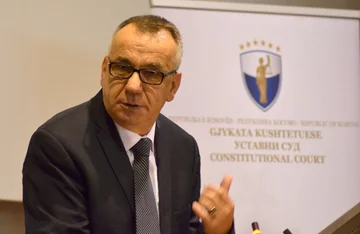
Gabriel Escobar: Well, look, it's very positive. It's very important. And it is not of the monastery only, though partly it is, but of devotion to the rule of law. Now you have a Constitutional Court ruling. In mature democratic societies, a Constitutional Court decision is final. And so it had to be applied. It was a difficult decision, but it had to be made.
So Kosovo is now showing that it has maturity to accept the results of a constitutional decision, however unpopular it may be. But it's the right thing to do because it's the legal thing to do. So it will have an effect.
Now, there are two other conditions that the Council of Europe had mentioned and that some European countries are looking for. One is... [has to do] with some actions for expropriations taking place in the north. And the other is Association. /REL