6 minutes ago
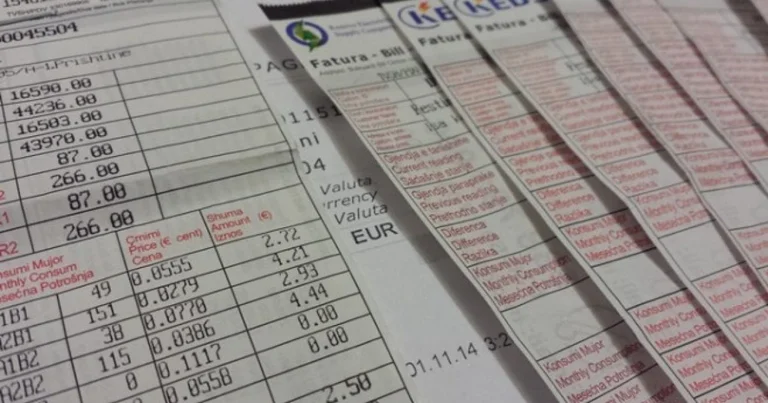
Citizens waiting for electricity bills can be expensive this year
Periskopi(2 years ago)
(2 years ago)Kosovo's electricity bills can be expensive... even this year. The possibility has already disturbed some citizens. Any increase in the price of services would mean less food products, because the luxury products we have forgotten”, says Bashkim Misini, employees in the private sector. “Ca disaster for those who don't. Retirement money does not [...]
Any increase in service prices would mean less food products, because the luxury ones we've forgotten”, says Bashkim Misini, private sector employees.
It's a disaster for those who don't. Retirement money isn't enough for food either, let alone the flow of waste”, Pensioner Mihane Berisha says.
For now, only the Kosovo Energy Corporation (KEK) has proposed increasing the production energy price.
For tariffs to pay citizens set the Energy Regulatory Office (ZRRE) by April 1st, but field connoisseurs say that if the price of produced energy increases, these tariffs could also increase.
What did KEK ask for?
KEK confirmed it has proposed increasing the production energy price.
The two thermal power plants of this corporation -- Kosova A and Kosovo B -- produce the largest amount of energy needed to meet needs in the country.
This energy is then sold to KESCO, the company responsible for supply and incasim.
KEC said the latest agreement between it and KESCO has been linked to the period “1 April 2023 until March 31st 2024”.
KEK said the requirement is to raise the price from 29.50 euros currently cost one megawatt per hour to 31.50 euros.
KEK said there is no information on whether his proposal is approved.
KEK, too, did not reveal why it demanded price increase. But in comments he has sent to the ZERE, the corporation is called in increasing the cost of production and inflation.
This is said to have encouraged Z The RRE to include the cost of acquiring energy from KEK in KESCO.
The ZERE did not respond to whether there will be increased electricity tariffs, but said it is “in the process of analyzing and reviewing comments submitted by interested parties”.
The ZRR makes the review and annual appointment of tariffs, which are announced every April 1st.
Last year, tariffs rose by 15 percent for all consumer categories.
For consumers who spend up to 800 kilowatts per hour within a month, the daily price is 7.79 cents per kilowatt, while for those who spend more than 800 kilowatts, the share on it was estimated at 14.45 cents.
Between 10: 00 a.m. and 7:00 a.m., the price for kilowatt is 3.34 cents for those who spend up to 800 kilowatta and 6.81 cents for what they spend most.
What do experts say?
Fadil Ismaili, former minister of Kosovo's economic development, says increasing the price of power produced by electricity could be followed with the expensive electricity citizens pay.
However, he says KEK's request is justified.
“Electric energy is a commodity like any other. In a kilowat of electricity production, you need to spend oil, coal, maintenance... Thus, the price of electricity may also be subject to rising prices of products and other services”Says Ishmael.
He adds that if this happens, the chain effect will be inevitable, as any change in electricity tariffs affects the cost of business, especially the production industry, increasing the prices of other articles”.
Skender Krasniqi, chairman of the Chamber of Commerce and Industry Steering Board in Pristina, also justifys KEK's request, but says the ZERE should not allow it to be reflected in citizens' bills.
If electricity prices rise, he says, some manufacturing businesses can even close and other companies, then, increase prices.
If this happens, the government's financial support for business is needed... because this would be unaffordable for some”,Krasniqi says.
Energy prices, found in the world, have begun to take off in early 2022, when Russia has begun the invasion of Ukraine and inflation has also begun to rise rapidly.
As a result, the Kosovo government has divided subsidies on several occasions. In one period, it has subsidized consumers who have saved at least 5 percent of the electricity per month, compared to the same month of the preceding year. These consumers have benefited twice the saving percentage.
Waste receipts also spread
After eight years, changes in February of this year also affected waste bills.
Regional Cleaning Company officials confirmed that for customers in the household, the bills increased from 4.70 to 6.20 euros. In contrast, for small and medium-sized businesses, bills were expensive for 2, respectively, 3 euros.
The cleaning company, except in the municipality of Pristina, operates in the municipality of Fushe Kosovo, the Obilic, Lipjan, Drinas and Podujevo.
spokeswoman Arbnor Ademi says that from inflation in recent years, the cleaning company has also been attacked, citing the expensive oil derivatives and various machinery for collecting and storing waste.
Everything is expensive. Horrible, horror...”, says pensioner Mihane Berisha, who lives with her husband in Pristina, and both receive 200 euros per month of retirement, reports REL.