3 minutes ago
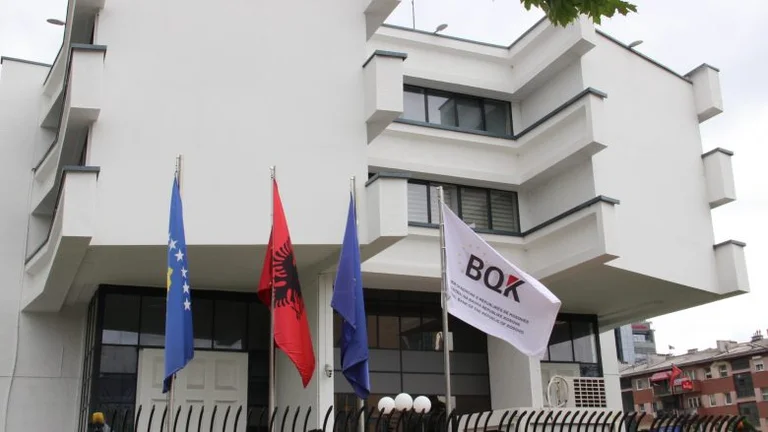
BQK has <x0director” for bank licenization
Periskopi(2 years ago)
(2 years ago)The Kosovo Central Bank, on the basis of the law, says it has <x0 directives towards disrepute” to decide for bank requirements applying for licenses to operate in Kosovo. The possible licensing of the Serbian bank, the Post Savings, would be “step back” for Kosovo economist Majid Bektash. According to Serbian economist Sasa Djogovic, the bank [...]
The Serbian bank's possible licensing, the Post Savings, would be “step back” for Kosovo economist Majid Bektash.
According to Serbian economist Sasa Djogovic, the bank can exercise its activity without any problems, but only with euros.
Kosovo and Serbia discussed the issue of using Serbian currency in Kosovo on Tuesday in Brussels, which was banned on February 1st.
The two countries have until Friday to hand over their proposals on how the dinar can be used, while the next meeting, according to European mediator Miroslav Lajcak, will be held on Monday.
Serbia's chief negotiator, Petar Petkovovic, said that “is important to find a solution that will enable continued operating of the Post Savings Course.
Kosovo's chief negotiator, Besnik Bislimi, said the proposals for the <x0 short-term <x1 solution would be made according to the Kosovo Central Bank regulation.
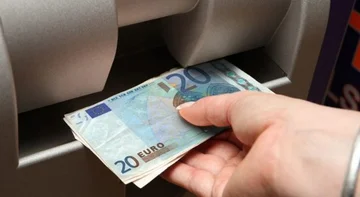
This regulation, which went into effect on February 1st, made the euro a single payment tool in Kosovo and, therefore, banned the circulation of the Serbian dinar into Serb-run environments.
It prompted numerous reactions in both Serbia and the international community, as the Serb community has for years accepted different payments to dinars from Serbia's budget.
The transition period for law enforcement ends on 27 March.
The Office for Kosovo in Serbia's Government did not answer the REL question if one of Serbia's options for resolving the issue is for the Post Savings to apply for operating licenses in Kosovo.
The same question did not answer the Post Savings, which has branches in the four majority Serb municipalities in northern Kosovo, northern Mitrovica, Zvecan, Zubin Potok and Leposaviq, while in the majority Serb environments in the south there are only ATMs.
This bank, currently, is the only one in Kosovo operating with dinars, but has no money to pay because with the BEC regulation, import of this currency has been banned.
Its website says the bank is a stock society, in which the Republic of Serbia has over 78 per cent of shares.
What does the Central Bank of Kosovo say?
The Kosovo Central Bank (BQK) says all concerned banks have the right to apply for licenses in Kosovo, in accordance with the law in force, but that the CEC has “the disrepute right” to decide on these requirements.
In this way, the CEC responded to Radio Free Europe's question if banks from Serbia, such as the Post Savings, can obtain licenses to operate in Kosovo and pay the income Kosovo Serbs receive from Serbia's budget.
“After analyzing the data received from the application and from all state institutions during the assessment, the CEC maintains its disrepute right to assess and decide whether such licensing is in the function of achieving its goals”, the CEC's response reported.
The law for banks in Kosovo stipulates that no bank can operate without license from Kosovo Central Bank. By law, licenses for foreign banks are granted for an indefinite period and cannot be transferred.
Earlier, the CEC warned that the transition period for implementation of its regulation could not last more than three months.
Bektash: The dinar will not be abolished if the Post Savings gets license
Economics Professor at the University of Pristina, Medi Bektashi, believes that the licensing of a Serbian bank in Kosovo would mean a return to the period prior to the BEC's entry into force.
Following me, the Post Savings is part of the Government of Serbia, and the same, no problem, can be conveyed and toʹi dictates all transactions that will take place in the northern and southern part [of Kosovo]”, Bektash says of Radio Free Europe.
He says the dinar issue is “politicised” as much as it had to be discussed in Brussels and does not believe the Post Savings if it gets licenses in Kosovo it will stop fully operating with Serbia's official currency.
This licensed bank can work and operate under Kosovo conditions and legislation. But no one in the world can prevent the entry of other waves on Kosovo territory. If this bank is licensed, the biggest problem will be to stop financing parallel structures, whether in the north or in the rest of Kosovo, which is financed from Serbia's” budget, Bektas says.
Djogoviq: From Political Issue to Technical Issue
Economist from Belgrade Sasa Djogovic says the Post Savings, without a problem, can operate with euros in Kosovo.
According to him, after the two sides' political agreement, the issue is now technical.
“What is important for citizens, for profiters of revenues in dinars, as well as for economic subjects who take means from Belgrade, is that these tools are taken into foreign currency, in this case in euros. Serbia will send funds to dinars through the Post Savings Course, which will convert to Euro”, Djogovic says.
He adds that the two sides must still agree on some technical details, such as how taxes will be paid and similar. They also say that the Post Savings have experience of foreign currency operating.
The Post Elevator has its branches in Republika Srpska entities in Bosnia and Herzegovina where the converted brand is used.
These are really just mechanisms now. The issue is becoming technical now that it is no longer political... We are approaching the day when the parties will agree on responsibilities. Arrangements will be made for citizens and businesses not to suffer”, Djogovic says of the REL.
What Serbian companies have licenses in Kosovo?
Within the dialogue for normalisation of relations, Kosovo and Serbia agreed to the formation of two Serbian companies based on Kosovo laws.
They are Serbia's telecom sister company, MTS d.o.o, and Elektroseveri, which is owned by Serbia's energy company, EPS.
MTS d.o.o has licenses in Kosovo to provide services in the field of telecommunications, while Elektroseveri for the electricity supply of Serb majority municipalities in northern Kosovo, as well as for the luck of the current there.
Both of these Serbian companies in Kosovo operate with euros and in euros issue bills to citizens of the Serb community. /Radio Free Europe