8 minutes ago
“Balkan security threats from Serbia”: Enhanced Geopolitical Must
Periskopi(2 years ago)
(2 years ago)The Russian invasion of Ukraine has increased Europe's determination to protect its security architecture and democracy. At the same time, many politicians and analysts have turned their attention to the Western Balkans, for fear of Russian influence in a region now plagued by political instability. Tensions there are constant even [...]
The Russian invasion of Ukraine has increased Europe's determination to protect its security architecture and democracy. At the same time, many politicians and analysts have turned their attention to the Western Balkans, for fear of Russian influence in a region now plagued by political instability.
Tensions there are ongoing over three decades after the breakup of Yugoslavia.
Bosnia and Herzegovina and Kosovo are two countries that isolate themselves as more vulnerable to some analysts. The first, due to ethnic tensions and pro-Russian Serb leaders, Milorad Dodik, who openly expresses his ambitions for separation from the rest of the country.
This is what we need. We don't need colonials; we don't need teachers. This nation has never allowed itself to live captive”, Dodik has said at a rally before his supporters in Banjaluka.
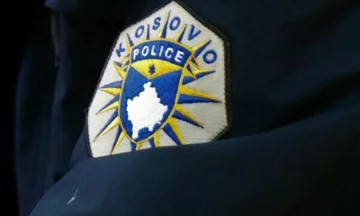
Kosovo, on the other hand, has open issues with Serbia -- the country that maintains close ties with Russia -- and is the only one in the Western Balkans who has not imposed sanctions against it, due to Ukraine's invasion.
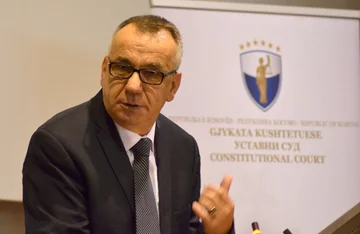
Kosovo Prime Minister Albin Kurti has said at one of his government's recent meetings that Serbia, with “metodas” of Russian President Vladimir Putin, poses a threat to Kosovo.
Speaking at a regional conference in Pristina, he has said that in the first two years of his government, Serbia has sent its army to the border with Kosovo four times, has sponsored terrorism, and has distributed false news to justify its aggressive actions.
Kurti has said the European Union and NATO have responded towards the Russian invasion of Ukraine, bringing Finland and Sweden into the military alliance, and granting the country EU membership candidate status to Ukraine, Moldova and Georgia.
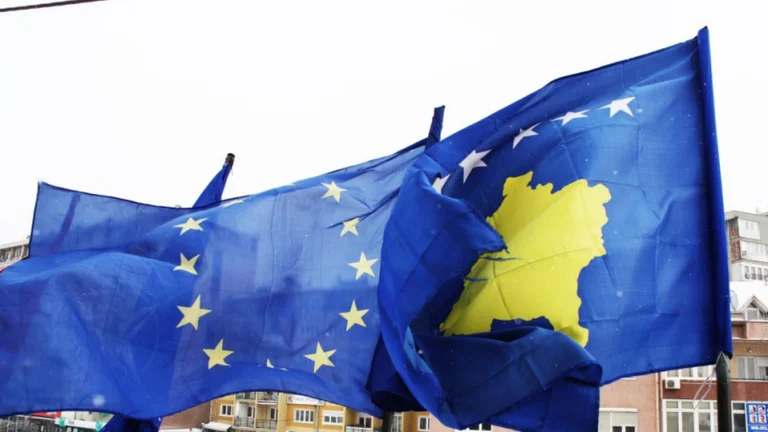
“The security threats in the Western Balkans from Serbia should be addressed with the same approach, giving Kosovo candidate status for the European Union and membership in the Council of Europe”, Kurti has said.
Likewise, Germany's Foreign Minister Annalena Baerbock has said Russian aggression in Ukraine has made EU expansion with the Western Balkans necessary. This would make Europe stronger, she says.
“The Russian struggle of aggression is not limited to bombs, rockets, fears and worst attacks on the civilian population in Ukraine. It includes hybrid warfare. Enhancing is the geopolitical necessity”, Baerbox said.
The six Western Balkan countries -- Kosovo, Albania, Northern Macedonia, Montenegro, Serbia and Bosnia and Herzegovina -- are in different phases of the EU accession process.
The road is long, they have to enclose laws with those of the EU and prove that their institutions and economies meet democratic norms.
The process has gone too slowly, but after the Russian invasion of Ukraine, the EU has allocated a 6 billion-euro package to help them both in reforms and to flee Russian influence.
Analysts do not expect things to change overnight. They say the EU's long-standing reluctance to expand last time in 2013 with Croatia has its cost.
Vesela Tcherneva, from the European Council for Foreign Relations, tells of Radio Free Europe's Expose programme that some countries in the region have already found alternative partners.
For example, Serbia plays the game of choice between the EU on the one hand and Russia and China on the other. This trend is on the rise. And I think European policymakers already understand that instability in a region, which is geographically not just part of the continent, but in the heart of the continent, could be very, very dangerous”, Tcherneva says.
In his speech about the EU situation, held in September 2023, European Commission President Ursula von der Leenen has said the EU must respond to “calling history” and accept a large number of countries, including from the Western Balkans. The future of the Western Balkans is in our Union” she said.
A few days before that, European Council President Charles Michel said the EU would be able to accept new member states by 2030, but that they must not import conflicts from the past”.
Kosovo and Serbia have normalisation of constitutional relations for progress on the road to European integration.
Bechev says all Balkan leaders could engage more in implementing reforms, but adds that the EU has responsibilities, too, for the lack of success in the enlargement process.
According to him, the Western Balkans have always been in the EU agenda, but not top-age, either because of some leaders' reluctance to expand, or because of EU internal problems.
However, after the start of the war in Ukraine, the EU has taken several steps to consolidate its position and prevent divisions in the continent, reports Radio Europe and Free