9 minutes ago
78 days of bombing: Key NATO Campaign Details
Periskopi(2 years ago)
(2 years ago)March 24, 1999. Shortly after 7:00 in Serbia's capital, Belgrade, the first sirens are heard. They warn the flight of NATO military planes on Serbia's cover. Just before 9: 00 p.m., there is a powerful explosion in the aircraft factory “Lola Utva”, in Pancevo in Serbia. Flame and smoke cover this location in the suburbs [...]
March 24, 1999.
Shortly after 7:00 in Serbia's capital, Belgrade, the first sirens are heard.
They warn the flight of NATO military planes on Serbia's cover.
Just before 9: 00 p.m., there is a powerful explosion in the aircraft factory “Lola Utva”, in Pancevo in Serbia.
Flames and smoke cover this location on the outskirts of Belgrade. This moment marks the start of a 78-day Yugoslavia bombing campaign.
NATO aircraft bombed on the territory of Serbia, Kosovo and Montenegro.
How did it get to the bombing?
Amid dilemmas and objections from China and Russia, then world Secretary General NATO, Javier Solana, on March 23, 1999, ordered an air strike on the Federal Republic of Yugoslavia at 22:17.
Reasoning, there is no readiness for political solutions to the Kosovo crisis in Serbia.
Air strikes began without approval of the United Nations Security Council.
The decision on the bombing was made after Yugoslavia's president, Slobodan Milosevic, refused to be elected politically.
Important Facts
In 1999, there were estimated to be about 400,000 Yugoslav military troops in Kosovo.
In March 1999, The UNHCR estimated about 475 thousand displaced Kosovars after the offensive of Serb military and police forces. That number continued to increase, and until the end of the war, about one million Kosovars had left the country.
According to data published by the Humanitarian Law Fund, during the 1998-1999 war in Kosovo, over 13,500 people, 76 percent of whom are believed to have been civilians were killed. For more than 1,600 missing persons in war, research continues.
What did NATO bomb?
Bombings had three main objectives -- Yugoslav air defence, command and control systems and Serb military forces deployed in Kosovo.
Main Attacks
March 24: The factory is bombed for the production and repair of planes in Pancevo, as well as bombing other military-profile objects in Serbia.
March 25: A location in Rozaja in Montenegro, very close to the Kosovo border is bombed.
March 26th: Serbia's Lypola fuel depot destroyed. A section of the power grid in Batajnica is damaged.
March 28th: The plant Sloboda in Cacak, a major home appliances producer in Serbia, is hit.
April 1st: The grenades hit a bridge between Novi Sad and Petrovaradin in Serbia.
April 3rd: NATO hits government buildings in Belgrade.
April 4th: Yugoslav Army headquarters is bombed in Belgrade. The Beopetrol depot is destroyed in Belgrade and Bogbutovc in Kraljeva. The fuel depot is bombed at the joint factory in New Belgrade. Oil refinery attack in Pancevo. The Slatina airport near Pristina is attacked. Attacked NIS Yugopetrol in Smederevo, Serbia.
April 5th: A furnace factory and oil refinery in Novi Sad are hit. They hit the other warehouses of naftagas Promet: 10km from Sombor. Belgrade's main airport is attacked. Hit NIS Yugopetrol in Pristina. A tobacco factory is hit in Nis, Serbia. Chemical factory Milan Blagojevic is hit in Llucan, Serbia.
April 6th: The warehouse of Beopetrol is attacked in the village of Krusha the Great in Rahovec. Chemicals factory Milan Blagojevic is attacked in Llucan, Serbia.
April 7th: The Jugopetrol warehouse in Sombor Serbia is bombed. Several locations in Pristina and Serbia's Novi Sad are bombed.
April 8th: NATO attacks continue on Kralev, government facilities in Beorgad and surrounding towns. TheZastava Automobilewa factory in Kraguyevc, Serbia shortly after it was bombed.
April 9th: NATO aircraft bombard the company Zastava Automobiliı in Kraguyevc, Serbia NIS Jugopetrol into Smederevo and RTS broadcasters at the top of Golesh, near Pristina airport.
April 10th: Pristina, Nis and Kralev airports are bombed.
April 11th: The mountain complex evcibare near Mount Zlatibor and a residential area in Novi Sad is attacked.
April 12th: Several locations are bombed in Kosovo and in Serbia, among them a train, the warehouse of Jugopetrol in Pristina, a hotel in Copaonic, Serbia. Other oil depot attacks in Novisad, Pancevo and Kraguyevc.
April 13th: Other attacks on oil depots in Kosovo and Serbia. The column with Albanian civilians shortly after being hit by NATO by mistake.
April 14th: A convoy of civilians in Kosovo is accidentally hit. The attacks continue in Pristina, mainly on oil depots.
April 15th: Several locations are attacked in Serbia.
April 16th: The oil refinery in Pancevo and Novi Sad is again attacked. The Pancevo oil refinery shortly after the bombing.
April 18th: Several locations are attacked in Pancevo, Serbia, but others near Slatina Airport in Kosovo.
April 19th: A location in Subotica and the chemical factory in Baric, Serbia is attacked. Communications broadcaster destroyed near Pristina.
April 20,: The coal mines in Bardh near the Slatina airport on the outskirts of Pristina are attacked. Government objects in Pristina and an oil refinery in Novi Sad are bombed. The main headquarters of the Socialist Party of Serbia in Belgrade shortly after the bombing.
April 21st: The main headquarters of the Socialist Party of Serbia in Belgrade, Serbia, is under attack.
April 22nd: One of Yugoslavia's president Slobodan Milosevic's residences is attacked. Attacks in Pristina and Novi Sad. RTS target following NATO's attack.
April 23rd: Radio Television of Serbia is bombed RTS in Belgrade. A bridge is attacked in Novi Sad and other locations in Serbia.
April 25th: Industrial area in Nis is attacked.
April 26th: Bombings in Sombor, Novi Sad, Nis and Kraguyevc of Serbia. The Slatina airport in Kosovo is again bombed.
April 27th: Heavy bombings in Belgrade and Surdolica in Serbia. In Kosovo: bombings in Slatina, Decani, Pec, Lipjan. Several points near Podgorica in Montenegro are bombed.
April 28th: The oil refinery in Novi Sad, a television broadcaster at the Frushka Gora peak, is bombed and an oil depot is bombed in the town of Pozheg. A location in Mitrovica, Pristina and the mine in Stanttarg is bombed in Kosovo. A grenade accidentally falls in Sofia, Bulgaria. A part of Gollubovac's airport, near Podgorica in Montenegro, is bombed, as well as in Bar and Bijelo Polje.
April 30th: Government objects are bombed in Belgrade. The Lim River Bridge is bombed in Murino, Montenegro.
May 1st: A Nis Express bus on the Lulshhan Bridge is wrongly bombed on the outskirts of Pristina. An oil refinery is bombed in Novi Sad.
May 2nd: The power grid is mainly bombed. A bus is hit in Pec and an oil depot in Pristina and Rahovec. A RTS headquarters and the oil refinery in Novi Sad are bombed.
May 5th: The Yugopetrol is again bombed in Nis.
May 7th: NATO mistakenly bombed the Chinese Embassy in Belgrade. Three Chinese journalists are killed. Heavy attacks on Nis. A road bridge leading to Romania is bombed. Several points are bombed in Belgrade.
May 8th: Intensive attacks in Belgrade, mainly on the electrical network.
May 10th: The chemical plant Prva Iskra' is bombed in Baric.
May 13th: There's a location in Prizren Corisha bombed. NATO says there was a regional position of Serbian military and police. Local Albanians are killed and hurt. Two men leave the country where they were staying in Corisha.
May 14th: A refugee camp is bombed in Pristina's magistrate, Prizren, near the village of Korisha.
May 15th: The warehouses of Yugopetrol are bombed in Bor and Belgrade.
May 17th: The Yugopetrol is again bombed in Bor.
May 19th: The Jugopetrol depot is bombed in Belgrade.
May 20th: Air strikes damage the residences of Switzerland's Ambassador Spain, Sweden, Norway, Hungary, in Belgrade. Libya's Embassy is also damaged, as are the objectives of Israel's diplomatic mission.
May 21st: The power grid is hit in Nis. A power plant is attacked in Belgrade.
May 22nd: The electricity network is hit and damaged in Belgrade and other parts of Yugoslavia.
May 23rd: NATO begins intense electrical network bombings. Many cities remain free of electricity and water.
May 24th: The Millan Blagoyevic factory is heavily bombed in Llucani, Serbia.
May 27th: The Jugopetrol oil depot is bombed in Bor. Electric network attack in Belgrade. The attack on Belgrade.
May 30th: Bombardies in Belgrade, on a bridge in central Serbia and the sanatorium in Surdulica.
May 31st: Transmitters bombed in Nis. KFOR soldiers near the border with Northern Macedonia.
June 10th: NATO interrupts air strikes on Yugoslavia. The UN approves Resolution 1244, envisioning the deployment of an international administration in Kosovo. The withdrawal of Serb troops from Kosovo begins.
Serbian counters
The Serbian Army tried to counter NATO air strikes. According to the documents, the longer-range individual systems within Kosovo were used to shoot at NATO aircraft in an unpredictable way.
The arms used to attack planes were short-range, as well as mobile air protection systems.
A NATO report says that instead of shifting efforts against these Serbian systems, NATO commanders chose to operate at altitudes beyond which most Serbian antiaircraft systems could not be effective.
Attempting Serbian Army to Hide
Facing intense air strikes, Serbian military troops tried to distract NATO pilots during the bombing campaign.
They're having different campaigns, including these in the following photos:
These campaigning methods are presented in a 2000 U.S. Department of Defence report explaining Yugoslavia's organisation and target bombing.
“Serbs widely used camouflage to hide tactical targets, such as military vehicles, and fixed objects, such as bridges. In addition, Serbs used fraud to create a number of false targets”, the report says.
Efficiency of the attacks
After the end of Operation Allied Forces, NATO issued a preliminary assessment of the effectiveness of its attack against a number of targets.
These damaged or evidently damaged targets included:
11 Railway Bridges
34 Highway Bridges
29 percent of all Serbian ammunition deposits
57 percent of oil reserves
All Yugoslav oil refinerys
14 Command Posts
Over 100 planes
Ten Military Airfields
Planes that guaranteed NATO success
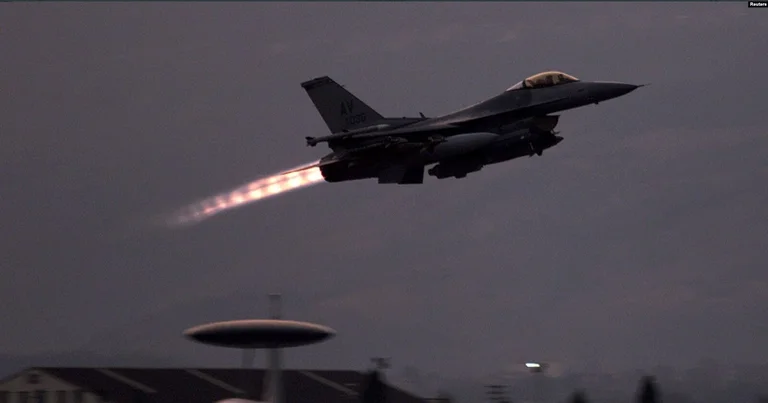
Having numerous member states and planes available, a 2000 NATO report mentions three types of planes that have played a key role in the success of Yugoslavia's shelling. The drones were also used in the air campaign.
Next are three models that are described as key to success by NATO.
Wrong bombings
NATO bombings were not always accurate. They caused casualties even among civilians, both on Kosovo territory and in Serbia.
In 1999, NATO itself estimated that the bombings had caused about 520 civilian casualties.
In some cases NATO pilots wrongly attacked targets that caused dozens of casualties.
On April 14, 1999, such an incident occurred in the outskirts of Prizren when the bombing of Over 80 Albanian civilians were killed in NATO.
Another wrong bombing of a bus on the Elushan Bridge in Pristina's Podujevo magistrate killed about 40 civilians, mostly Albanians.
On 5 April 1999, ten civilians were killed during an attack on the Aleksinac military complex “Deligrad” in Serbia and 30 were injured.
On 12 April, a train was bombed in Ristovac traveling towards Belgrade, killing 20 people.
April 23, by Attack NATO over RTS in Belgrade was killed by 16 civilians.
In April, 11 civilians were also killed in Surdulica, Serbia.
Six civilians are killed in Murino, Montenegro, on 30 April.
In early May, 14 civilians are killed in Nis, Serbia.
These are just some of the incidents and do not present all the cases when the incorrect NATO bombings killed civilians, both in Kosovo and Serbia-Montenegro.
After 78 days of attacks, the bombings were suspended on June 10th 1999, with the Kumanovo Technical Agreement envisioning the withdrawal of all Serbian military and police forces from Kosovo.
The agreement was followed by the approval of UN Security Council Resolution 1244.
This resolution was a compromise of five permanent Security Council member states, under which a United Nations administration UNMIK administration was deployed in Kosovo, which managed the transitional phase until the establishment of local institutions and the permanent resolution of Kosovo's status.
On June 12th 1999, the deployment of about 50,000 soldiers from 36 countries worldwide, out of which 30,000 were from NATO countries.
KFOR is present today and cares for Kosovo's security. /RadioEurope Free