7 minutes ago
About 3 thousand Kosovars were married last year abroad
Periskopi(2 years ago)
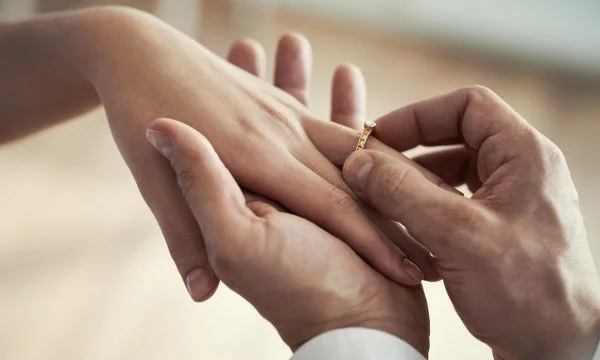
(2 years ago)Marriage in our country is considered the foundation of the family. People enter marriage for several reasons, including family creation, economic stability, education, and child care. But if we go back in time we see that marriage as an institution and in Kosovo has changed as a result of different factors, so from marriage <x0).
People enter marriage for several reasons, including family creation, economic stability, education, and child care.
But if we go back in time we see that marriage as an institution and in Kosovo has changed as a result of various factors, thus switching from marriage <x0-traditional) to modern “marriage”.
And one of the factors that contributes to these changes is the marriage of Kosovo citizens with foreign citizens/a.
Kosovo's Ministry of Internal Affairs in an answer to tv1.info has indicated that the number of marriages of Kosovo citizens with foreign/a nationals/a during 2023 has been 2 thousand 856.
Of them the highest number has been of men who married non-Albanian women, so a total of 1515 compared to girls who married non-Albanian men, totaling 1350.
The largest number of citizens' marriages of Kosovo more foreign citizens was in 2022.
“Marriage: The year 2022. A total of 3564 crowns. The year, 2023. In a total of 2865 crowned”, the MPB says.
With Kosovars crowned with foreigners, the possibility of leaving the country is greater. This caused the traditional Kosovo family to undergo change in its structure.
And for this sociologist phenomenon, Blaton Kurteshi says that economic remittances can facilitate economic living for the rest of the family living in Kosovo. But the emotional aspect that it says is extremely important, for parents experience feelings of loneliness and separation from their children.
When individuals from Kosovo choose to marry abroad, a complex interaction of social families and wider communities begins. Initially, the emotional side is very important, since their children experience their own feelings and separation from their children. Economically, remittances from abroad can facilitate the economic livelihood of other family parts here, but can also promote economic assistance. Culturally, marriages abroad bring new practices and values, potentially challenging traditional family structures and creating generation divisions. Moreover, moving young people abroad to marry can affect the perceptions and aspirations of connection with migration. However, they also present challenges, such as negotiating dynamics between cultural and religious differences and adapting linguistically to family members. In general, intercultural marriages embody interaction between individual identities, family families and broader social dynamics”, says Kurteshi for Tve1.info
Asked whether visa liberalisation for Kosovars will affect increased marriages with foreigners/a, given the fact that the possibility of moving and contact with others is now greater, Kurteshi says this could affect opening up to other cultures, lowering steroids and therefore even the possibility of marriage.
The visa liberalisation will affect opening up to other cultures, because it will provide opportunities with different cultures, then it can therefore potentially affect the stereopics we can then make for others”, she says.
Otherwise, marriage is also guaranteed with the Declaration on Human Rights, where Article 16 of this statement says “Burrat and mature men have the right to marriage and form families, without any restrictions on family or race, faith. They have equal rights both in the case of marriage bonds and in the case of divorce”.