23 minutes ago
Montenegro: Political crisis deepened due to Constitutional Court
Periskopi(a year ago)
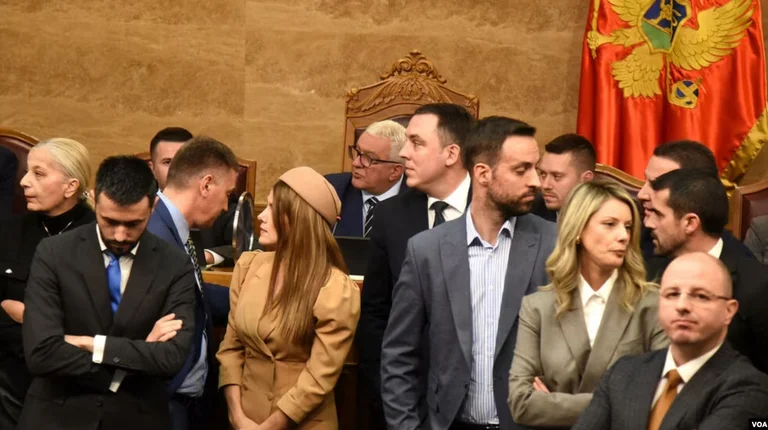
(a year ago)Opposition parties in Montenegro did not allow the parliamentary session to be held Friday, preventing Prime Minister Milojko Spajic's intervention. The opposition is seeking to annul the decision concerning the retirement of the Constitutional Court judges, which it considers a constitutional “puc”. For the Montenegrin parliament's decision to suspend [...]
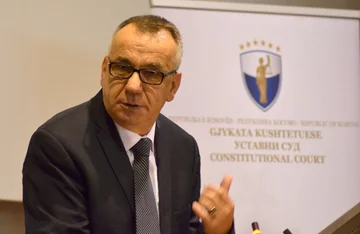
The opposition is seeking to annul the decision concerning the retirement of the Constitutional Court judges, which it considers a constitutional “puc”.
The Montenegrin parliament's decision to cut off the Constitutional Court judge's mandate has also voiced concern for the European Union.
The “call on all institutions to respect rule of law and respect the Constitution,” said European Commission spokesman Guillaume Mercier. “This is crucial for Montenegro's EU path”.
Opposition MPs accuse the Constitutional Commission and the parliamentary majority of causing a deep institutional and constitutional <x0-crisis” due to the decision to retire a judge and try to oust two other Constitutional Court judges.
After leaving parliament's hall, opposition MPs have surrounded Prime Minister Spajic, preventing him from addressing reporters.
On Friday, opposition representatives met with President Jakov Milatovic, who echoed opposition statements, blaming the Constitutional Commission for the crisis in Montenegro.
The constitutional crisis arose as a result of the actions of the Constitutional Commission, which took over the jurisdiction of the Constitutional Court and thus entered the area of illegal and unconstitutional acts”, President Milatovic said after the meeting.
Analysts and civil society organisations in Montenegro warned of a new constitutional crisis after Montenegrin Parliament Speaker Andrija Mandic, supporter of pro-Russian and pro-Serbian policies, referring to the conclusions of the Constitutional Commission, said Wednesday that the judges of the Constitutional Court have ceased their mandates.
Political clashes in Montenegro follow the Intergovernmental Conference held in Brussels, where Montenegro closed three chapters. Since the opening of EU membership negotiations in 2012 and so far, Montenegro has closed six chapters altogether.
Although Montenegro was willing to close chapter “Foreign Policy, Security and Defence”, Croatia did not give its consent due to “the issue of missing persons during the last war”. / VOA