3 minutes ago
Returning Trump American Voice Analysis: Here are expectations from new US administration in Kosovo
Periskopi(2 years ago)
(2 years ago)Leaders in Kosovo, president, prime minister and leaders of all political parties in Kosovo congratulated former US President Donald Trump on victory in Tuesday's elections, demonstrating hopes for continuing and deepening co-operation with the United States. President Trump's first mandate at the White House was marked by relations [...]
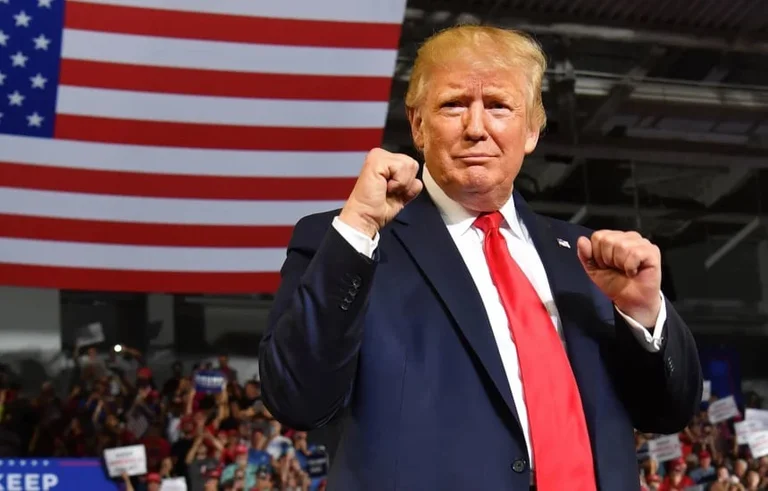
Leaders in Kosovo, president, prime minister and leaders of all political parties in Kosovo congratulated former US President Donald Trump on victory in Tuesday's elections, demonstrating hopes for continuing and deepening co-operation with the United States.
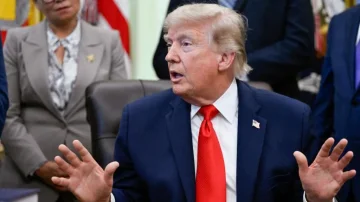
President Trump's first mandate in the White House was marked by tense relations with Prime Minister Albin Kurti's first government.
The White House secured an agreement on normalising economic relations between Kosovo and Serbia, which was signed in September 2020 in the presence of President Donald Trump.
The deal was signed several months after the collapse of Prime Minister Kurti's first government, which did not agree with US demands for lifting 100 per cent tariffs against Serbian goods that were imposed in November 2018 in response to Serbia's approach to Kosovo citizenship.
The Democratic League of Kosovo, which was part of power, withdrew from the coalition, leading to the collapse of Mr. Kurti's government, followed by a new government signing the agreement in Washington.
Prime Minister Albin Kurti at the time accused US envoy Richard Green of being involved in advancing the vote that brought down his “government.
Mr. Greenell, a close associate of Mr. Trump has been described as candidate for the post of Secretary of State in the future administration of President Trump.
Analyst Agon Maliqi tells the Voice of America that expectations are for Mr. Green to be engaged again for the region.
“How this will impact then remains to be seen by the findings of the new government in Kosovo, by the way the European Union behaves, and at the moment it is a little difficult to predict”, he said.
Mr. Maliqi says that although the past has little influence on politics, concern remains the Kosovo government's approach to American administrations.
“Over (administration) Beden even though we had deep disagreements, the very clear frustration expressed by the Biden administration, however, there was also a kind of understanding of the actions of the Kosovo government and a kind of tolerance for this kind of approach, which I doubt can continue with an American administration which not only in relation to Kosovo but with almost every ally of the United States and has a transitional approach in the sense that we will be with you as much as you will be with us<1>, he said.
One issue that received much attention during President Trump's first term was also the idea of exchanging territories between Kosovo and Serbia as a peaceful solution between the two countries.
Discussions began in the summer of 2018. President Trump's National Security Adviser John Bolton, who stepped down from office on August 24th of that year, said the United States will not be involved in the idea of exchanging territories between Kosovo and Serbia, but if the parties agree, there will be no obstacle to”
A day later Kosovo President Hashim Thaci and Serbia's Aleksandar Vucic, in a debate during the Albbakh forum in Austria, sought international support for any agreements that could be reached in the European Union-brokered talks, even if it meant border change.
This idea was met with harsh reactions in Kosovo and Serbia, as well as rejection by a part of the European Union countries among which Germany was the most vocal.
The White House's envoy for Kosovo-Serbia dialogue, Ambassador Richard Green, denied several times that the United States was part of discussions on exchange of territories.
This week, this case was raised during a hearing session in the European Parliament for confirming the candidate for the post of European Union Enlargement Commissioner Marta Kos, who said it opposes the trends to exchange territories between Kosovo and Serbia.
“The European Commission and I, if confirmed, will not follow these tendencies”, she said questioned by Slovenian MP Vladimir Prebilic.
Analyst Agon Maliqi told Voice of America that he sees it difficult to restore such an idea especially after he failed once. But according to him, such a possibility also depends on the success of the current process of dialogue led by the European Union.
The longer the Brussels process extends without a solution and more drags on is possible. The last time the subject opened was a surprise. The more Brussels' dialogue fails to resolve the dispute in the framework of the Ohrid Agreement increasingly opens up opportunities for alternative solutions because Kosovo and Serbia are being held hostage and their integration path, especially in Kosovo at Euro-Atlantic structures, is nowhere”, he said.
However, according to Mr. Maliqi, Kosovo, which is left in sanctions by the European Union and with the change of administration in Washington, seems to find itself in a new reality.
The thing to say anyway is that Serbia at this moment feels a little bit better, which will not necessarily be true, but perception and feeling in Belgrade is that they will now face less pressure about the question of dialogue or that they may have more impact on detecting dialogue parameters, and that is something that in Pristina must account for”, analyst Agon Maliqi said.