16 minutes ago
The EU answers Government: Call “non-paper” draft Association status is ignoring obligations
Periskopi(2 years ago)
(2 years ago)Kosovo cannot escape its responsibilities from the Brussels dialogue and the appointment of the European draft state for the Association of Major Serb municipalities such as “non-paper” from its officials shows disrespect for its obligations from the dialogue, EU spokesman Peter Stano said on Tuesday. “Call the European draft status as just a non-paper, [...]
Kosovo cannot escape its responsibilities from the Brussels dialogue and the appointment of the European draft state for the Association of Major Serb municipalities such as “non-paper” from its officials shows disrespect for its obligations from the dialogue, EU spokesman Peter Stano said on Tuesday.
“Calling the European draft status as simply a HINA-paperė, represents a disregard for the European Union Council's invitation to act on its basis without new delays towards the establishment of the” Association, Stano said.
In October 2023, The EU handed it over to Kosovo and Serbia to a modern “draft-state” for formation of Association. The United States, Germany, France, and Italy supported him.
Since then, the United States and the European Union have repeatedly urged Kosovo to submit this draft to the Constitutional Court.
Officials of Prime Minister Albin Kurti's Government have even in the past named it “non-paper” the draft European status quo.
But, a few days after Kurti said he as prime minister could not establish association of municipalities, his spokesman, Kryeziu, told local media on November 1st that the European draft state “is one of a non-papper”, and that the prime minister has not accepted it.
In the language of European institutions, <x0non-paper” is an informal document that is displayed in closed negotiations within EU institutions, in an effort to find agreement on any controversial issue.
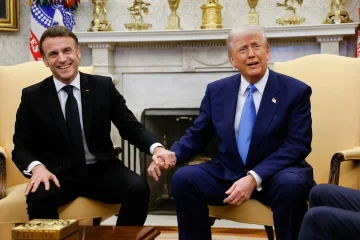
However, Stano insisted that Kurti and Serbia's president, Aleksandar Vuciq, accepted this draft status in principle last year, when EU Special Envoy for Dialogue Miroslav Lajcak presented it to European leaders, French President Emmanuel Macron, Italian Prime Minister Giorgia Melon, and German Chancellor Olaf Scholz.
“In the December 2023 conclusions, the European Council welcomed Serbia and Kosovo's readiness to accept the proposed draft status of parties on the part of EU facilitator. This represents formal acceptance of the document from all 27 member states“, Stano stressed.
He added that the bloc regrets that “, despite the acceptance of the document”, no progress has been achieved towards establishing the Association of Serb majority municipalities in line with the European draft state.
“in line with the official redefinence to dialogue and full implementation of all agreements, we urge Kosovo to move forward with its establishment without new delays”, he added.
Kosovo and Serbia initially reached agreement on forming association in 2013 and another agreement on principles in 2015. But, the Kosovo government refuses to form, as it says, single-ethnic association, while Serbia insists on implementing the agreement.
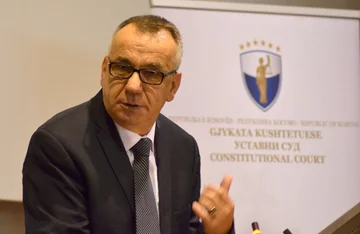
In 2015, the Constitutional Court of Kosovo has estimated that the agreement on principles is not in line with the Constitution on 23 points, though they can be harmonised.
Stano stressed that, although 11 years have passed by the first agreement, Kosovo has not yet undertaken the necessary “steps towards its establishment and “so it is not fulfilling the clear obligations under international law”.
He said the Kosovo government cannot give up the burden of responsibilities stemming from dialogue and that the establishment of association cannot leave the municipalities in their hands.
Whatever proposal should be discussed with Serbia and the EU facilitator and should be in line with the 2013 and 2015 agreements. That, too, means that the Kosovo government cannot compile the statute outside the dialogue process“, he underlined.
Days ago, European Union spokeswoman Nabila Masrali told Radio Free Europe that establishing association is a legal obligation for Kosovo, according to international law.
According to her, the fact that agreements for Association have been reached within the dialogue, “means that each proposal should be discussed with Serbia and EU mediator”.
Even in the EU Progress Report on Kosovo, the lack of steps towards establishing association has been cited as an obstacle to the normalisation process among neighbouring countries. / REL/