8 minutes ago
With progress reports, EC aims to speed up EU enlargement for Kosovo is expected to contain criticism of obligations from dialogue
Periskopi(2 years ago)
(2 years ago)Just weeks before the end of the five-year mandate, the European Commission (KE) will adopt and publicise the annual enlargement package and progress reports for countries involved in the process. It will be this last package approved by the current composition of the Commission, which is on the run. According to [...]
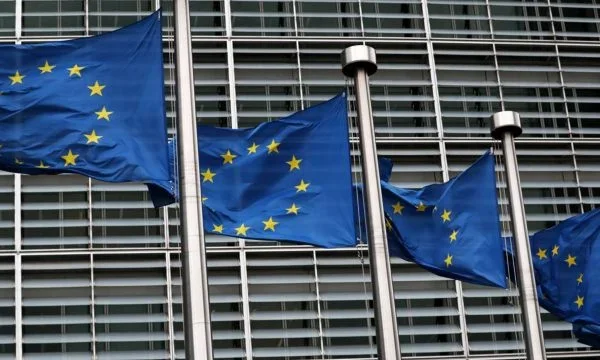
Just weeks before the end of the five-year mandate, the European Commission (KE) will adopt and publicise the annual enlargement package and progress reports for countries involved in the process.
It will be this last package approved by the current composition of the Commission, which is on the run.
Under the plan, this is expected to happen at the EC College meeting in Brussels on October 30th.
The previous plan was to approve these documents on October 16th, but it was postponed for two weeks because of some circumstances.
When October 16th was mentioned for adopting the enlargement package, it was believed that the new European Commission would be willing to launch the mandate as of November 1st.
But, meanwhile, hearings and voting of candidates for new commissionors were postponed for the first two weeks of November, so the new Commission will not be ready before December 1st.
According to EU sources, which have been able to see progress reports in their working versions, so as drafts, this time they are expected to stress a kind of progress for all candidate countries and for Kosovo as the only “running potential versions of”, writes Radio Free Europe.
The purpose of the Commission is that, on the one hand, it be objective to assess the real situation of countries from the enlargement process, but, on the other hand, to be not overly critical of them, in order to avoid the possibility that any EU member country uses these reports to prevent the progress of the process.
In the political part of the strategic document for enlargement, key achievements during the past year will be highlighted.
Among them is expected to mention the European Council's decision by December 2023 to open membership negotiations with Ukraine and Moldova, then the conditional decision to open negotiations with Bosnia and Herzegovina, as well as grant candidate country status to Georgia.
Montenegro, too, marked a step forward with the approval of the transitional report on meeting criteria from chapter 23, which concerns rule of law.
Albania, just days before the adoption of its new Progress Report, opened the first group of EU membership negotiations negotiations.
All of these and others will be included as achieved in progress reports of these countries and the document on the enlargement strategy.
The only place for which there has been no movement in this direction is Kosovo.
It submitted its application for EU membership in December 2022, but that requirement has not yet been reviewed.
Thus, Kosovo remains the only one of the ten countries in the enlargement process, which does not have candidate status.
But, even for Kosovo, the Progress Report is expected to be dynamic and analyse reforms and performance in all areas, as in all other countries, from this process.
The Progress Report for Kosovo and Serbia is expected to contain criticism for both countries of the lack of readiness to implement obligations stemming from their dialogue on normalising relations, relieved by the EU.
This will not be any surprise, as dissatisfaction with the lack of progress in dialogue, in the EU has already expressed it publicly.
The EU constantly reminds Kosovo and Serbia that their European journey depends also on dialogue for normalisation of the reports between them.
One achieved in reports between the EU and the countries of the Western Balkan region is the adoption of the Development Plan and Reforma.
It's about a package of 6 billion euros, of which 2 billion are grants without return, while the rest are in favourable loans.
With this package, it is intended to help countries in the region prepare for progress towards EU integration.
The section that will require more of the countries in the region in these progress reports concerns rule of law, the fight against corruption and public administration reforms.
Although there are differences among candidate countries as far as progress is concerned in these areas, all are still far from achieving the level the EU requires.
The European Commission is expected to, in particular, extend an invitation for more progress in ensuring an independent judiciary, respecting freedom of expression and depoliticising public administration.
The countries in the region are also expected to continue co-operation in the area of migration, including adaptation to EU asylum and visa policy.
After approved by the European Commission, these progress reports and the enlargement package will be reviewed in December as well as the Council by member states.
Based on them, decisions are expected to be made for opening or closing chapters in the process of membership negotiations for several candidate countries, especially for Montenegro and Serbia.
Also, during December, a joint EU summit with Western Balkan countries is expected to take place.