5 minutes ago
EU envoys approve up to 35 billion euros in contributions to G7's Ukraine loan
Periskopi(2 years ago)
(2 years ago)EU envoys agreed on Wednesday to grant Ukraine up to 35 billion euros as part of the bloc's action on a larger loan planned by the Group of Seven Countries (G7) supported by the Russian central bank's frozen activities, the EU Council statement said. G7 and [...]
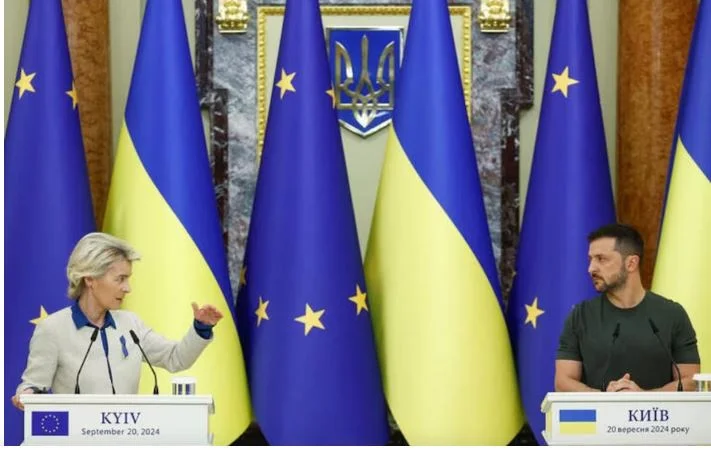
EU envoys agreed on Wednesday to grant Ukraine up to 35 billion euros as part of the bloc's action on a larger loan planned by the Group of Seven Countries (G7) supported by the Russian central bank's frozen activities, the EU Council statement said.
G7 and the European Union announced in June that they would extend a $50 billion loan to help Ukraine, served by profits generated by unable Russian assets in the West. These assets were frozen shortly after Russia launched a full invasion of Ukraine in February 2022.
More than two-thirds of assets -- around 210 billion euros -- are stuck in 27 EU countries, and most are held by Belgium's Euroclear depositor.
With Wednesday's agreement The EU can rely on the main space in its budget as a guarantee if restrictions on assets are lifted. All EU sanctions on Moscow must be renewed every six months through a unanimous EU vote. But Hungary, with its friendly attitude towards Russia, has repeatedly tried to block sanctions and measures to help Ukraine and could prevent a renovation, Reuters reports.
Hungary, which holds the six-month rotating EU presidency, does not want to discuss any possible extensions for the regime that holds assets until after the US elections in early November.
The European Commission proposed extending the period of renovation from six to 36 months, but Hungary did not submit the proposal during the envoy's discussions, EU diplomats said.
The Commission's proposal for the loan must also be approved by the European Parliament, since it includes the bloc's budget. EU lawmakers are expected to vote on the package on October 22nd, diplomats said.
The deal helps bypass Hungary's refusal to extend the period of renovation. The loan, an extraordinary “macro-financial assistance
However, the agreement will not be enough to secure the US. Washington initially agreed to contribute around $20 billion, but does not want to move forward without guarantees that Russian assets will remain frozen for much longer.