5 minutes ago
Vuciq: Kosovo is illegally armed
Periskopi(2 years ago)
(2 years ago)Serbia's president, Aleksandar Vucic, accused Western powers of arming the Kosovo Security Force and the opposition pro-oppressive media in Serbia of serving these powers. During an event in Belgrade, he said he is thinking that “s will begin investigations into arming the so-called Security Force [...]
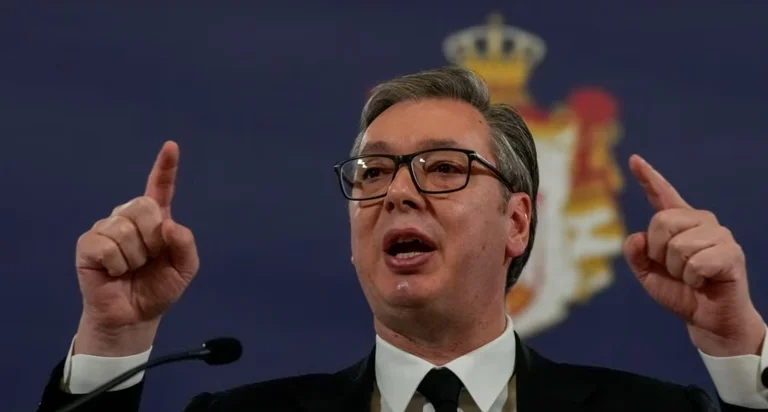
Serbia's president, Aleksandar Vucic, accused Western powers of arming the Kosovo Security Force and the opposition pro-oppressive media in Serbia of serving these powers.
During an event in Belgrade, he said he is thinking that “will begin investigations into the arming of the so-called Kosovo Security Force and those assisting in this arming, contrary to Resolution 1244. I want to investigate who violated the United Nations Charter, how they dared to do it... I'm thinking about how not to bring the country into a difficult position and while maintaining international law”, he said.
Earlier this month the US State Department approved the possible sale of Yavelin missiles to Kosovo, worth $75 million.
This proposed sale would support US foreign policy and national security goals by improving the security of a European partner, which is an important force for political and economic sustainability in Europe”, the State Department said, under which the sale will not change the military balance in the region.
The Serbian president, who had named the announcement “a major disappointment for Serbia”, attacked the pro-oppressive media and opposition in Serbia that “do not want to know what the foreigners and Albanians are doing to Serbia”.
“You are interested in how to punish Serbia, because some Serbs wanted to defend their hearth”, the Serbian president asked reporters about the events in the village of Banjska in northern Kosovo on 24 September last year, when a group of armed Serbs attacked Kosovo police by killing one officer and wounding two others.
Kosovo has accused Belgrade of organising and arming the group, but Belgrade denies being involved. The responsibility for the attack took over was Milan Radoicic, former deputy chairman of the Serbian List, the main party of Kosovo Serbs, which was founded and supported by Belgrade.
The incident was estimated by the worst since Kosovo declared its independence in 2008, prompting Western diplomacy's concern for stability in the region and calls for bringing authors to justice.
Authorities in Serbia detained Milan Radoicic several days after the attack under charges “in order to carry out criminal acts, production, ownership, possession and trafficking of firearms and explosive materials, and serious crimes against overall security”.
But, he was later released on condition that he would not leave Serbia, and was prevented from going to Kosovo. After the September 24th attack, Kosovo police found a large quantity of weapons in the village of Banjska.
The Serbian president said members of the group have committed criminal acts and will respond, but “when I see what weapons are talking about... they say there were pistols, rifles, hand rocket launchers. Well, wait... you brought Yavelin all illegally... And you don't answer. You can do it. You are great and powerful and you have your servants here (in Serbia) from political to those media...”, the Serbian president said.
In December 2018, Kosovo's Parliament adopted the law on transforming the Kosovo Security Force into the Kosovo Army, a process that will last 10 years and will not replace NATO forces that continue to have about 5,000 peacekeeping troops in Kosovo, several hundred of whom are Americans.
The number of NATO troops increased after 24 September amid Western concerns that Russia could prove the destabilisation of the Balkans to distract attention from its aggression in Ukraine.
Following the attack, Western diplomats set out to speed up the process of normalising relations between the two countries. The Kosovo government is required to establish the Association of Serb majority municipalities, while the government of Serbia fulfils obligations leading to recognition of Kosovo as a matter of fact. Belgrade has stressed that it will not implement anything leading to Kosovo's recognition. / VOA