5 minutes ago
Vatican: Blessing of same - gender couples is not approval of homosexuality
Periskopi(2 years ago)
(2 years ago)The Vatican has noted that allowing priests to bless couples of the same gender is not an adoption of homosexuality, but neither is blasphemy, since some Catholic bishops reacted negatively to the mass declared last month. Pope Francis approved a December decision allowing priests to bless unmarried couples and the same [...]
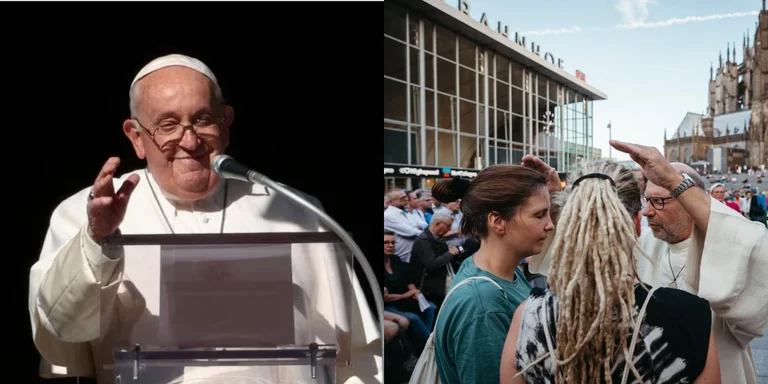
Pope Francis approved a decision in December allowing priests to bless unmarried couples and of the same gender as long as the blessing was performed without any kind of ritualisation and did not give the impression of church approval, writes The Guardian.
The decision was welcomed by Catholics LGBTQ+, but caused confusion among bishops in several countries, especially in Africa, where some bishops said they would not implement it.
In a reminder of the Catholic Church doctrine of marriage, the Vatican explained on Thursday that the giving of blessings to couples of the same gender “was not an excuse for all their actions and they are not an adoption of the life they make”. However, the measure should not be considered “heretic, contrary to church tradition or blasphemer”.
Priests could choose to give occasional blessings, but the Vatican acknowledged that such gestures would be premature “in places where homosexualness could result in torture, imprisonment or even death, they could not enforce a complete ban, broadcast the clansova.
In the five-page statement, the Vatican explained that <x0 spiritual blessings” should be kept by <x2 very short>” and should not justify anything that “is morally unacceptable”.
The Vatican reiterated that when a couple of the same gender demands a blessing, it “should never be given in line with the ceremonies of a civil union, not even in relation to them. Nor can it be performed in any dress, gestures, or words that fit a wedding”.
When the move was announced in December, it was described by an observer as the “most concrete shepherding in church attitude towards homosexual couples in the 2000-year history of the church”.