9 minutes ago
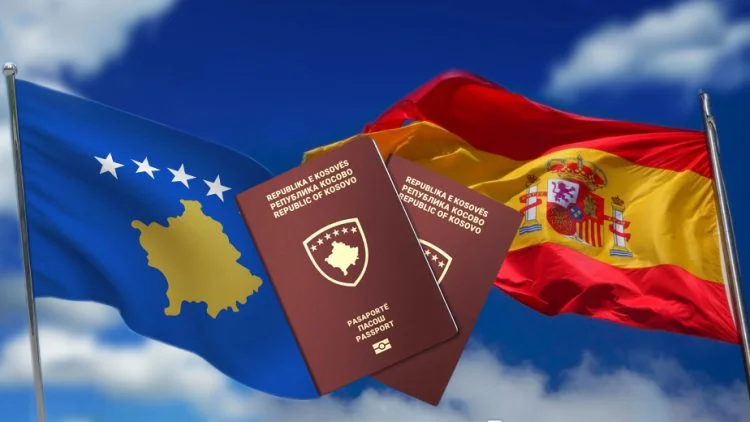
Spain declared over recognition of Kosovo passport
Periskopi(2 years ago)
(2 years ago)Spain's Foreign Ministry said Monday that Kosovo citizens would be in trouble to legally visit him and other countries in the Schengen area that do not recognise Kosovo's independence, as if they did not agree to recognise Kosovo's common passport. “All states of [Zona] Schengen that does not [...]
Spain's Foreign Ministry said Monday that Kosovo citizens would be in trouble to legally visit him and other countries in the Schengen area that do not recognise Kosovo's independence, as if they did not agree to recognise Kosovo's common passport.
“All states of [Zone] Schengen, who does not recognise [Kosovo], has accepted the use of ordinary Kosovo passports. This, by no means means, recognition of Kosovo”, Free Europe (REL) told Radio Europe Elena Aliarica Cortezon, spokesperson for the Spanish Foreign Ministry.
As of January 1st, Kosovo citizens with biometric passports are able to travel freely to the Schengen area states, following the entry into force of the visa liberalisation decision.
But only on January 5th did it become clear that they would be able to visit Spain as well, after a report by the European Commission's Department for Migration and Home Affairs, that Spain already recognises the usual Kosovo passport.
Corteson emphasised for REL that Spain supports and will continue to support the Belgrade-Pristina dialogue, “as a way of resolving this issue and seeks to limit its influence on citizens”.
Spain is among five EU states that do not recognise Kosovo's independence, which includes Greece, Cyprus, Slovakia and Romania. However, all these states recognise travel documents issued by authorities in Kosovo.
Spain's decision to recognise the passport has welcomed Kosovo Foreign Affairs and Diaspora Minister Donika Grovalla, as well as Deputy Prime Minister Besnik Bislimi.
Visa liberalisation enables Kosovo citizens, who have biometric passports, to stay up to 90 days within six months in either of the 27 members of the Schengen area.
Visaless travel serves for tourist visits, family issues, or similar ones. However, visa liberalisation does not imply work permits or other benefits.
Kosovo was the last Western Balkan country, whose citizens until January 1st this year could not move freely to the Schengen area.
This despite the fact that since 2018, the European Commission had confirmed several times that Kosovo has met all conditions for visa liberalisation, but that some states have consistently expressed reservations.