7 minutes ago
Situated: KFOR to stay in Kosovo as long as necessary
Periskopi(2 years ago)
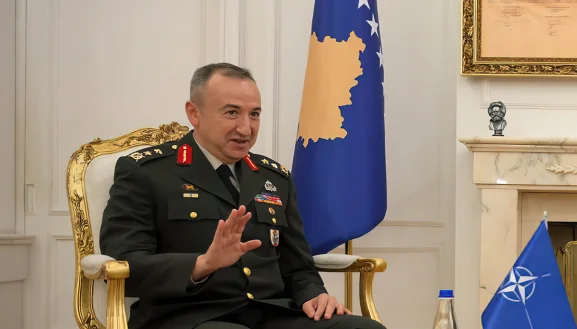
(2 years ago)KFOR Commander Major General Ozkan Ulutash has estimated today that the situation in Kosovo is generally calm but still sensitive. He in an interview for Serbia's Tanjug has said that NATO, after increasing tensions in recent months, has deployed hundreds of additional soldiers, more precisely fourfold KFOR's presence in the north [...]
KFOR Commander Major General Ozkan Ulutash has estimated today that the situation in Kosovo is generally calm but still sensitive.
He in an interview for Serbia's Tanjug has said that NATO, after increasing tensions in recent months, has deployed hundreds of additional soldiers, more precisely fourfold KFOR's presence in northern Kosovo and tripled the number of patrols, among other things on the border with Serbia.
Our “mission currently numbers about 5,000 personnel from 28 NATO member states and partners. The goal of these careful steps is to ensure that KFOR's mission continues to fulfil its UN mandate, based on UN Security Council Resolution 1244 from 1999, which is to ensure a secure environment for all communities living in Kosovo, as well as freedom of movement, impartially and at any time, the Ulutas were quoted as saying.
He stressed that KFOR will continue to make efforts to prevent any escalation and that it is willing to respond to any challenge, through further adaptation of its position, if necessary.
“As the third in the reaction chain, we will continue to work closely with the Kosovo Police and the European Union's Mission for Rule of Law (EULEX) as first and second in the reaction chain. I will repeat what Secretary General said. NATO during its recent visit to the Western Balkans in November: “Stability in the region depends on all sides choosing diplomacy rather than violence. NATO strongly supports dialogue between Belgrade and Pristina under the auspices of the EU and both sides should act with confidence”, Ulitaşh said.
Asked how he comments on Pristina's claims that Serbia is preparing an attack in northern Kosovo, which Belgrade has dismissed as inaccurate and groundless, KFOR commander said he does not want to speculate about any scenarios and that KFOR is carefully monitoring all relevant security developments in the region.
“We are in close contact with the Serbian Army Chief of Staff, institutions in Kosovo and Kosovo security organisations, as well as other organisations, including EULEX, the OSCE and UNMIK”, he added.
Commenting on the Pristina representatives' statement that the Kosovo Security Forces, if necessary, go north, the military emphasises that Stoltenberg was very clear on the issue during his recent visit to Pristina when he stressed that “any deployment of KSF to the north requires KFOR's consent”.
The head of KFOR added that they will continue to support dialogue between Belgrade and Pristina under EU auspices by providing the security framework needed for diplomacy. According to him, it is the only way towards lasting peace and stability, for the sake of all communities living in Kosovo.
Speaking of Albania and Germany's announcement of sending additional forces to KFOR, Ulutaş said NATO is firmly committed to security in Kosovo and that KFOR will stay as long as necessary.
According to him, the mission in Kosovo from the very beginning is based on conditions on the ground, not on predetermined terms, meaning that all changes in the number of personnel will be based on assessments of conditions on the ground, followed by the North Atlantic Council's decision.
The mission's new options for reinforcement are a reflection of NATO allies' determination to ensure that KFOR has an appropriate presence on the ground, so that it will continue to fulfil its UN mandate in a situation characterised by the tensions we have seen in past months”, KFOR Commander Major General Ozkan Ulushash explained.