a minute ago
Netanyah says it disagrees with US to establish a Palestinian state
Periskopi(2 years ago)
(2 years ago)Prime Minister Benjamin Netanyahu, has rejected the United States' calls for Israel to reduce the intensity of its military offensive at the Gaza Strip or take steps towards establishing a Palestinian state after the war ends. His refusal immediately provoked criticism from the White House. Tensions over these issues reflected one [...]
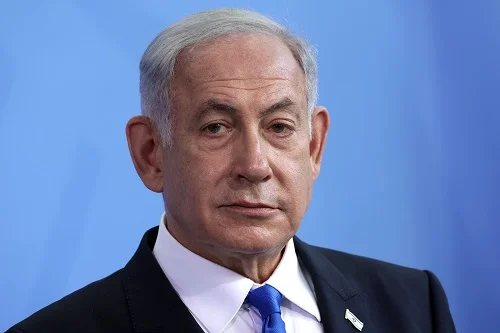
Prime Minister Benjamin Netanyahu, has rejected the United States' calls for Israel to reduce the intensity of its military offensive at the Gaza Strip or take steps towards establishing a Palestinian state after the war ends. His refusal immediately provoked criticism from the White House.
Tensions over these issues reflected a major rift between the two allies over the size of Israel's war and its plans for the future of the besieged territory.
“We certainly see this differently”, White House national security spokesman John Kirby said.
Netanyah's statement on January 18th came a day after US Secretary of State Antony Blinken said that Israel could never have “actual security” without a path to Palestinian independence. Earlier this week, the White House also said that it is the right “co time for Israel to reduce the intensity of its devastating offensive in Gaza.
During a media conference, Netanyah expressed a different stance from Washington. He repeatedly declared that Israel would not stop the offensive until it has fulfilled its intentions to destroy Hamas group of Palestinians declared terrorist organisations by the US and the European Union, and to return home the hostages being held by the radical Palestinian group.
He dismissed the growing claims by Israeli critics that these goals are not reachable, pledging to push ahead for months of offensive.
“We will not agree to anything but absolute victory”, Netanyah said.
Israel began offensive following the unprecedented attack of Hamas in southern Israel on October 7th, when the group's warriors killed 1,200 people and took some 250 others hostage. Near 130 hostages Israel believes they are still under the capture of Hamas. War has raised tensions throughout the region, threatening to fuel further conflicts.
Israel's attack, one of the deadliest and most devastating military campaigns in modern history, has left nearly 25,000 Palestinians killed, according to the Gaza health authorities. Israeli offensive has also caused great destruction, and over 80 percent of the territory's population of 2.3 million have fled their homes.
The enormous cost of war has led to the intensifying of international community calls for Israel to stop offensive. Israel's main ally, the U.S.A., has started to express disagreement and has called on Netanyah to show his vision of post-war Gaza.
The US has said that the Palestinian Authority, which is internationally recognised and that the government in semi-autonomous areas in Israel's occupied West Coast, should be revived “and return to Gaza. Hamas had ousted the Palestinian Authority in Gaza in 2007.
The US has also called for taking steps towards establishing a Palestinian state. Palestinians demand that Gaza, the West Coast, and East Jerusalem be part of their future state. These areas were occupied by Israel in 1967.
During the economic forum in Davos, Blinken said Wednesday that the two-state solution is the best way to protect Israel, unite moderate Arab countries and isolate Israel's staunch enemy, Iran.
Without “a road to a Palestinian state”, he said, Israel will not have actual “real security”.
Netanyahu, who leads an extreme right government and who has long opposed Palestinian citizenship, has repeatedly rejected the two-state solution. He said a Palestinian state would become room for the launch of attacks on Israel.
He said Israel “should have security control over the entire territory west of the Jordan” River, adding that “this conflicts with the idea of sovereignty. What can we do?
I tell our American friends this truth and I have stopped trying to force us into a reality that would endanger the state of Israel”, he said.
His statements prompted the White House's immediate reaction.
Kirby said the American president, Joe Biden, would not stop working “towards two-state resolution.