3 minutes ago
Who will monitor the implementation of the regulation that prevents the dinar?
Periskopi(2 years ago)
(2 years ago)Kosovo Customs, Tax Administration, Market Inspectorate... All mentioned as possible responsibility for monitoring the implementation of the Kosovo Central Bank regulation, which defines the euro as the only currency for payment. The regulation itself does not specify it, but it says the competent “authority is the local law enforcement authorities in the Republic of Kosovo”. [...]
Kosovo Customs, Tax Administration, Market Inspectorate... All mentioned as possible responsibility for monitoring implementation Rules The Central Bank of Kosovo, which defines the euro as the only currency for payment.
The regulation itself does not specify it, but it says the competent “authority is the local law enforcement authorities in the Republic of Kosovo”.
In an interview given Radio Free Europe, the chairman of the BEC Board of BEC, Bashkiba Nuboja, said that “implementing and doing justice institutions, does not make the CEC” and mentioned Kosovo Customs in particular.
The REL also sent questions to the BQC institution for more clarifications, but no answers were found.
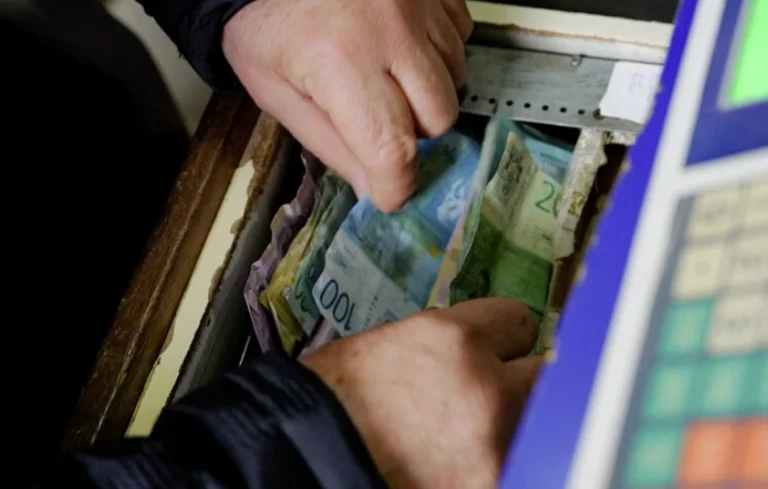
By the regulation, which was released on January 17th and is expected to enter into force on February 1st, the Serb community in Kosovo will be barred from using Serbia's dinar for cash payments.
Out of the post-war, in 1999, residents of ten Serb-run municipalities, encouraged by Belgrade, have used the dinar for everything from salaries and pensions to shopping and restaurants.
The new regulation allows dinars to be kept in bank accounts or exchanged in euros.
“There was no preparation”
University of Pristina Economics Professor Medi Bektashi, who has also been a member of the BEC Board, said that, along with regulation, The CEC also had to issue an administrative guide, which would clarify which mechanisms to implement regulations.
That means no preliminary, adequate preparations have been made... to prepare both banks, but Serbian citizens, who receive aid and salaries from Serbia”, Bektas told Radio Free Europe.
According to him, “has taken at least a year for vendors and consumers to prepare for changes”.
He added that, given the practice of market control, enforcement of regulation should monitor: Kosovo Customs, Tax Administration and Market Inspectorate.
Market inspector “is ready”
Radio Free Europe addressed all three institutions mentioned for comments and, so far, received answers only from the Market Inspectorate.
Deputy Inspector Naim Hajra said that this body, operating within the Ministry of Industry, Trade and Trade, is ready with all capacities to react immediately to “following the regulation's entry into force.
He stressed that, on February 1st, all prices of products in store windows should be exposed to euro currency and, without specifying, the Market Inspectorate has sufficient numbers of inspectors to inspect the situation.
To that end, he said he has also served a visit by Industry Minister Roseta Hajdari to the north of Kosovo Serb-run residential area on January 25th.
“We have agreed to build the capacity of the Market Inspectorate, through which we intend to implement this [EC] instruction”, Hajra said.
He also explained that, if inspectors meet at prices placed in dinars, businesses will be punished on the basis of the Consumer Protection Law.
This law envisions fines of between 1,000 and 20,000 euros, depending on legal offense.
Pollemics for the dinar
Article 11 of the Kosovo Constitution defines the “a single currency” as a valid payment tool in Kosovo.
But for years, dinars arrived in Kosovo through the People's Bank of Serbia, which has a safe in the municipality of Leposaviqi, north of Kosovo. That money, then, was transported to the money transport company “Henderson”.
Asked by the REL why a regulation for implementing the laws that exist, the chairman of the BEC Board, Nrbato, has now had to be issued, said:
If the law hasn't been empowered, then it doesn't even empower the regulation. But this regulation only defines relevant instruments and actors that have responsibility for law enforcement. Until yesterday it was the law that specified it, but the relevant actors did not. Now, after being in our domain and a law of the BQC, it defines that other institutions should help the CEC in implementing regulations and laws, then we've already measured things. There's no extra”.
The international community asked Kosovo to suspend the implementation of the BEC regulation, expressing concern about its impact “in schools and hospitals”, which are paid in dinars, and for which, as it said, “does not seem to have any alternative process implemented, at the moment”.
According to the QUINT group, which includes the US, Great Britain, Germany, France and Italy, this issue should be further discussed under the dialogue for normalising Kosovo-Serbia relations, which is mediated by the European Union.
The EU, on the other hand, demanded Agreement in dialog for the CQQ's decision.
Until Kosovo President Vjosa Osmani warned on Wednesday Agreement On the dinar issue, Kosovo Deputy Prime Minister Besnik Bislimi said on January 24th that the <x0th> constitution is sacred andMust apply”.