a minute ago
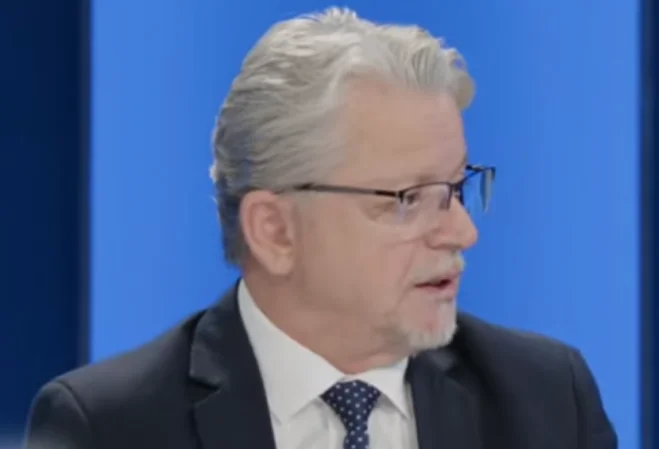
Gorani: Now we're electorates, reduced to civilians.
Periskopi(2 years ago)
(2 years ago)Maybe it's not that much of a question of a diagnosis. Dukagjin Gorani é more than anything else has embedded the role of the public intellectual on political issues in the country had hit the core of the core during this year when in the T7 <x0 prisssing” it has concluded that “for a while [...]
Maybe it's not that much of a question of a diagnosis.
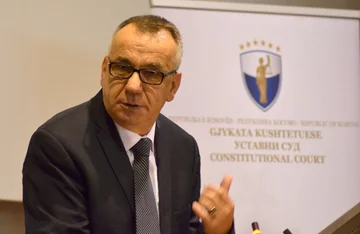
Dukagjin Gorani who more than anything has embedded the role of the public intellectual on political issues in the country had hit the core of the core this year when in “Prevising” of T7 had calculated that “For a long time we've stopped being friends” and that“s are electorates”.
This sentence in the context it had agreed on just sounds euclidiafrom self-aware truth; if you say “width is greater than parts”. Its quality stood simply “a priorityYou don't have to do a test or put it into the experience to verify it.
But why? In Goran's lens we already dealt with “tifozer”, with the citizen “tifoz”, with a majority (electoral) citizens who “)The Person Replaces the Truth”.
The electorates not just in terms of “you /I choose you” as political preference on the basis of a feasible socio-economic outlook offer; but a “election” exclusive to anyone else who chose “as you.
This, for Goran, has been one thing that's hung them all the time.
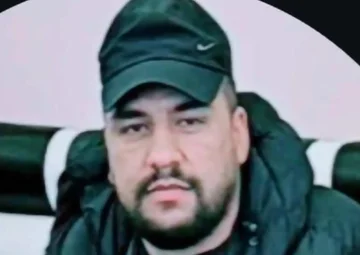
In these Kosovo society reading waters, below find a conversation with Dukagji Gorani.
Total interview:
National: During this year, a statement of yours has impressed me that Kosovo society has stopped being a society, but has become an electorate. You've even been able to understand what you understand with this “shift into electorate”; but can you tell us “why” why you think it's been passed in this situation and what are the chances of social demazepsing once good from politicians; more specifically to the political organisation “Determin” and its president, who best swims these waves; which we can say you create for yourself?
Gorani: Community feeling is maintained through common values, right? Society is just another word for mutual solidarity, belonging and trust. In our case, traditionally, these institutions are maintained at the family level, relatively and regionally. With the state's establishment these institutions had to rise to national level, through the process of institutionalisation. What else is the state if it's not legalisation-political-territorialization of these institutions?
However, something happened during the process of relating these institutions, an abnormality that I expected to relate to the time and way of creating the state and which only deepened the reduced experience of Malaysian society. It is a constant insistence that the state of Kosovo be interpreted by the party and group achievements of no doubt collective, comprehensive and national. To this day the battle continues over party ownership of the state, which was supposed to be everyone's. For example, for LDK, the state is the incarnation of Ibrahim Rugova's efforts; The PDK insists that the state is merited by the KLA and Hashim Thaci; Tryvona, Vetevendosje tries to convince us that the state of the third republic is merited and owned by Albin Kurti. In short, in our discussions, whether public or private, the projected joint and comprehensive categories are regularly reduced to group and party issues.
You know, the birth of the state means a form of the death of previous society. The state is a super-structural intended to overlap and assimilate the provincial and partisan aspects of society. In itself, the state is a modern structure, so it insists on breaking up the usual and pre-modern society, reconsidering it within modern parameters (i.e. Constitution, assembly, laws, governance, etc. The fate of countries is such that they can either be modern or cannot exist at all. There can be no primitive, provincial or ancient state. How much less could there be a state that has a specific historical title of any individual, movement or political party. What we do is one of the greatest and harmful foolishnesss that we continue to apply daily. All of us indiscriminately refuse to accept the state of unity because we fear that we cannot isolate ourselves within it. Therefore, we are not the society of beliefs but leaders; we are not the culture of soldiers but warriors. We're a country of shit, and it's an absurd phrase and state.
Bayraktarill doesn't produce community and society. Such a state, absurd, subdues citizens within the clan's institutions and declassifys them. The quality of the group/party is transformed into a supreme identifying characteristic, while the state is reduced to a power tool that must be seized and used. Thus, the state equals power and from here comes the meaningful cities like Albin's State, Rugova's state, Hashimi's state of state, etc.
I don't think we can escape, as you say, from dependence on dung and primitive leadership. This, for the fact that the state we founded failed to produce individual citizens who would then produce society through free participation in public life. On the contrary, the new state became the catalyst for grouping and further disuniting of the individual, thus making it impossible for modern citizens to be born. Today, we are reduced to voting machines, experiencing our incompatible destiny and well-being from the success or failure of the structure that we support and from which we begin to depend. In time, this existential obsession to electoral power reached levels previously intact through the logic of Vetevendosje and Kurti, when the citizen was eventually reduced to citizenship-vote.
National: It's been a politically turbulent year. We've seen and heard everything; the most important of a ruthless popular life from May and June to any criticism and disagreement with the course in the north of the country, but also the allies who adopted that course. Do you believe that the Kosovo state has suffered a fracturing (from criticism in international media, the sorrow publicly displayed by allies to the Sanction from the US, the EU and Germany) in the welfare and support of its sponsors; but also in ensuring security? And what is our perspective in relation to our country's finalization in light of this deep frustration?
Gorani: Likely, in the Balkans, every people gets five minutes of their own to bump into the international community. Now it's our turn, the Kosovo Albanians, to use all the longing phrases we've been hearing for decades from people in the neighborhood, how the West is rotten, unfair and dishonest, and how we're autochthonin, with historical rights, vital culture, healthy youth, etc. What they say, someone laughs, wears it.
Today, these phrases are part of the discrostive arsenal of current power and its structures in society. Their articulation merely dislodges the developmental scale of these structures, which only deepens the traditional refusal to transform ideological thinking, ruling logic and political culture of the state. In general, in the Balkans, the West is considered useful unless it affects local and provincial views on belonging, group, provincial traditions and identity myths. Then he is considered sorosist, masonic, satanic, and funder of the enemy neighbor.
I think that, from abroad, the state of Kosovo and its government are experienced as a boring problem caused by a society unable to understand contemporaryness. It is not new for a Balkan state, but expectations have been in the process of establishing it. The treatment we receive is also what we have seen over decades of neighbourhoods: reproofs, sanctions, restrictions, and stubborn persistences in the reform of power and society. Among other things, the events you mention -- this year -- ended perceptions (even in decline) for Kosovo as a historical victim. Today, we are treated as an irresponsible Balkan act, with the potential for worsening regional security. Whether the NATO mission/ KFOR was founded to protect Kosovo from neighbourhoods, tomorrow it is likely to continue to protect the neighbourhood from us so simply seen from outside. Kosovo is not seen separate from the Balkans and its developments, nor does it have any special status of ally or political friend. Until yesterday we were helped because we defined humanitarian issues, but not today. Kosovo is seen only as a small piece of Balkan mosaic, which through political and economic co-operation must qualify for EU integration. What I'm saying is boring phrases that we hear every day, but anyone who thinks it's something else that's something more profound, more specific and more dramatic has distorted experience of their size and importance.
This political process for a full-ball co-ordination will continue monotonously, with acceleration and slowdowns depending on the circumstances. For our political microcosm, the political process with Serbia is experienced as epic and historical issues; for the EU and Western diplomacy, it is experienced as a job and a bureau mandate. Of course, integration into the Western political community means a process of discipline and normalisation, often experienced locally as structural violence. There is, however, no other way of involvement in large interstate and international structures. In the context of the EU, this process was all passed from France and Germany to Poland and Croatia. Sooner or later, we and Serbia will pass. According to international logic, this job would be good to be done as soon as possible. The Balkan logic agrees, even though according to her, anyone who chances to be in power during this process will have a potentially disfigured history as a traitor to the nation. Therefore, in the Balkans and in Kosovo, politicians are radically modern and pro-European only in the opposition. Once he gains power, he remembers national values, identities, and historical paranoos. Exactly at this stage is Kosovo with Albin Kurti today.
National: I've heard you almost all year long beyond the analysis, more like a public intellectual and you, unlike others, have maintained a sober disk despite the inexoration and collective euphoria we witnessed to. You're focused more on the general painting than on the partisans of there-to-day. Is it difficult, to say so conditionally, to look at the events that are disassembled; to see, analyse and articulate political and social events; and why are you, in your analysis, so?
Gorani: I still believe that success in analyzing society is measured by the observer's ability to distance itself from it with the ability to see itself with foreign eyes. However, this way of judging now and how long it is considered old and past - fashioned: Persities are replacing truth. More and more, the truth is defined as a product of outlook rather than vice versa. The truth once changed its outlook; today, they design the truth. Not only to us but also elsewhere in the world, the facts are subjecting themselves to something unprecedented since the Descartes era.
So I'm not sure my way of analyzing society has any value today. A lot more convincing, but the analysis is that it should be the world than those who try to explain what that is. This, for the fact that today, as always before, we believe that the world is just as we think it is. Here is an example of the emblems: today there are individuals and groups in our society who truly believe that Albin Kurti and his government can influence American elections, in the appointments of EU Emisars, in political developments in Albania, in Vuciki's power in Serbia, in party swings in Montenegro and in election developments in northern Macedonia. As detailed as it may seem, this form of social ʹanalysis is becoming increasingly popular and bolder. Today, the earlier dicocotomy between facts and standards has been reduced to conflict between facts and beliefs. Individual/group beliefs are easily being served as a surrogacy for facts and in time are being smuggled into fact. That's fascinating, this job.
National: What's interesting in the verbal confrontations you have in the TV studio, is a kind of sleek method of “enchus”; this is through questions and questions about the claim confirmed by the other, you manage to draw up the misconceptions promised in that statement, making your conversationist sometimes appear ridiculous even after your screening; and just maintaining that initial position from him becomes impossible. Where did you create this chroximating method, and why is it more specifically necessary?
GoraniAgain, as a member of a school now viewed as past, the dialogue process is almost instinctively exercised, and I often see the argument, whether privately or in public. I do so instigated by the principle that the co-viser/oppositor must personally obey the authenticity or falsehood of his claims through a process of critical discussion. Here I see questions and questions as meaningful challenges designed to disseminate the logical sustainability of the conversationator's claims.
Today, however, such a process, critical of dialogue, is being experienced offensive and arrogant. Today, you have almost no right to challenge the truthfulness of someone's claims through questions. In fact, the reaction I often get from this effort is, I think, characteristic of our society: I'm not on trial here! )
I think such reactions speak of an increasing social and cultural logic of the indiscriminateness of beliefs, regiscence in judgment and evaluation, as well as in the unwillingness of changing thinking. Logical stability, the linearity of thought, the understanding and temporal synchronisation of statements today are considered only unnecessary mental burden, and occasionally the restriction of freedom of speech short, today the conversationer demands that logic be allowed and cognitive dysonance respected. Today, people proudly show you that they do not say what they think and that they do not practice what they say. Such a situation was once reasoned because of persecution, whether by family, society, or State. Today, this is presented as a matter of will, as a conscious enterprise, even as an identity strategy and policy.
I admit, this is a social world that constantly distracts me, an epistemological dimension where I feel foreign and unable to understand. But it is also real: you can be liberal and patriarchal at the same time today, both democratic and nationalist, at the same time secular and religious, pro-European and provincial alike medieval and modern. In such an environment, critical thinking means right to test and contest authority is considered strictly hostile.
National: Do you think and if so, when? ) that Kosovo society will undergo a positive socio-political transformation; when will it have enough maturity not to fall prey to popular bait; and will it be solid enough that the state or politics are not alpha and omega in people's consciousness?
Gorani: I don't believe in this anymore. We testified not only that we are little friends but also that we prefer to think of as a small society that does not measure itself with the world but only with each other. During this quarter of freedom, we testified that we cannot produce a sense of centrality, a cultural ability to create supplementary products with global contemporary. We're not getting out of cognitive dysonance slides since implementing imported contemporary values from new technologies to cultural products or global ethics we're trying to do within the local context and pre-modern. In short, today we act contemporary only on the appearance and performance level until we open our mouths to articulate our beliefs and outlooks. That's where logical slides and meaningful inconveniences begin.
The situation we are in is not just a consequence of limiting freedom of movement, even though I think isolation was one of the greatest disasters of postwar. Individual and collective instability helped overcome the process of provincialisation and primitiveisation of society and public life. Today, we are so isolated from the outside world that we have produced a host of fears, prejudices, and distrusts toward it. Perhaps our only comfort can be a growing belief that, however, the world can only be what we think it is and that, therefore, it depends on us and will be forced to adapt our worldviews.