4 minutes ago
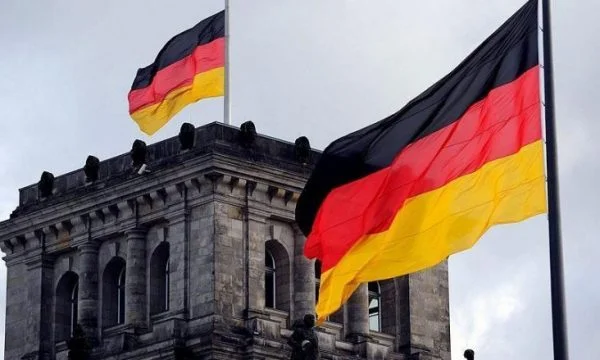
Germany begins 2024 with heavy economic stagnation
Periskopi(2 years ago)
(2 years ago)Germany's weakened economy is facing a difficult start of the year because farmers have launched nationwide protests against government plans to limit oil subsidies, and train drivers aim to strike because of disagreements over salaries. German economy, Europe's largest, was the most [...]
The German economy, the largest in Europe, was the weakest among the eurozone countries last year due to the impact of high energy costs, small global orders and record high interest rates.
The government suffered a serious blow in November, when Germany's highest court brought down plans for the 2024 budget, prompting political divisions over how the funding gap worth 17 billion euros should be met.
Long-term trouble in structure facing Germany's workforce and infrastructure remains unresolved.
The International Monetary Fund predicts that Germany's economy will be the only one to suffer decline in 2023, and its growth of 0.9% now is expected to be below the 1.4% average of advanced economies in 2024.
Below, you can read some of the challenges facing Germany in 2024:
Chancellor Olaf Scholz's coalition has made the proposals in the rewritten budget plan for limiting subsidies for oil more enjoyable. However, the chairman of the German Agricultural Association said that these changes are not enough for farmers, so they launched nationwide protests Monday.
Even the Christmas agreement, announced by the GDL train driver association, ended on Monday. The GDL went on a strike Wednesday, due to the salary dispute with the railway operator Deutsche Bahn.
The nationwide strike, which will last three days, causing train trips of hundreds of thousands of people to be canceled.
Scholzi's three-party coalition announced in December the reconciliation of key budget provisions for the 2024 budget bill after weeks of talks, because the country's Constitutional Court made a decision that upsets government finances.
As Finance Minister Christian Linder has requested, a follower of severe budgetary conditions, Germany will pay back borrowing restrictions in 2024 and will complete financing gaps worth a total of 17 billion euros, mainly with savings money.
This will further delay slow economic growth. Three major economic institutions in Germany have lowered their forecasts for economic growth in 2024, saying the budget crisis is slowing the recovery.
Ifo now predicts that the German economy will grow to 0.9% next year, instead of increasing 1.4%, while RWI cut its forecasts from 1.1% to 0.8%. DIW cut projections from 1.2% to 0.1%.
The uncertainty is delaying the recovery now, as it increases consumers' trends to save and reduce the company's readiness to invest”, said Ifo's chief, Timo Willershauser.
Disagreements over the budget have raised tensions in the coalition among the three parties, and polls show that the major winners of the crisis are conservatives from the opposition and the far-right party Alternative to Germany (Afd).
Increased tensions and the need to focus on concluding the 2024 budget agreement are delaying structural reforms promised by the government after coming to power, including to remove bureaucracy, make online hundreds of government services, and modernise public transportation.
Germany, like other industrialized countries in the world, is facing severe shortage of workers, especially for qualified ones. Official forecasts indicate that Germany will face the absence of 7 million skilled workers by 2035 because of the elderly population.
The government is seeking to take migrants from countries outside the EU to meet the shortage of workers.
Germany's economy is highly focused on trade, so it is sensitive to international events that reduce export demand.
Poor global growth, especially in China, as well as high interest rates, is expected to affect reducing demand for German exports.
The obstacles to transporting goods to the Red Sea and escalating tensions in the Middle East can weaken trade even more.
“Like the rest of the German economy, exports are in the field between falling and stalling”, Carsten Brzeski from ING said.