8 minutes ago
What happens after the dinar is removed in Kosovo?
Periskopi(2 years ago)
(2 years ago)Jadranka from Northern Mitrovica fears she will no longer be able to get the pension in Kosovo, but that she will have to go to the border city of Serbia every month. I don't know who's guilty, but to become such a thing...
Jadranka from Northern Mitrovica fears she will no longer be able to get the pension in Kosovo, but that she will have to go to the border city of Serbia every month.
“I don't know who's guilty, but to become such a thing... I don't know, I don't have words”, says this northern Kosovo resident, who gets the pension in dinars from Serbia's budget.
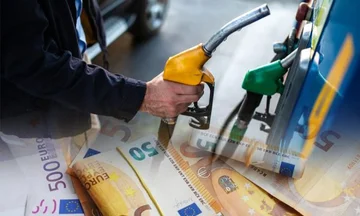
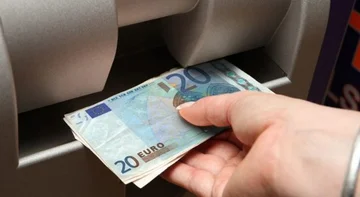
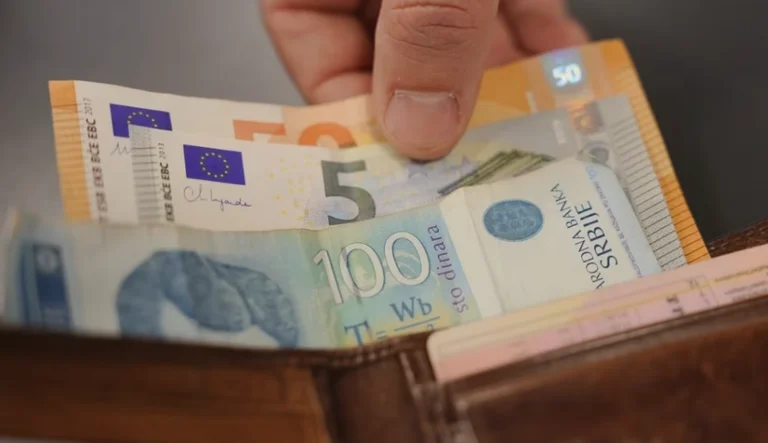
On January 17th, the Kosovo Central Bank (BQK) announced that on February 1st, the only currency for cash payments in Kosovo will be the euro.
But this raises the question of how workers' salaries will be paid in Kosovo's Serbian institutions, separated from Serbia's budget, then pensions, additions to children or social assistance.
The Serbian list ) the largest party of Serbs in Kosovo said the removal of the dinar means the Serb “depart without the use of weapons”.
“After all forms of institutional violence used against the Serbian people by the authoritarian regime of [Kosovo Prime Minister Albin] Kurti and after failing to expel all Serbs from Kosovo, he now decided to stop the dinar in Kosovo and thus directly threaten the physical survival of the Serbian people”, the Serbian List said in response.
According to Kosovo Deputy Prime Minister Besnik Bislimi, the particular importance of the BEC regulation lies in determining the currency allowed to be used in all bank and nonbank transactions in Kosovo, which in this case is the euro.
“Each of the citizens of the Republic of Kosovo that has acted contrary to this has been on the other side of the lawbreaker”, Bislimi wrote on Facebook.
He said the BEC regulation “is not the product of political negotiations in Brussels”, and as such, “does not have the impact on the prosperity of” of the normalisation of reports between Kosovo and Serbia.
“Transparability to import foreign currency, convert it into euros and transfer it to final beneficiaries has no chance to affect either the management of eventual benefit supplies or the reduction of their purchasing power”, according to Bislim.
“Insisting that, even further, transfer of money across the state border is made and tolerated in a non-unilateral way, with sacks and individual cars, and then distributed through unregistered and unlicensed offices, not only similar in 19th century ideas, but also aimed at keeping citizens profitable in illegality and constant dependence on the same sexier”, the Kosovo deputy prime minister said.
So far, Serbia's official currency ʹ has been able to be used in commercial objects in all majority Serb areas in Kosovo.
For Mirjan, retired from North Mitrovica, the news that he will no longer be able to use is the horrid “” and “another form of pressure”.
Money input only through Kosovo Central Bank
The BQK regulations say that import and export of euro currency and metal coins and other currency in Kosovo will be its exclusive right.
So far, dinars have entered from Serbia to Kosovo through the People's Bank of Serbia, which has a safe in the Leposaviq Serb majority municipality in northern Kosovo. That money, then, was transported to the money transport company “Henderson”.
The CEC's regulation also stresses that other currency, which is not euro, can only be used in Kosovo as value stored in physical form or in non-euro currency bank accounts. International payments can also be carried out in different currency from the euro.
“The exchange of currency in the Republic of Kosovo can only be done through institutions that are licensed by the Central Bank of Kosovo and which offer the service”, the regulation said.
So far, dinars in Kosovo have used Serbia's Post Savings, the NLB Commercial Bank and Serbia's Posta public company.
Without any accounts at Kosovo banks
Milivolo from North Mitrovica has no accounts at any Kosovo bank and reports that the dinar will be removed and considers it “catastrophic”.
[Serbia's] state must undertake something urgently. And this is the end of the story”, he says.
His fellow citizen, Goran, has received his wages in dinars so far. He says Kosovo and Serbia should find a solution so that ordinary people do not suffer the consequences.
Everything has been made clear to us since the Commercial Bank stopped working. As far as we know, and as we're informed, she has no license to circulate dinars. We've had this clear for a long time. That whose game it is, I don't know”, Gorani says.
At the end of December last year, clients of the National Bank of Serbia, NLB, it has been announced that their accounts will be carried to one of Serbia's cities, due to the closure of its branches in Kosovo.
Free Europe Radio has seen messages NLB has sent to clients in Kosovo. This bank did not answer the REL's question about why it has decided to close its branches in the majority Serb facilities in Kosovo.
Those with NLB accounts in Gracanica near Pristina have reported that by January 31st 2024, their accounts will be transferred to Serbia's Kursumli, while service contracts, account numbers and payment cards will not be changed.
NLB customers in northern Kosovo have been announced that their accounts will be transferred to the Race.
Clients have also been announced that ATMs are available throughout the region and that they can draw money without a commission.
In Kosovo there is the NLB bank what it would have to mean that those who receive their salaries in dinars can withdraw them to euros without a commission.
“Possible converting of money through bank accounts”
Former Kosovo Central Bank Deputy Governor Sokol Havolli explains that dinars will not be physically used for daily purchases, but that they could be deposited in bank accounts or converted into euros.
He says no one should be allowed to pay in any currency, but that the euro would have to be used for transactions.
“Valhouts that are not euro can come to Kosovo as they are in the contract, but then, when you pull them for purchase, they must be converted to euros, as the euro is official currency”, Havol explains.
He adds that Serbia could also pay its workers' salaries in Kosovo if both sides agree on it.
Free Europe Radio contacted several banks in Kosovo ProCredit, BKT, Raiffeisen, NLB, TEB to ask if their clients can account for dinars. But the negative response received only from the BKT, which, as well, said in its branches dinars can neither be exchanged for euros.
The same REL question did not answer even the Kosovo Banks Association.
Is there an alternative solution?
University of Pristina Economics Professor Medi Bektashi thinks it takes a little more time to implement the decision to prevent cash-ready payments in dinars.
Many Serbian citizens in Kosovo receive aid, pensions and salaries from the state of Serbia, and the alternative should be found through talks by competent institutions”, Bektas says of Radio Free Europe.
In this case, he adds, the agreement for the means reaching dinars to be converted to euros must reach the two governments and Kosovo Central Bank with the People's Bank of Serbia.
As an example, Bektash cites that the Kosovo government has financially assisted members of the Albanian community in municipalities in southern Serbia: Touché, Medvedja and Bujanoc.
In most cases, that assistance has gone through Central Bank or commercial banks. Since the Kosovo government has no dinars, the transactions have been made through the Central Bank [Serbia's People's Bank], where the euro has been exchanged in dinars, and recent beneficiaries in this case municipalities in the Presevo Valley of Presevo have received the means in exchange for the dinar”, Bektash explains.
What about the Post?
REL addressed Serbia's public company Posta with the question of what will happen to its business on February 1st, when the dinar is removed.
But instead of answering, she said Serbia Post Office Director Zoran Djordjevic's taskman, has given an interview for the Kosovo Online portal and that the REL can refer to it.
In that interview, Djordjevic said, among other things, that Serbia's Post is trying to find a way to continue working as before.
In sports of this post operating in the Serbian system in Kosovo, other monetary benefits in dinars are shared, as well as various transactions conducted.
Former director of Serbia's Post in Kosovo Rangil Nojik tells Radio Free Europe that he should not be put in this situation where the dinar is removed. He adds that this is the result of the inactive participation of Serbs in Kosovo institutions.
Nokia believes that a solution can be found for Serbia's Post to continue its work, but, according to him, it will have to change the way it works if the dinar is converted to euros.
“Post doesn't function with international currency, respectively. So it would have to change the way it works. But that would still imply that the Kosovo Central Bank would have to accept the dinar. So, there must be good will”, says Nokia.
Was the use of the dinar legitimate?
Former Kosovo Central Bank Governor Fehmi Mehmeti tells Radio Free Europe that the use of the dinar in Kosovo is unconstitutional and illegal.
He recalls that the UNMIK UNMIK's decree and administrative directives (the UN's Interim Administration in Kosovo) have been removed in Kosovo, and that, originally, deutschmarks and later the euro have been introduced to the market.
But, Nojjic, who in the post-war period has also been Kosovo Assembly MP, says otherwise.
According to him, there have been regulations for the use of coins, respectively, of various types of money.
He says that since 1999, the dinar has legally entered Kosovo ʹ has been reported to Kosovo Customs, from which the declaration has been taken.
Nojik says the opportunity to introduce the dinar through the Law for the Central Bank of Kosovo has been lost.
Lajcak briefed Brussels
The European Union's special envoy for Kosovo-Serbia dialogue, Miroslav Lajcak, told Serbia's Pink Television on 17 January that he has discussed removing the dinar with Kosovo Deputy Prime Minister Besnik Bislimi, and that he has announced Brussels to him.
He said the situation is currently being analysed and that he expects the EU, soon, to come up with a common stance. He demonstrated the hope of finding a solution that will have no negative consequences.
REL asked the EU to remove the dinar in Kosovo, but did not receive answers.
Similarly, they did not respond from the Office for Kosovo in Serbia's Government either.
Earlier, Serbia's president, Aleksandar Vuciq, said Kosovo authorities aim to remove the dinar and “enter” Mail course. / REL/