a few seconds ago
Beating and insulting, all that happened in the Assembly during 2023.
Periskopi(2 years ago)
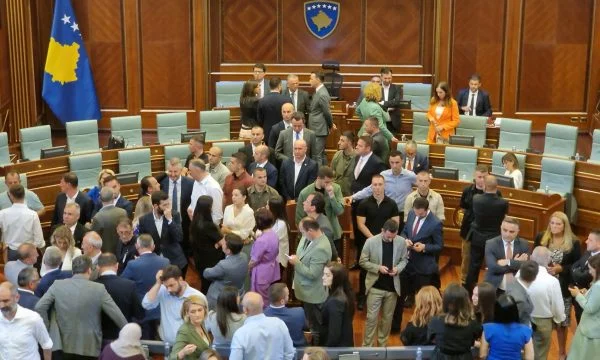
(2 years ago)The Kosovo Assembly during 2023 coincided with lack of quorum, charges and abuses that culminated in the unprecedented beatings between PDK deputies and some of the government cabinet ministers at the 13 July session. The ruling party accuses the opposition that throughout the year it has used extinguishing causes to harm the majority. But [...]
The Kosovo Assembly during 2023 coincided with lack of quorum, charges and abuses that culminated in the unprecedented beatings between PDK deputies and some of the government cabinet ministers at the 13 July session.
The ruling party accuses the opposition that throughout the year it has used extinguishing causes to harm the majority. But the opposite is said by the opposition, who estimate that the Vetevendosje Movement has not had the political will to co-operate with the opposition either on issues of national interest. The opposition also criticises power for failing to fulfill the legislative agenda, as well as preventing parliamentary supervision.
Kosovo Assembly Work Monitor Violet Hajoll says of Kosova Preis that the legislature during 2023 has adopted only 71 laws, or only 25 percent of the 2023 legislative agenda. It stresses that many sessions have failed because of quorum, while considering that the Assembly has failed in terms of parliamentary supervision of the government.
“This year is slightly weaker than that of last year's Kosovo Parliament, as there are fewer laws passed compared to last year where over 100 laws were passed, and this time we have about 60 laws that have been passed in the Assembly. The Assembly in general has been characterised by many phenomena, there has been the use of non-parliamentarians among MPs who are involved in violence during July. In addition, there have been major shortage of MPs, so many hearings have failed as a result of lack of quorum.
Then the supervision has not been on the level, there has been little MP supervision activities against government representatives. There have been some phenomena where the government itself has blocked the overseer role of the Parliament. We have seen when the prime minister has refused to answer the opposition parliamentary questions, which has been an unprecedented case in the Parliament... we have had a huge lack of political consensus between position and opposition to international agreements. For eight months during the year, international agreements on the part of the Parliament have been unable to be adopted due to the lack of this consensus”, she says.
On the other hand, the head of the Vetevendosje Movement Parliamentary Group, Mimoza Kusari-Lila, says the Parliamentary Group has had a good performance this year, but in certain phases there has been impasses, which, according to her, occurred when there were blockades by opposition parties.
It argues for not adopting the Civil Code even this year, until it vows that next year there will be an added dynamic of work to fulfill electoral promises.
“What has characterised the Assembly in three years can be said to function with stages of added dynamics or impasses. This has been a constant character. The seizures came when there were blockades or differences between position and opposition... We have also tried to keep communication and, of course, discussion on the level of parliamentaryism, despite the fact that difficulties have been obvious. You mentioned the beating, which has been related to a cause the opposition has tried to push through the publication of my wiretapping talks with the former Serbian List representative in the Assembly.
As a major investment has been made, the cause again was not sustainable for any action or outcome they wanted. In the end, we're stuck with their flight by not voting or international agreements...21:14 We have remained committed to meeting the legislative agenda and electoral programme that we have been competing with.
As far as the civil code is concerned, it hasn't come from the government yet. This has been due to a slightly broader discussion and reaching consensus that goes beyond the position for his vote 22:12. Next year should be the year with the biggest dynamic because we've taken office in our electoral promises and those obligations are a contract with citizens who have given mass confidence to LVV. We consider that we need a busy activity in legislative and executive activity so that as much as we can get closer to the programme we have won the” election, Kusari-Lila points out.
But criticism of the majority in the country addresses PDK deputy Blerta Deliu-Codra, who says power is lagging in meeting the legislative agenda, while most of the laws adopted under it have gone with accelerated procedures.
As it claims, law enforcement has been weak, so some have been sent to the Constitutional Court, where it mentions the Law on the sovereign fund.
We don't have the political will of the majority to coordinate even on the matter that have had national interest. The legislative agenda has been met at an extremely poor level in relation to expectations that have been there since. You know the government has brought a very ambitious agenda and that at the start we had our dilemmas if this were to be fulfilled in the Parliament. What we have seen during this year are mainly violations of procedures, accelerated procedures in the adoption of laws, and lack or better say overcoming public debate within the Parliament to address matters of interest. Also a government's responsibility in relation to the Parliament to account for laws and lack of transparency, which has been closed.
The greatest ambition has been the inability for the government to respond to the Parliament's deputies. The arrogance of power to answer the deputies' issues, for the first time in democracy we have seen a democracy of roles, where ministers have chosen which MPs will answer to parliamentary questions”, Deliu-Kodra declares.
Meanwhile, LDK deputy Armend Zemaj says the legislative work in terms of content has been poor due to government interventions and majority in the Assembly.
He cites the impasse of several investigative commissions, which, according to him, has not allowed parliamentary supervision.
The context-side work “The work of the Assembly has been weak due to majority interventions. And also because of what we call the inability to manage with the Parliament, but also the legislative strategy... the failure of parliamentary supervision by blocking functional commissions, blocking with the arrogance of numbers opposition proposals, but also blocking the basic criticism of providing an alternative to better governance. This year has been the worst in recent years even because of its failure to fulfill the legislative agenda, arrogance not to report to MPs, and because of what we do not have without a quality of the laws that have come, because they have weak rules”, Zemaj says.
The Convention during 2023 has held a total of 78 sessions, which, due to poor planning and lack of deputies produced 27 follow-ups, while 13 extraordinary sessions and two solemn sessions were held.