2 minutes ago
25 Years From the Contact Group's Historic Declaration in London
Periskopi(2 years ago)
(2 years ago)The massacre in Recak eventually ruled out the possibility of a peace agreement in Albanian-Serbian direct talks, as had been proposed for several years. Thereafter, diplomatic activity in Washington relations increased - NATO-Brussels-Brug Contact, where and everyone had come to reconciliation that the idea for organising a conference should have priority [...]
The massacre in Recak eventually ruled out the possibility of a peace agreement in Albanian-Serbian direct talks, as had been proposed for several years.
Thereafter, diplomatic activity in Washington relations increased - NATO-Brussels-Brug Contact, where and all had come to terms that the idea for organising a conference should have a priority over the policy of ultimatums.
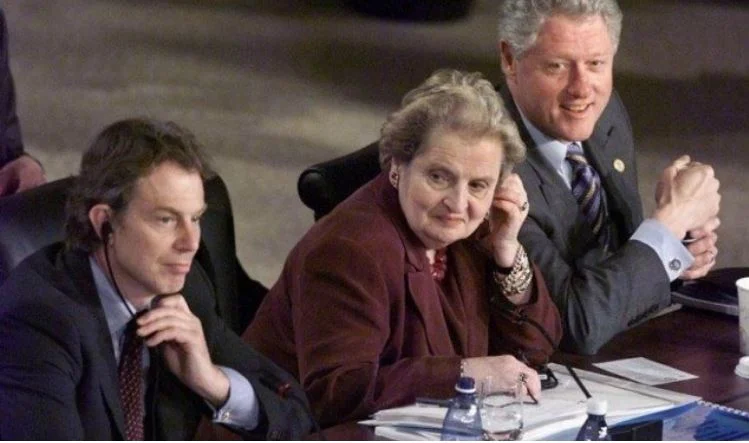
On January 29, 1999, the Contact Group, meeting in London at the Lancaster House Palace, near the Royal Palace “St. James”, released with the historic Declaration of Conference in Rambouillet, and adopted the unconventioned principles on which the Kalmari Agreement for Kosovo should be built.
The Council of January 30th NATO renewed the decision made in October of last year, thus setting a diplomatic framework for the Conference.
The spirit of the Contact Group Declaration left no doubt in its determination to find a solution and negotiate before spring. It's almost the ultimatum, will be expressed in his book Pascal Milo.
In Belgrade, the Contact Group statement is naturally not well received.
Official Albania through its ambassador to France, Luan Rama, had sought by Vedrin's special adviser, the Kosovo man in charge, for Albania to be granted observer status, which was rejected.
As the councillor Fushe's reasoning, he will declare that there will be no other observers from the Balkans, and that there will be no international conferences like that of Paris for Bosnia.
The determination for military intervention the Contact Group, supported by the UN Security Council, was already part of the game with NATO.
The American government in particular had started putting pressure on possible military action to stop the depression in Kosovo.
The threat of using force in proportion to Kosovo by the US had been in place since 1992.
In the case of the Kosovo conflict, which would be caused by Serbia's action, the US would be willing to use the military force against Serbs in Kosovo and Serbia itself, then wrote to George Bush, Slobodan Milosevic, a threat repeated by Bill Clinton's administration.
While Javier Solana, secretary general NATO had declared that the Alliance, in its efforts to support the international community to reach a negotiated agreement, had... re-enlisted military planning for a series of opportunities to halt violence and create conditions for negotiations. These include the use of land and air forces, especially a wide spectrum of options for the use of air force alone. These ensure that NATO could act quickly and effectively if the need appeared.
The UN Security Council had also adopted resolutions 1160 (1998), under which Belgrade should cease all war action, as well as 1199 (1998), based on the UN Charter chapter VII. A resolution, which is taken based on the UN Charter's VII chapter, is seen as a first step towards the most severe measures taken by the KS, which can go as far as military intervention.