7 minutes ago
Someone claims Russian-Serbian secret service got involved in Romania scandal
Periskopi(3 years ago)
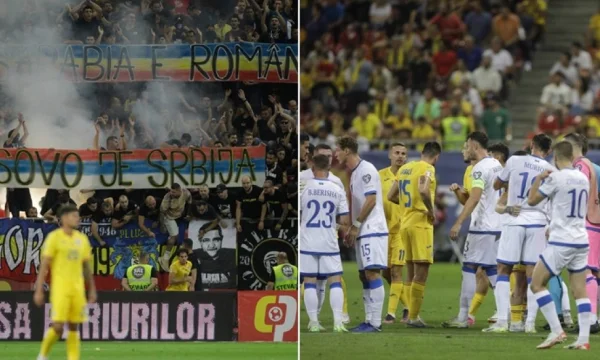
(3 years ago)The Russian-Serbian secret service is estimated to be involved in the behaviour of Romanian fans on September 12th, where the match took place between Kosovo's representative and Romania's, in which the baners were seen with the “Kosovo is Serbia” and “Babina is Romania”. From the Octopus Institute, they estimate that the main purpose of these [...]
The Russian-Serbian secret service is estimated to be involved in the behaviour of Romanian fans on September 12th, where the match took place between Kosovo's representative and Romania's, in which the baners were seen with the “Kosovo is Serbia” and “Babina is Romania”.
From the Octopus Institute, they estimate that the main goal of these banners has been to provoke the Kosovo representative's team, as they point out that U. EFA, it should be harsher in decision-making.
The senior researcher at the Octopus Institute, Taulant Elshani for Kosova Prees, said that during research they have recorded enough elements leading to allegations that the Russian-Serbian secret service is involved in the show and content of these residents.
<x) And we have enumerated the involvement of various elements of the secret services of Russia and Serbia, and we suspect there is deep involvement. Taking into account the association of the Romanian typhophons Ultras Tricoloriovic, rightist politician George Simion, as well as his party with Russian secret services. For George Simion, who's connected to the Ultras Tricoloriı, and cooperation with this group that has done hooligan action in some sports matches, has links to the Russian secret service. So all of this has made us look deeper and identify these links”, Elshani said.
Elshani argued that the way Romanian fans acted in this match has been very similar to the behaviour of Serbian fans.
“And Besssarabia is Romania, so it's very significant in this, and it should be stressed that Besssarabia historically is also part of today's Ukraine. So, and the provocations are probably selected and shot”, Elshani said.
“Skenography and the way fans have been brought to the Romanian-Kosovo match on 12 September is very similar to the conduct of Serbian hooligans through Serbian football stadiums. And we know that Serbian fans and hooligans are largely controlled by Serbian secret services. Even in this case, we have strong doubts that there is a significant, significant infiltrate of Russian secret services”.
Meanwhile, Elshani estimates that the purpose of these inscriptions has been to provoke the Kosovo representative's team until she adds that U. EFA has had to be tougher than Romanian fans' actions.
“The main goal of these banners has certainly been to provoke the Kosovo representative's team to then cause incidents in the field and to be followed mainly by damage to Kosovo's image in the world... UEFA had to be harsher, now only an investigative procedure was opened, and see what decision it will make. How it could be harsher U n EFA? A punishment and loss at the table of Romania's national team”, Elshani stressed.
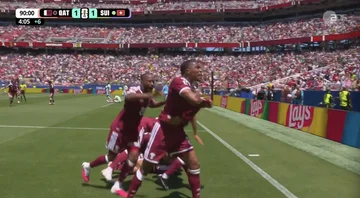
Otherwise, the match between Kosovo and Romania, which was held on 12 September, was valid for qualifications at the European Championship “German 2024”.