10 minutes ago
Polishing political parties “threatens to divide society”
Periskopi(3 years ago)
(3 years ago)Vulnerable “”, <x2-catastrophe” and unacceptable “” is what happened in the Kosovo Assembly on Thursday, some citizens surveyed say. As the plenary session was held, in the morning of July 13th, in the Kosovo Assembly began clashes between power and opposition, which escalated into physical clashes between some members of the Government of Kosovo [...]
Vulnerable “”, <x2-catastrophe” and unacceptable “” is what happened in the Kosovo Assembly on Thursday, some citizens surveyed say.
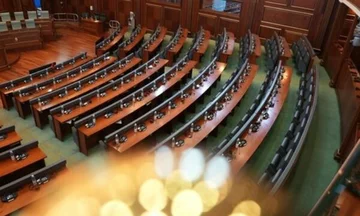
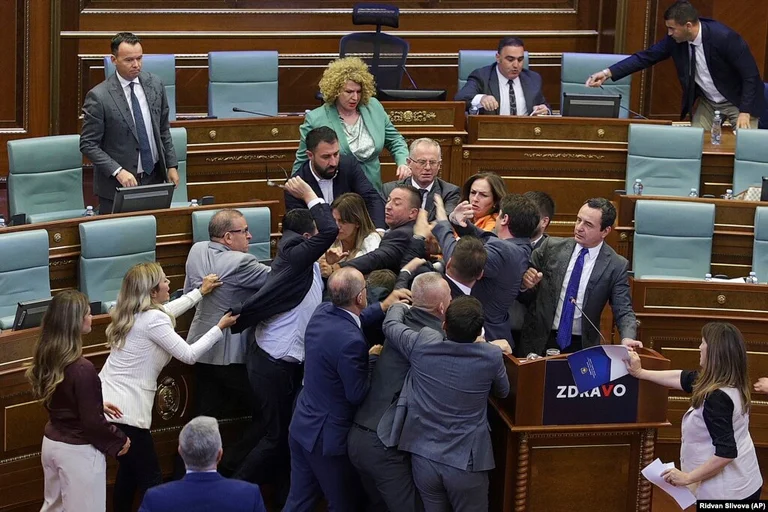
While the plenary session was held, in the morning of July 13th, in the Kosovo Parliament began clashes between power and opposition, which escalated into physical clashes between some members of the Government of Kosovo and elected deputies of the ruling party, Vetevendosje (LVV), on the one hand, as well as some deputies of the biggest opposition subject, the Democratic Party of Kosovo (PDK), on the other side.
Representatives of both political parties have blamed the other side for starting the clash, but have called for political objections not to scale political hostility.
Political process recognition, Arton Demhayan, from the non-governmental organisation “Arise”, estimates that there are already signals that these disputes have overtones of political hostility, and that they send extremely negative and divisive signals to the opinion.
Match, unacceptable “”
Burim Ratkozer, a citizen from Pristina, says the images of violence, which were broadcast by the Kosovo Assembly, were terrible, regardless of who was their initiator.
Whatever happened in the Assembly is completely unacceptable, at any time, in any government, any party that is in power or opposition. What we saw should never happen, in any way, and for no reason”, says Ratkozer.
Ilmi Bajraktari claims that the behaviour of MPs and executive members who clashed in the Kosovo Assembly is extremely disappointing.
It was a big disaster what happened. For a man who's educated, he sits there [in the Assembly], and there's these cases of language, punching, beating, swearing, leaving nothing without saying anything. This people should be conscious, and at other times stop giving these people a vote of”, Bajraktari says.
Fatmir Muccoli estimates the clash in the Assembly reflects not only political objections between the subjects represented there, both power and opposition, but open hostility.
They're hostile, they're not able to control themselves. That hate language, that hostility is painted in the people. For this reason, the people are sick, politicised in every segment”, Mucholi points out.
How did tensions climax?
Tensions in the Kosovo Assembly on 13 July rose following criticism following the publication of several wiretappings, including LVV parliamentary group chief Mimoza Kusari-Lila.
She has acknowledged that she has held a conversation with Serbian List Deputy Chairman Milan Radojic, who is on the US blacklist, and is wanted by Kosovo judicial authorities.
The conflict began until Kosovo Prime Minister Albin Kurti was addressing the Parliament's deputies.
MP PDK, Mergim Lushtaku, approached the speaker and threw water at Kurt, and his deputy, Besnik Bistim.
In defense of both came Finance Minister Iron Murati, who Lushtaku then physically pushed. Bislimi struck with his water bottle MP Lushtaku, who later suffered physical clashes with Justice Minister Albulen Haxhiu.
All this followed in exchange of shocks and insults from MPs appointed by both sides.
Kosovo police, called by Parliament Speaker Glauk Konjufca, and the prime minister's close defence, intervened to stop the clashes.
“
From the ruling party, LVV, and in opposition, The PDK whose deputies were involved in physical clashes estimate that further escalation must be avoided.
LVV MP Adnan Rrustemi says Kosovo's political scene should avoid slipping towards hostility among political subjects.
I don't think Kosovo's political scene should be hostile. Especially not for topics, which connect with political dialogue with Serbia, with the extension of sovereignty and implementation of the Constitution in the country's north. We can have differences and clashes on domestic issues, and that is legitimate. Even when debates reach the ends of the word but not physical violence”, Rrustemi points out.
However, he blames The PDK for the rise of tensions in the Parliament, and for the initial physical clash.
Albin Kurti, now prime minister of Kosovo, attacked with pepper spray Isa Mustafen, who in 2015 was Kosovo prime minister.
“
MP PDK, Xhavit Haliti, says that even the LVV, but also the party he belongs to, want to be acquitted of fighting in the Parliament.
He estimates that controversy, with overtones of hostility, has long been accumulated from both sides, power and opposition. But he does believe that there has never been an expected reaction to the level of physical conflict.
I want to believe in the awareness of both sides, but also of individuals in this case, not to repeat such events in the Kosovo Parliament, because it is not the problem that we individually or personally hurt each other, or that we want to damage it. It's not about who benefits from us, the opposition or the power. The point is that the situation is losing Kosovo”, Haliti stresses.
Danger From Civil Conflict
Artan Demhay from the “Arise” says the violence shown at the Assembly session on 13 July has spread the extreme polarisation of the ruling and opposition parties.
This polarisation, according to him, is impressive, and fed by political parties.
Demhasaj estimates there is great danger for this polarisation to turn into its polarisation of society in Kosovo.
“We have divided societies, on the part that support opposition parties and those supporting the ruling party. This extreme polarization of the parties in the Parliament could be at risk of appearing among citizens. We always have to keep in mind that there is great danger, that all of this will then become a civil conflict within Kosovo”, Demhasaj says.
He adds that already the signals sent to everyday by political parties, but even from citizens' clashes through social networks, signal the risk of entering a phase where parties are divided into trays that plunge each other into hostility.
To avoid further escalation, according to him, both sides, power and opposition must be engaged.
We see how quickly a situation can get out of control, like the situation [on July 13th] in the Assembly. Therefore, I think the ruling party has greater responsibility to maintain political stability, but also society. But even opposition parties, which are represented in the Assembly, must play their role, not to escalate this political polarization, even in the polarization of society, which could lead to a civil conflict in our society”, points out Demhaya.
Apologise to each other?
VV deputy Rrustemi estimates it is not in the interest of power to escalate the situation with opposition parties.
I wish the reports did not go to escalation, and in the direction of conflict. Yes, we are determined to fulfill our vows and promises. We are determined to empower the rule of law in Kosovo, to strengthen the fight against corruption. We are determined to rule straight and honest. If this presents an unbearable obstacle to any opposition MP, we cannot remove this problem”, says Rrustemi.
Haliti from the PDK expresses the opinion that both sides should be responsible and not allow slides towards hostility. But for such a thing, he holds that mutual will be required.
It would be on the way to meet each other and who could even apologize to each other. But I had not even ruled out political responsibility [to individuals], in each version, in the camps of both sides, which might in the future be viewed as prodigal for situations that might arise in the future”, Haliti says.
He adds that he hopes events, like the July 13th one in the Assembly, will not be repeated and the Assembly sessions and work will continue.
Violence shown in the Kosovo Assembly has been condemned by opposition party leaders, the Democratic League of Kosovo (LDK) and the Alliance for the Future of Kosovo (AAK).
LDK leader Lumir Abdixhiku has written on his website, on the social Facebook network, that violence should be rejected as an access tool. He described this event as the dark “pisod of parliamentary history in the country”.
Meanwhile, AAK head Ramush Haradinaj, through a Facebook text, has said that violence spread in the Kosovo Assembly “is alarming that the situation can escalate, not only in the Kosovo Assembly, but also outside of it”.
Regarding the clash in the Parliament, Pristina's Constitutional Prosecutor has already announced that “has initiated investigations into the criminal act”, as well as authorised the Kosovo Police for “taking all necessary investigative actions, including the taking of statements of the parties involved” in this case. / REL/