24 minutes ago
Civil society accuses power, opposition of having party interests for the Election Law
Periskopi(3 years ago)
(3 years ago)Civil society has criticised the Kosovo General Election Law, which brought together the government and opposition for approval. According to the Kosovar Institute for Democracy and the FOL Movement, this change will not contribute to a more fair and qualitative representation in the Parliament, but will serve as an inner race that could increase [...]
Civil society has criticised the Kosovo General Election Law, which brought together the government and opposition for approval. According to the Kosovar Institute for Democracy and the FOL Movement, this change will not contribute to a more fair and qualitative representation in the Parliament, but will serve as an intraparty race that can boost the potential of manipulation of voters by commissioners.
The General Election Bill has been the reason for both power and opposition to agree as rarely. With full consensus, political parties have said yes to this bill, which, according to them, will improve and advance the election process.
The MP vote has also welcomed US Ambassador to Kosovo Jeff Havenier, who has said that “these reforms further harmonise Kosovo with EU standards and strengthen democratic rates”.
However, a series of criticisms for the bill in question have had Kosovo's nongovernmental organisations. They have accused political parties, who for narrow party interests, have become together to change it only in a non-commetic way, the law on general elections.
The Kosovo Institute for Democracy (IKD) and the FOL Movement have estimated that adopting the law by accelerated procedure is a negative phenomenon that harms parliamentary life and democracy itself in Kosovo.
In an interview for Dukaagjini portal, Eugen Cakoli from IKD has said this law is more a cosmetic address of some election law shortcomings, according to him, responding to party interests of political subjects.
In its content, we estimate that this law is more of a cosmetic address of some of the bills of the law for general elections based on EU recommendations. And on the other hand is addressing party interests that have parliamentary political subjects in particular with those issues that have made it difficult for them to say getting mandates or some of the abuses that have been more obvious during the election processes in Kosovo”, he has stated.
Also, Cakolli has said changes in the Law on Elections are short-terms that could violate the integrity of the elections and that, according to him, new changes may be needed in the future.
He has also expressed concern that expanding the voting list from five to ten candidates would bring negative effects, increasing counting time and risk of counting abuses.
The demands of civil society have absolutely not been met, we as a civil society have demanded that part of the discussions be the content issues of the electoral system. It means not only these technical addresses, but also to discuss the issue of thresholds, zones, lists, the manner of electing the president, and many other questions”, it has been expressed.
He has stressed that civil society had demanded that discussions address the content issues of the electoral system, not just technical addresses.
According to him, the IKD has specifically submitted recommendations to the Parliament's deputies that the integrity of candidates and their judicial adaptation should not be limited to effective prison. He has said he is required that persons convicted of criminal corruption not be allowed participation in the upcoming elections.
“We have demanded that the issue of the candidate's integrity or legal eligibility of candidates not be limited to effective prison only because in recent years over 80 percent of the cases of criminal corruption have been released by who or fines, and all of them will be allowed to participate in the upcoming elections whenever the same are held, making us MP or anmumbler, or even mayors who have been convicted of misuse of official office”, Cacolkali said.
While, from the FOL Movement, a nongovernmental organisation, there has also been criticism over the adoption of the General Election Law. According to them, the law is not subject to sufficient consultations and discussions with the general public, not respecting the optimum deadlines defined in the Parliament's regulation.
In terms of expanding the list of voting from five to ten, the FOL Movement has estimated that this change will not contribute to the fair and qualitative representation in the Assembly, but will serve as an in-party race that could increase the potential of manipulation of the voters' will on the part of commissioners.
For Dukagjini portal, Viona Bunjak from this organisation has voiced concern that voters will have the opportunity to score less than 10 candidates, creating major opportunities for manipulation.
“This change is more about shifting intra-party clashes and competition to voters than it actually contributes to more fair or quality representation in the Assembly. This change will increase the potential of manipulation of civic will on the part of commissioners, especially in cases where voters will score less than 10 candidates”, it has stated.
In terms of the candidate's judicial adaptability, she has stressed that this change is one of the most damaging aspects of the law. After Bulnjak has said that the right to run would not only have people sentenced to effective prison terms for one or more years but also those who have been sentenced on parole, fines, or less than a year in effective prison. This, according to her, violates the integrity and image of the Parliament.
Even according to the FOL Movement, the Law for General Elections in Kosovo will bring regregations to the upcoming elections, making it difficult to form a productive government. Bulnjak also doubts that this law will have many problems in its implementation.
Some of the changes in the Law for Elections, which civil society opposes, are:
Candidates' Legal Adaptability, according to civil society “is one of the most harmful changes under the bill, which seriously violates electoral integrity”.
With this change, fair running will not only have those who are sentenced to effective prison terms for one or more years, at the same time as the criteria for running with him for losing the mandate. This enables candidates who have been sentenced to parole sentences, fines or less than a year's effective imprisonment to be part of the election race.
Another difference is the possibility of dismissing the CEC leader or members with proposals of 2/3 CEC members, for cases of status damage or the institution's integrity.
Increase in preferential vote in 10 candidatesAs it was in the 2007 elections, there is another proposed change under the bill. So, out of five candidates with the new law, citizens will have the opportunity to vote 10.
Counting of candidates' votes at Community Counting Centre. This change allows the ballot boxes to open twice for counting. As a result of irregularities and problems with the counting of votes of political subject candidates is the centralisation of their vote counting process through each municipality.
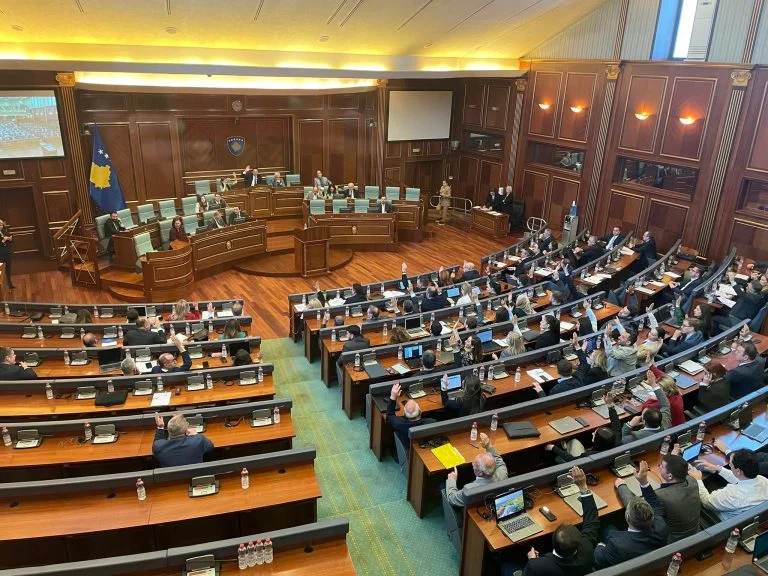
Despite the criticism, the Kosovo Assembly on Thursday, June 8th, with 79 votes -- three against and without any abstention -- approved the General Election Bill.