11 minutes ago
BBC: US punishes Kosovo after violent riots
Periskopi(3 years ago)
(3 years ago)British media, BBC, has reported extensively on recent developments in northern Kosovo. The BBC writes that the US has announced measures against Kosovo, following ignoring its advice to avoid increasing tensions in the Serb majority northern area. The BBC reports that the US has criticised Kosovo's decision to deploy “tools [...]
The BBC reports that the US has criticised Kosovo's decision to deploy “with violent tools”, Albanian mayors of municipalities in northern Kosovo.
The British media recall that for this reason, Kosovo has been excluded from participating in a major and ongoing US-led military exercise in Europe.
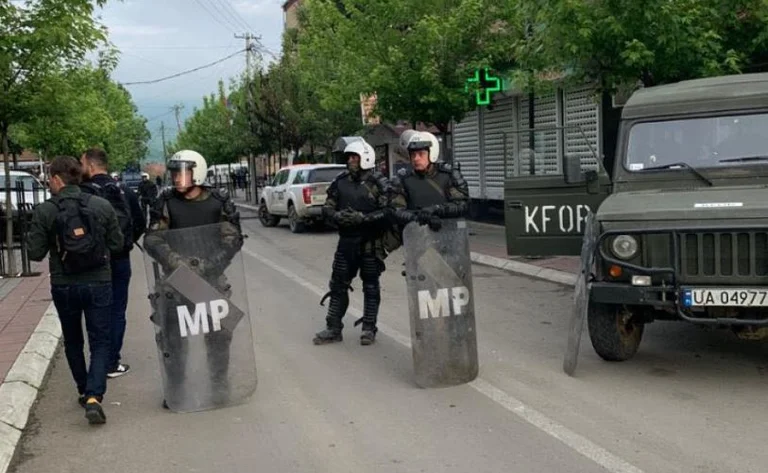
The BBC recalls that NATO police and troops clashed Monday with Serb protesters in Zvecan, northern Kosovo.
“Protesters had tried to get a municipal building amid riots for the deployment of ethnic Albanian mayors, in areas where Serbs make up the majority of the population.
NATO will send 700 additional troops to Kosovo after saying 30 of its peacekeepers and 52 protesters were injured in the clashes in Zvecan.
The BBC pays attention that the crisis dates back to April, when ethnic Serbs boycotted local elections in northern Kosovo, allowing ethnic Albanians to take control of municipalities with a turnout of less than 4%.
Like the US, the European Union has accused Kosovo authorities of destabilizing the situation in northern Kosovo and has warned measures against any action that could fuel ethnic tensions there.
Kosovo declared independence from Serbia in February 2008, after years of strained relations between its Serb and Albanian majority.
It has been recognised by the US and key EU countries. But Serbia, backed by its powerful ally Russia, refuses to do so like most ethnic Serbs within Kosovo.
While ethnic Albanians make up more than 90% of the population in Kosovo as a whole, Serbs make up the majority of the population in the northern region.
The BBC reports that US Ambassador to Pristina Jeffrey Havenier said the US “predicted the consequences of the” decision on the violent deployment of ethnic Albanian leaders in the four Serb majority municipalities.
A strong Kosovo ally said he had “strongly outlined” Prime Minister Albin Kurti to change his course of action, but the advice was ignored.
As a result, Kosovo's participation in the NATO exercise, Dfender Europe 23, has been cancelled.
 Hovenier said the US was reviewing other measures and currently “has no enthusiasm” to help Kosovo in its efforts to gain broader international recognition or progress towards EU and NATO membership.
Leaders of Serbia and Kosovo have exchanged accusations of violent scenes.
Serbia's President Aleksandar Vuciq said Kosovo Prime Minister Albin Kurti is the only “responsibility for the riots.
In response, Kurti claimed protesters in Zvecan were “a group of extremists under official Belgrade”.
Chief NATO, Jens Stoltenberg, said violence “should be halted”.
He strongly condemned the unprotested <x0 attacks against KFOR troops” referring to the NATO peacekeeping force in Kosovo.
But ethnic Serbs in northern Kosovo have criticised KFOR for failing to prevent Kosovo's armed police from breaking into municipal buildings and removing Serbian flags.
Tuesday's NATO announcement tells of significant increases in the numbers of KFOR members. 700 additional troops will join those 3,800 currently in office in Kosovo.
An additional reserve battalion is on alert and will be ready to deploy within seven days if required.
KFOR's mission is to ensure the security and freedom of movement of all in Kosovo, regardless of their ethnic affiliation.
Former boss of NATO, Lord Robertson, has accused Serbia of inciting tension in Kosovo.
“Ide that we will completely withdraw from Kosovo cannot happen until Serbia begins to accept reality,” he told BBC Radio 4 World Tonight programme after returning from a visit to Kosovo.
Noting “for rescue warning” by Americans for Kosovo authorities, he said a “scale of sound reason and a degree of cold diplomacy should have been the agenda”.
“I think Kosovo authorities should have treated him much better,” he said. The fact that their close friends, like Americans, are giving them very sharp warnings, should make them reconsider what they are doing. ”
He rebuked Kosovo and Serbia, saying the two sides should sit carefully and think about what future they want for the people of both countries”. /rtk