20 minutes ago
Hope and scepticism for “Declaration” for the missing
Periskopi(3 years ago)
(3 years ago)With doubts and many unknowns this way they see family members of missing persons during the war in Kosovo the pledges of Kosovo and Serbia leaders made through the basic agreement towards normalising relations between the two countries. Serbia, never and in any process, has initiated the issue of missing persons as humanitarian issues and [...]
Serbia, never and in any process, has initiated the issue of missing persons as humanitarian and priority issues. He has always seen it as a political process. Whenever he had to, he used it politically”, told Free Europe Radio Ahmet Gajchev of Obiliki.
He has had seven missing family members and for three of them still knows nothing.
The fact that it is not set as a priority but is placed in a country with energy or similar means that it is something less important”, says Silvana Marinkovic of Gracanica, who has her husband missing.
About 25 years ago, the war that started Serbia's then regime in Kosovo has ended with over 13,000 people killed and over 6,000 missing.
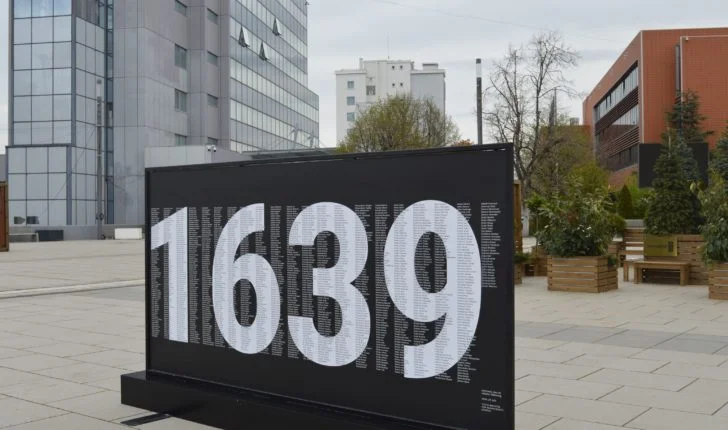
Thousands of mortar remains have been found over the years in mass cemetery in Kosovo and Serbia, but are not yet known for the fate of some 1,600 people missing at the time.
The issue of the missing is mentioned in Article 6 of the basic Agreement, which Kosovo and Serbia have agreed to in February of this year. It says that the <x0pades agree to deepen future co-operation” on the matter.
At Anex's fourth point for its implementation, for which Kosovo and Serbia agreed on March 18th in Ohrid it is said that the “pals agree to adopt the Declaration of Missing Persons, as negotiated under the dialogue mediated by the European Union, as urgent matter”.
Family of the dead say that no one has clarified and detailed what the Declaration mentioned means.
According to the Fund for Humanitarian Law, it should have a implementation plan.
What's the Declaration on Missing Persons?
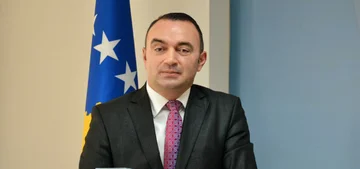
Andin Hoti, chairman of the Government Commission for Missing Persons in Kosovo, who has been part of the Kosovo delegation in negotiations on achieving reconciliation for the Annex implementation of the basic Agreement, says that for such a statement, now more than a year and a half, Kosovo and Serbia are negotiating under dialogue to normalise relations, which the EU is mediating.
But, according to him, Serbia has so far rejected the adoption of a Declaration on the Missing, changing and removing paragraphs that the Kosovo side has asked for.
In the Declaration, first of all, it's that missing persons as we've constantly asked them not to be just missing persons, because they're not extinct from nature, but to be called forcibly extinct persons. This is the only term based on the UN International Convention that explains what a forcibly disappeared person means, how one person can be eliminated by force and who is responsible for these extinctions by force, says Hoti.
According to him, that makes the state of Serbia responsible for war crimes in Kosovo.
He adds that the Declaration should include the approach of parties to all written, audio-visual or whatever in state archives of both countries, including classified ones.
Hoti believes the Declaration of Missing Persons should be signed within this month of April.
On the other hand, the chairman of the Commission for Missing Persons of the Government of Serbia, Velko Ordreovic, does not want to comment on the Declaration, saying that the text must first be accepted by the chief negotiators of both countries: Kosovo's loyalty Bislimi and Serbia's Petar Petkov.
He hopes an agreement on this will be reached at the upcoming meeting of the chief negotiators, to be held on April 4th.
Asked whether there was any movement of views regarding the term “persons missing by force”, Oldrovic says the work of the Commission's working groups is: search for missing persons, then collect and verify information, perform exhumation and identification, not “to try or name possible war crimes”.
He underlines that this humanitarian issue would have to be resolved at the highest political level.
We have a lot of things that we should act urgently, when it comes to verifying the information and location we have, both for the Serbs and Albanians, they're all gone. This is our mission. In fact, it has been a process blocked in Brussels for two years. I hope it will be possible for the working groups to collect urgently”, Ordreovic says of Radio Free Europe.
Family Disbelief in International Pressure
Representatives of family members of missing persons estimate that dealing with a humanitarian issue, such as dawning the fate of missing persons, in a political agreement, leaves little room for optimism.
Ahmet Gajchev, at the same time chairman of the Co-ordination Council of Associations of Families of Undiscovered Persons in Kosovo, says Serbian authorities have never had the political will to resolve the issue of the missing.
According to him, these authorities are put in motion only under strong international pressure. If the pressure is missing, he says, the issue of the missing will not be resolved either.
If the European Union, the states of the European Union that are democratic, neglect, postpone or hide the process of missing persons, then I don't know how to name this”, says Gajchev.
Neither Silvana Marinkovic, of the Association of Familys of Kidnapped and Ungenerated in Kosovo, expects the European Union to pressure the parties on the missing -- and especially those she says have been kidnapped after the entry of NATO forces and the United Nations administration to Kosovo in 1999.
The biggest number of kidnapped people is in that period. If this were resolved, they [the authorities back then] would be responsible in a way to testify to all that has happened”, Marinkovic says.
Fund for Humanitarian Law: The statement “said”, if there is no implementation plan
Vows for clarifying the fate of missing persons from both sides Kosovo and Serbia have not been absent in the past, says Bekim Blakaj from the Fund for Humanitarian Law in Kosovo. But, he adds, results in practice have been missing.
In the current case, as Blakaj says, if the Declaration for Missing Persons is approved by Kosovo and Serbia, but is not forwarded by agreement on a implementation plan, it will remain the dry “” and without optimism that there may be positive results in practice.
“If behind this [Declaration for Missing Persons] stands an agreement with concrete points, where the parties pledge to take concrete action, then we can hope there will be new developments and there will be a qualitative progress”, Blakaj tells Radio Free Europe.
Hoti: We Trust the EU and the US, but Not Serbia
Andin Hoti says that under the Annex for implementation of the basic agreement, the reconciliation of parties to adopt the Declaration of Missing Persons is specified the creation of the EU-led Joint Monitoring Committee, which will ensure and oversee the implementation of all provisions of the Agreement.
Also, he recalls, Anex says the parties can have negative direct consequences on the part of the EU, unless they apply all the Anex provisions.
I don't trust Serbia, I never trusted him, and I have enough reasons. We've seen for 23 years that the pressure is not enough. I am trusting the EU and trusting our friendly states, such as the United States of America, that they will condition Serbia to implement the Declaration. That means conditioning Serbia to hand over its archives, which not only is not handing over but it has reclassified for the next 30 years”, says Hoti.
Odreovic says he believes this time “will be different”, but does not offer more details.
So far, the issue of missing persons has been addressed several times within the dialogue in Brussels for normalising relations between Kosovo and Serbia.
In April 2022, the European Union has said that the parties are “very close to” an agreement to whitewash the fate of the missing and that all that's left to do is “harmonisation of the two words”.
The term “with violence” for the disappearance of persons during the war in Kosovo, in 1998/99, in which the Kosovo side has insisted and has been rejected by Serbia, has so far blocked reaching an agreement between the parties.