20 minutes ago
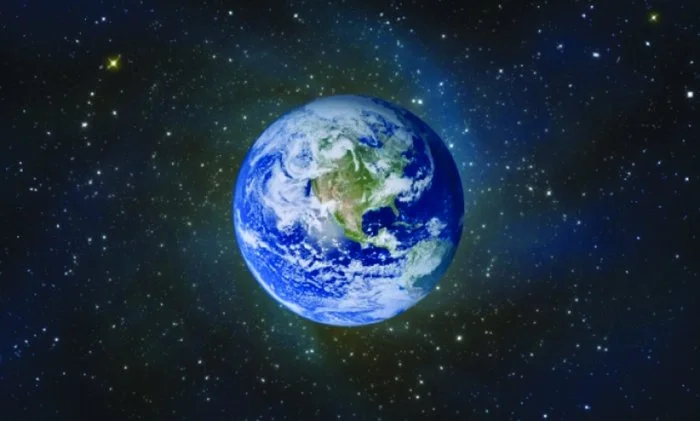
What's inside the core of the Earth?
Periskopi(3 years ago)
(3 years ago)Earth's internal core seems to hold a more internal secret. Geology texts include almost inevitably a cut diagram of the Earth that shows 4 gilded layers: a thin outer shell of rocks on which we live, known as crust; the cloak, where the rocks sail like [...]
Earth's internal core seems to hold a more internal secret. Geology texts include almost inevitably a cut diagram of the Earth that shows 4 layers that are skillfully denoted: a thin outer shell of rocks on which we live, known as crust; the cloak, where the rocks sail like an extremely viscosus fluid, promoting the movement of continents and the raising of mountains; a liquid outer nucleus of iron and eel that generates the magnetic field of the planet; and a very strong internal core.
Analyzing the intersection of seismic waves by large earthquakes, two Australian scientists say that there is a markedly different layer in the center of the earth. “Now we have confirmed the existence of Earth's innermost core” - says one of the scientists, Hrvoje Calcic, professor of geophysics at Australian National University in Canberra.
Dr. Calcic and Thanh- Son Pham, post-doctoral researcher, estimates that the earth's innermost core is about 1280km wide; while the entire core is about 2400km wide. Their findings were recently published in the magazine “Nature Communications”.
While the cut diagram appears to describe some clear divisions, the knowledge of the deep inside of the Earth is inevitably unclear. Since it is located some 400 miles [6400 km] in the center of the Earth, it is impossible for us to drill more than a few miles into the earth's crust. Most of what is known about what lies below us comes from seismic waves - earthquakes that travel through and around the planet.
Think of them as a giant Earth Sonogram. Two Harvard University seismologists, Miaki Ishii and Adam Dzievonski, first proposed the idea of Earth's innermost core in 2002, based on features of the speed of seismic waves passing through the core.
Scientists already knew that the speed of seismic waves traveling through this part of the earth differed depending on direction. Waves traveled faster as they traveled from pole to pole along the earth's axis and slower as they traveled along the axis. Geophysicists believe that the speed gap several percent faster along polar paths stems from extending iron crystals to the internal core.
But in a small region downtown, the slower waves were those traveling at a 45 degree angle with the axis instead of 90 degrees, Harvard seismologists said. The available data at the time was very few to convince everyone. The best measurements would be seismic waves that travel from the origin of an earthquake down to the depths of Earth and through its innermost nucleus.
However, their discovery generally requires a sysmometer located almost exactly on the other side of the earth, and this point is in the middle of the ocean. The new study took advantage of the fact that seismic waves also turn back. Thus, a sysmometer near the episode can reveal the reflection of the wave that travelled across the Earth and turned back, passing through the innermost nucleus twice. They can also be reflected back and forth for the second time, traveling 4 times through the innermost core.
In recent years a host of seismometers have been established, especially in the United States. The combination of signals from numerous instruments enabled the discovery of faint reflections resulting from earthquakes with magnitude 6 on the Riher or larger scale. “We analyzed 200 events and found that 16 of them had these jumping waves” - Dr. Calcic.
In the earthquake that struck the Solomon Islands in 2017, the waves that traveled 5 times through the inner core of the earth were discovered by sysmometers that were located accidentally across the planet. “Further studies of these waves can help us unscramble the internal structure of the Earth core” - says George Helfried of the Institute of Technology in Tokyo, Japan, who was not involved in this research.
There does not seem to be any significant difference in composition between the outside and the innermost parts of the inner core of the Earth, and the transition seems gradual and not too strong.
Vernon Cormier, professor of physics at the University of Connecticut, who was not involved in this study, says that this may indicate a change in earth's ancient past. The inside nucleus is very new, in terms of geology.
According to Cormier, estimates range from 600 million to 1 billion years. This is only part of the 4.5 billion-year history of the planet, and the structure of the solid core seems complex. In January of this year, several other scientists reported that the speed of the internal core's rotation is changing.
The reason people continue to study the core's internal structure is that they try to connect it to the Earth's magnetic field. They try to identify a change in Earth's magnetic field that may have occurred at the same time with the change in the crystallization of the inner nucleus” - points out Dr. Cormier. / “New York Times” World.al