9 minutes ago
ZKM provides details for the first open official meeting of the Institute for Research and Documentation of the Crimeans during the Kosovo War
Periskopi(3 years ago)
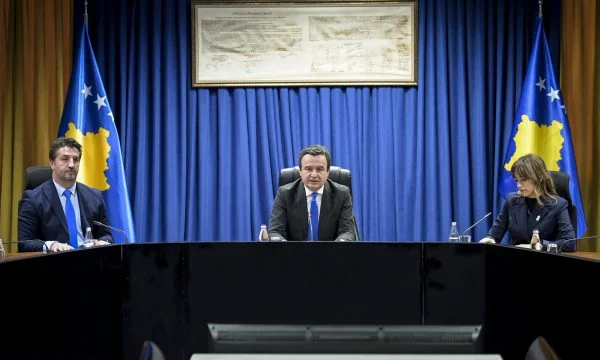
(3 years ago)Today, the first open official meeting of the Institute for Research and Documentation of the arch crimes during the war in Kosovo was held. After a long way to create a solid foundation, I am very happy to welcome you to the first open official meeting of the Institute for Exploration [...]
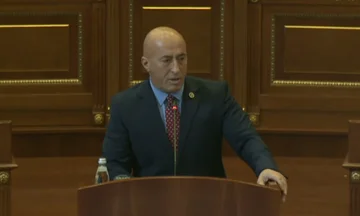
Today, the first open official meeting of the Institute for Research and Documentation of the arch crimes during the war in Kosovo was held.
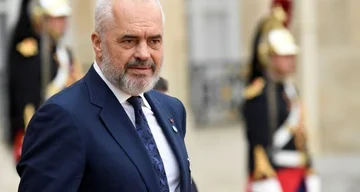
After a long way to create a solid foundation, I'm very happy to welcome you to the first open official meeting of the Institute for Research and Documentation of the Crimeans during the war in Kosovo. Serbian Prime Minister Kurti said during his speech, ZKM has announced.
We need to make sure that we do the best we can to address all that happened during the last war in Kosovo. We have more than 13,000 people killed during the last war, thousands raped, tortured, and imprisoned. ” he added.
He stressed that the Institute for the first time in post-war history envisions particular division of the damage caused by material rather than material and the needs of victims.
Kurt added that the purpose of all of us is shared: the creation of collective memory, which will not only serve us, but also all future generations to come after us.
History is filled with painful lessons, but perhaps the most important part to remember is that peace requires justice but also rehabilitation. None in Kosovo has happened, and war victims both deserve. ” said the prime minister.
In this case, the Director of the Institute for Research and Documentation of Crimes committed during the War, Attemi, indicated that the Institute symbolizes an important step in its support and effort to recognise and promote truth, to create preconditions for lasting peace in Kosovo and the region.
The main goal is close co-operation with all those who have an interest in documenting, researching and expanding knowledge about crimes committed during the war, where it stated that the Institute will work in the service of peace and justice, and will ensure that the crimes that have occurred in Kosovo are not passed without record, as duty of the Institute on Victims and Society.
Full word of Prime Minister Kurti:
The honoured Deputy Speaker of the Assembly of the Republic of Kosovo, Mrs. Saranda Bogujevci,
Dear Justice Minister Mrs. Haxhiu Albulen,
Honored Minister of Culture, Youth and Sports Hajrula Ceku,
Honored Director of the Institute for Research and Documentation of the Crimes Done during the War, Mr. Attem and Hetem,
Honored representatives of partner institutions and organizations,
Ladies and gentlemen,
honoured ones,
Welcome to this table of discussion invited by the Institute for Investigation and Documentation of crimes committed during the war.
As I was getting this word ready for today, I remembered May 2020 when we held the meeting that launched the team for the institute analysis. From that moment we've prepared the analysis, we've held meetings, we've discussed Narativa, we've operationalised strategies, and here we are today together.
After a long way to create a solid foundation, I am very happy to welcome you to the first open official meeting of the Institute for Investigative and Documentation of the Crimes during the Kosovo War. We already have the institute that will soon be functional, we have the appointed director, Dr. Attem and Hetem and we have a whole set of things ahead of us.
No one should and cannot claim that we will easily solve all the problems that have been caused for 24 years. It'll be difficult, very difficult. People are tired. Victims have lost confidence in the system. Generations of commitment are dying every day and are thus losing the primary memory of war.
This is a major threat that we are not allowed to happen. We have to make sure that we do the best we can to address all that happened during the last war in Kosovo. We have more than 13,000 people killed during the last war, thousands raped, tortured, and imprisoned.
We have experienced devastating damage that we have never measured. Even today, more than 24 years after the war, we do not have a figure that could tell us what the economic damage that war has done to our country.
And the situation is even worse in relation to the emotional and psychological damage that we haven't addressed in years. That's why we decided to start working with a team that's done exclusively with preparing the analysis which would be the best way to proceed with the establishment of the institute. And this has served us a lot.
Because the institute is not founded with decision and without operational strategy. The institute is not at the mercy of the donations that may come and may not come. The institute is founded by law, has its own budget line, has and will continue to have field experts, will be co-ordinating with other institutions in the region and international ones.
The Institute for the first time in the post-war history envisions special division of the damage caused by material and not material, and the needs of the victims, not just for crime. Even so, the Institute should have everyone's support if we want it to succeed alone.
We do not want for a moment, in no circumstances to dismiss all the good work that has been done so far by numerous initiatives. We want to take into account the work so far, so that many of you who are present have taken one step further and then a lot of steps together in the future. Let's see where the gaps are left and meet them.
We're lucky that among us we have very good field connoisseurs who, in addition to their personal and professional work, bring their international contacts to transitional justice.
In this case, I would like to thank my former advisor Furtuna Sheremet. Furtuna's work lies not only in material harm but also in emotional and psychological harm as well as in the needs of the victims. Right now, Furtuna is in The Hague, as part of Mr. Furtuna's defence team. Rexhep Selimi, but she has worked and continues to work hard in the face-to-face processes with the past, including especially the Institute for Chief Crimes during the war in Kosovo.
In the end, the purpose of all of us is shared: the creation of collective memory, which will not only serve us, but also all future generations to come after us. History is filled with painful lessons, but perhaps the most important part to keep in mind is that peace requires justice but also rehabilitation. None in Kosovo has happened, and war victims both deserve.
honoured ones,
We welcome today's discussion of future phases of the process of research and documentation of crimes committed during the war in Kosovo.
For this part, I hand over the word to the director of the Institute for Research and Documentation of the Crimes Done during the Kosovo War, Mr. Father and Hetem.
Thank you.