6 minutes ago
Serbia's elections Sunday not allowed in Kosovo
Periskopi(2 years ago)
(2 years ago)Just as the failure to hold Serbia's elections in Kosovo is not allowed by December 16th, nor is the use of Kosovo Serb license plates issued by parallel Serbian offices allowed, writes DW. December 15th was set as the last day of a deadline set by the Kosovo government, when Serbian citizens could register [...]
Just as the failure to hold Serbia's elections in Kosovo is not allowed by December 16th, nor is the use of Kosovo Serb license plates issued by parallel Serbian offices allowed, writes DW.
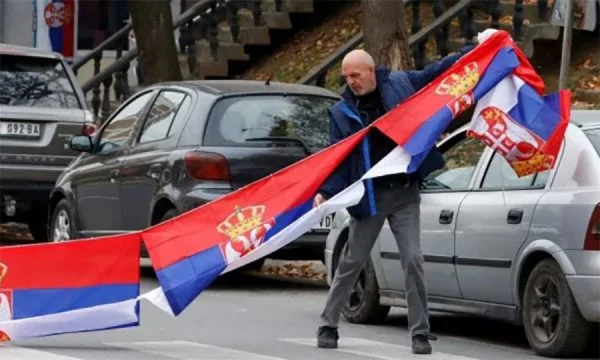
December 15th was set as the last day of a deadline set by the Kosovo government, when Serbian citizens could register their cars with signs of the Republic of Kosovo, RKS. From December 16th, cars bearing initial plates of Kosovo cities, plates issued by Serb parallel offices such as KM, PR, PZ, DE, UR, will be considered illegal by Kosovo authorities. Interior Ministry officials say that for drivers' illegal license carriers, after December 15th, fines will be followed first and then, if they are again on the street, cars will be confiscated.
“After December 15th, citizens who do not register their cars even after the decision specified by the Government of the Republic of Kosovo will be counted as owners of unregistered cars and their cars will not be allowed to circulate on the territory of the Republic of Kosovo, including border crossings as the legislation predicts at power”, MPB spokeswoman Noratosti has said.
The Kosovo government, originally set the date 01.12 for converting Serb license plates, but extended the deadline until 15 December, as long queues had been observed in front of centres for reregistering in northern Kosovo. According to Kosovo Interior Ministry data, from 1 November to 14 December, 3,405 Serbian citizens have converted their plates to RKS and municipalities with the largest number are North Mitrovica and Leposaviqi. Since last year there are a total of 4,210 converting tables at the RKS.
Kosovo government: Establishing Legality
According to the Government of Kosovo, the whole process aims to establish legitimacy in northern Kosovo, thus enabling the functioning of parallel Serb structures in Kosovo, though some of them still function. The Kosovo government's decision not to hold Serbia's elections on Kosovo territory is also seen as establishing legitimacy. On December 17th, parliamentary elections are held in Serbia, third in a row in just three and a half years.
Serbia addresses O SBE not Kosovo government
Serbia authorities previously urged O mission The SEU in Kosovo, but not official Pristina, to be included in the collection of Kosovo Serbs who have dual citizenship. Exactly why Serbian request was addressed The SEU, not Pristina, made the Kosovo government without any hesitation stop holding Serbia's elections in Kosovo.
Kosovo Deputy Prime Minister Besnik Bislimi, who is at the same time the chief negotiator in dialogue with Serbia, says the <x0->tension to organise elections of another state in Kosovo without a preliminary request, is not in the spirit of dialogue and without a formal direct request from Serbia, then” decision cannot be made.
There are no elections planned this year in our country. If the authorities of other states prefer to organise elections in Kosovo for their diaspora, then, they must formally ask our authorities for a positive decision and support. Attempting to organise elections without a positive request or decision is not in the spirit of dialogue and do not contribute to confidence building”, Besnik Bislimi has said.
EU with criticism against Kosovo
European Union officials had considered that Pristina's decision on “does not allow Serbia's elections in Kosovo to be held, is not in line with the spirit of dialogue and confidence building between Kosovo and Serbia. The EU has recommended that Kosovo resume practices to allow Kosovo Serbs to vote within the country during parliamentary elections. “As a result, Serbian voters will have to travel to southern Serbia's cities to vote in the upcoming December 17th parliamentary elections. This decision, not in accordance with the spirit of Dialogue, the principle of protecting the rights of communities not majority, and building confidence between Kosovo and Serbia”, European Commission spokesman Peter Stano had said. Kosovo Serbs, who have two citizenships, will be able to vote for elections in Serbia even from Kosovo, but only through mail, or the Serbian Liaison Office in Kosovo.
Serbia's Republican Election Commission announced that on December 17th, Serbs from Kosovo can exercise the right to vote even in the border cities of Serbia, Vranje, Kursumli, Race and Tutin. In recent elections in Serbia, in April last year, more than 93 thousand citizens from Kosovo municipalities had voting rights. But now according to data from Serbia's State Administration and Local Self-Government Ministry, this time there are nearly 30,000 more voters, more than 120 thousand, respectively. In the past, Serbia's elections have also been held in Kosovo, which included the OSCE mission in garnering votes, which were then sent to Serbia for counting. This practice was allowed by Kosovo authorities earlier. The OSCE mission has indicated that, however, it remains ready to support vote collection, as it has in previous cases.
The last parliamentary elections Serbia has organised for the Serb community in Kosovo were those of June 21, 2020. These elections had been held since 2017, where voting stations for Serbs who were assisted by the OSCE were opened in Kosovo. But this time Kosovo Serbs who have dual states can vote for elections in Serbia, but only through the Serbian Liaison Office in Kosovo, or through mail. On 1 November, Serbia's President Aleksandar Vuciq announced holding new parliamentary elections on December 17th, these third consecutive elections in Serbia in only three and a half years. Keeping parliamentary elections in Serbia occurs at a time when the entire international community is making efforts to normalise Kosovo-Serbia relations through dialogue facilitated by the European Union. /DW/