3 minutes ago
Hasani: Resolution 1244 and Referage, among the red dots in the draft state of Association
Periskopi(3 years ago)
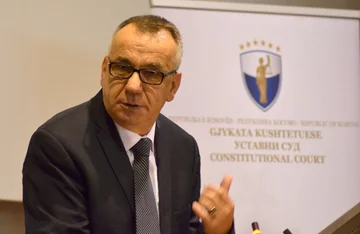
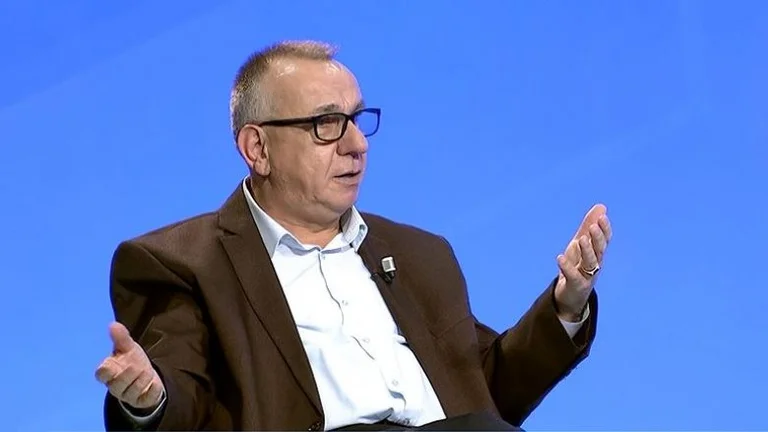
(3 years ago)The former head of the Kosovo Constitutional Court, Enver Hasani, has said that the draft state-proposed draft status for forming the Association of Serb majority municipalities in Kosovo creates political-territorial autonomy with stressed state competencies. In an interview for Radio Free Europe, he has said it does not mean the constitutional document becomes [...]
The former head of the Kosovo Constitutional Court, Enver Hasani, has said that the draft state-proposed draft status for forming the Association of Serb majority municipalities in Kosovo creates political-territorial autonomy with stressed state competencies.
In an interview for Radio Free Europe, he has said it does not mean that the document becomes constitutional only because it can be sent to the Constitutional Court.
He mentions that the drafts for the Association should be in line with the Constitutional Court's 2015 act, but the current draft did not receive it at all, excluding it from preambles.
Hasan has mentioned as the possibility of changing the trial of 2015, although he has clarified that something like this can be done only by relying on criteria outside the Constitution - political, sociological, moral.
Finally in the public, a draft status drafted by European officials is being circulated for establishing the Association of Serb majority municipalities in Kosovo? How do you evaluate this document?
Enver Hasani: This content of this statute is the direct derivative of the Brussels Agreement, an annex of Ohrid, respectively. It means, is dedicated to implementing political-territorial autonomy, which has stressed constitutional authorisations, state content. The part of the competencies, which concerns economic, cultural development, political representation, all are responsibility for the Republic of Kosovo and responsibility for the Constitutions, as in all other countries of the region, and now those competencies are usurping the Association. On this basis, this is entirely the new Constitution, it is about writing a second Kosovo Constitution, which applies only to Serbs.
If this document goes to the Constitutional Court, what will be the result?
Enver Hasani: The fact that it goes to the Constitutional Court doesn't mean it's constitutional, because, to be constitutional, in the statute it would have to be based on the act of 2015, not Resolution 1244, and besides the resolution, to be quoted in preambles, and later on the text, the European Charter, in a non-flightly, completely switchable manner. Those articles have autonomy with municipalities, local government, and not with economic-territorial policies that regulate the statute there. To be in accord with the Constitution, he would have to have the 2015 act of judgment. That act has been eliminated, it does not exist in the presupposed statute. Therefore, the court has no competence to make a assessment of the content, constitutionality of the statute of another entity, outside of what exists in the Constitution.
What exactly is the opposite of that draft, according to you?
Enver Hasani: End of story. From the preamble, which mentions Resolution 1244, which guarantees Serbia's territorial integrity, the Kosovo Constitution is mentioned in a non-stop. Under what laws is the statute determined? No mention. Take him and look at the European Charter. It's about private education. It is not about private education, but about Serbia's education in Kosovo, and why the provision of private agencies has been introduced is because Serbia refuses to accept that education and health that it finances and creates on Kosovo's territory is in the authority of the Republic of Kosovo, which it does not recognise. As a result, these two agencies have been commissioned, but diplomas, recent documents, have the stamp or style of the state of Serbia. This opposes Kosovo's sovereignty and independence
The draft mentions that diplomas will be issued in two languages.
Enver Hasani: From Serbia. There is no connection, language is guaranteed with the Constitution. This too is unconstitutional. The statue cannot assign which languages they are, they have assigned the Constitution.
The bill envisions that these health and educational institutions will be recognised as private, but will be licensed by Kosovo authorities.
Enver Hasani: That's all very exciting. They are private, and in the end, when those diplomas are used in Germany or other countries, they are diplomas of the state of Serbia.
According to the draft, what are the main dangers of this document?
Enver Hasani: The main danger is that this document does not create a third level, not a fourth of power, is parallel power, both horizontally and vertically. In a horizontal respect, this power that creates organs, the Assembly, the Executive Body and security issues, the appointment of policemen where Serb municipalities are, makes the document split, not the Constitution of Kosovo. In the vertical aspect, the association is presented as the representative of Serb municipalities, of Serbian autonomy in relation to central power and to economic operators, state institutions of neighbouring countries, foreign countries, this is presented. In property, for example, all properties are converted into association property at the moment it is established. Weiman, part of Trepca once was, anything that is not private in the territory of these municipalities, is carried into this association. Second. This is the safef-contained, closed regime, not open. And there is evidence of the way the dispute is resolved to interpret the statute, and Arbitrage is appointed. The interpretation of the statute and its implementation is no longer the Constitutional Court, all it has to interpret is taken only when it is formed, then it can assess the amendments, but not the content. This association is ethnic and even worse, it creates a super category of the ethnic community, which is the Serb community, which preserves privileges at the central level, according to the Kosovo Constitution, but also in relation to all communities, including Albanians, has additional rights, which abides in the way it defines, with this statute.
Why do you say it creates a parallel system?
Enver Hasani: The third level of power means that in vertical lines, central power controls it. It's called administrative control of legitimacy, then comes judicial control and constitutional control. That's the third power. In southern Tirol, this is the case in Finland, Catalonia, is the central - power control. It's administrative, legal, and constitutional. None of these control links exist. So it's a parallel power, it's a confrontational power, and at the end when there's problems, then it goes to Arbitraz. In Arbitrazh, Kosovo as a sovereign state has a representative so central power one is Serb, and the third is Europe's
Can you compare the structure of association between past agreements and this draft?
Enver Hasani: The structure resembles 2013, but in 2013 and 2015 it's not before Arbitrage. The second, the court has decided that the structure will take place according to an existing association. This structure is not made according to an existing association and content is problematic. The content is completely contrary to the 2015 act, and forms, reiterated, political-territorial autonomy with pronounced state competencies.
Who should send this document to the Constitutional Court?
Enver Hasani: Without question, the government sent him. But the other one is to proceed to the Constitutional Court, the other is to decide on its contents. The Constitutional Court, if it wants to assess whether it is in the spirit of the Constitution or not, must first change the act of 2015. With that bias, there is no Kosovo lawyer, nor beyond, who can reconcile that act of judgment with this statute. So, the court, if it wants to give permission to form, then it needs to change its bias, change its precedent in 2015, and decide differently. But that bias can only change it based on criteria outside the Constitution: political, sociological, moral.
How can the Constitutional Court change those conditions in 2015?
Enver Hasani: Very simple. The court changes its precedent, but not on the basis of arguments to the Constitution of the Republic of Kosovo and constitutional arguments. One case you know, a precedent, in 2015, has been changed, with the argument that we are no longer in 2009, when the Court was established and we continue with the new decision because that first generation of judges had other duties. These are moral arguments that have nothing to do with the Constitution.
“The constitution will be changed in the future”
How should it act, according to you, Kosovo?
Enver Hasani: I can say how it had to be done, what Kosovo should do belongs to those who brought it into this situation. Kosovo has had to not resist from the beginning, it has had to make the draft itself, a draft has been made by internationals, and this has been done to remove responsibility from itself, which is wrong.
The responsibility cannot be lifted. The Kosovo government has constitutional obligation and international obligation to form association. He had to make the Association himself, take the Constitutional Court's act, open public debate, if the Constitution should be changed, change.
Should It Be Changed? I think we have no solution, the Constitution will be changed in the future, to change sectoral laws, to issue a special law on the formation of this association and others, and to form solid, constitutional and judicial grounds. And then come face to face in dialogue.
You mentioned Arbitrazin. Can you take an example of when something might end up there?
Enver Hasani: Any disagreement, like the property issue. They should immediately form an management agency, as it was for privatisation, for the property of Serbian autonomy, the Association. Kosovo's agency has the list and resists not carrying the property, and the case immediately goes to Arbitrazh. Central records, or civilians, whatever they are, central power may not give it to him. There's other stuff in there. The statue appoints the Constitutional Court's competencies in several countries, appoints parties authorised to the Ministry of Local Power. It can't, what the law does, or the Constitution.
Then who should it be? It has been mentioned that small changes can be made to this document after receiving comments. If, hypothetically, they were to leave what was mentioned, the ministry's case, Arbitrazhi, could it then be more acceptable?
Enver Hasani: What is red mega light in that statute is three dimensions. First, Resolution 1244 must leave urgently. The second, Arbitragi and third, requires a separate chapter to specify administrative control of legitimacy, judicial control and the Constitutional Court. If Arbitragi is removed, then existing organs exercise their powers, administrative, legal, and constitutional. That's all that calms it down, fixs it and makes it an association. It doesn't bother, let autonomy be, so it has developed in both Tirol and Finland. The constitution has not initially seen it, later adjusted it to the Constitution. The courts have then played a role, made laws about them, and gradually stabilised them.
This means that each incoming draft for Association should have reference to the 2015 act?
Enver Hasani: Until it is in force, even now it is, the Constitutional Court's acts force everyone and are part of the standard that is interpreted. When the Constitutional Court is changed, it has to give reasons why it is changing its standard in 2015. Why is the association allowed today with all those powers, which are completely state-owned, and then they were illegal. He must reason for the public.