7 minutes ago
UN criticises Kosovo for low sentences on terrorism-related charges
Periskopi(3 years ago)
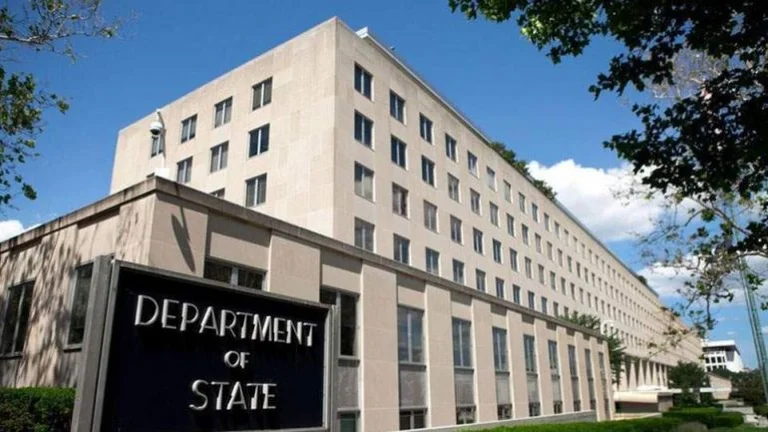
(3 years ago)The US State Department said that in Kosovo during 2022, justice institutions continued to issue low penalties for terrorism-related charges, and said there are early releases on those charges. In its report on terrorism for Kosovo, it was said in 2022, Pristina continued to [...]
The US State Department said that in Kosovo during 2022, justice institutions continued to issue low penalties for terrorism-related charges, and said there are early releases on those charges.
In its report on terrorism for the states, Kosovo reportedly in 2022, Pristina continued to repatriate its citizens from camps and detention centres in Syria.
It reported that the third May repatriation operation was conducted in co-operation with Albania and supported by the United States.
For now, Kosovo has repatriated over 120 citizens. It is estimated that 80 other citizens continue to be in the camps of displaced people or in detention centres, or in the battlefield in Syria. Low sentences for terrorism-related charges have continued”, said the UN report.
According to the US, Kosovo citizens within and outside the country, “are a potential target for recruiting from violent extremist organisations, with ethno-nationalist or religious orientation”.
“During 2022, Kosovo prosecuted a repatriated woman with US assistance. Even though this woman was sentenced to two years in prison because of joining the Islamic State group, Kosovo courts have condemned the repatriated to three to four years and half in prison for organising and participating in the terrorist activities of IS”, it was said in the report.
Also, the Kosovo report cites the establishment of the indictment against Ylber Bella for organisation and participation in the terrorist group. Bella was repatriated to Kosovo in May, in the joint effort with the US.
The UN report also mentioned the indictment case against four persons suspected of preparing terrorist acts against constitutional order. They allegedly had attempted to create organisational structures to carry out terrorist attacks in Kosovo by contacting a senior official of the Islamic State group.
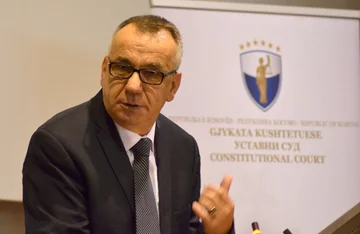
The UN said that in June, the Constitutional Court in Pristina acquitted four people -- two suspected of preparing attacks on nightclubs, churches and Kosovo forces, and two for other criminal acts. They were released for lack of evidence.
Under laws in Kosovo, various penalties are provided for terrorist acts and anti-religious order. Since 2015, participation in foreign wars and by law has also been prohibited in Kosovo, providing sentences of up to 15 years in prison.
The UN noted that Kosovo has legislation to fight even terrorist financing, but said there is a lack of a strategy to address terrorism-related threats.
“However, short sentences, early and conditional releases, as well as undaunting surveillance after release present security threats”, the report said.
As for terrorist incidents in 2022, The UN also cites the arrest of former Kosovo Serb police officer Dejan Pantic in December 2022, on charges of terrorism following the attack involving explosive devices against the local offices of the Central Election Commission and the staff of this commission in Northern Mitrovica.
His arrest had prompted local residents to establish barricades in northern Kosovo, blocking for weeks roads leading to the Jarinje and Brnjak border crossings, connecting Kosovo and Serbia.
Barricades were removed after Pantic's security measures were changed from custody to house arrest.
The report also cites the Kosovo government's condemnation of armed attacks on police in northern Kosovo, which it described as a terrorist act.
Kosovo prosecutors classified these incidents related to terrorist charges and cases against constitutional order”.
As for security aspect in northern Kosovo, inhabited by Serb majority, report The UN said “security issues and political instability in northern Kosovo continue to limit the ability of the Government of Kosovo to extend its authority to that region. Mission NATO in Kosovo, KFOR and the EU Mission for Sundiction of Law, E ULEX, have co-operated with the Kosovo Police to promote a safe environment and strengthen rule of law”.
The UN also mentions the US Embassy's assessment in Pristina that since the launch of Ukraine's Russian occupation in February last year, there has been an increase in dezinforms in Kosovo, and that those “are increasingly stimulating of violent extreme thinking and interethnic polarisation has contributed to increased interethnic tensions in northern Kosovo”.
In a report published in late November 2023, drafted by the Balkan Investigative Journalism Network (BIRN), Kosovo was said to be exposed to dezinforms and narrators coming from Russia and China, aimed at promoting an interethnic and interreligious struggle in Kosovo./ REL