25 minutes ago
Kosovo lists with Israel in wartime, Palestinians reconfirm friendly reports with Serbia
Periskopi(3 years ago)
(3 years ago)Israel is very grateful to Kosovo, the state with which it had recently established diplomatic relations that declared its full support for it, condemning Hamas' attack. Apart from the Jewish state of official Pristina is thus standing on the West side, while relations with Palestine seem irreformable. Palestine [...]
Israel is very grateful to Kosovo, the state with which it had recently established diplomatic relations that declared its full support for it, condemning Hamas' attack. Apart from the Jewish state of official Pristina is thus standing on the West side, while relations with Palestine seem irreformable. Palestine considers Kosovo part of Serbia, and the new Palestinian ambassador to Belgrade a few days ago confirmed to the Serbian prime minister that this stance will not change. This was Kosovo Foreign Affairs Minister Donika Grovalla himself realized last year when he met with Palestinian Foreign Minister Riyadh al-Maliki. In the “attempt to break the ice”, she was convinced of Palestine's strong bond with Serbia.
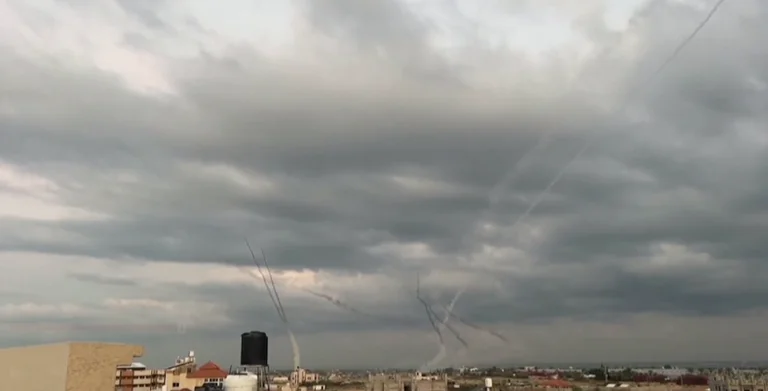
Israel has been involved in the war since Saturday morning after the militant group Hamas launched thousands of missiles across the border. Alarms were issued throughout the country, including in Jerusalem and Tel Aviv, and over 1,000 people were killed so far. Israel retaliated by conducting air strikes on targets at the Gaza Strip.
Kosovo reacted quickly. President Vjosa Osmani and Prime Minister Albin Kurti condemned the unexpected incubation, expressing solidarity with Israel, with whom the youngest state in the Balkans established diplomatic relations three years ago.
“Terrified by terrorist attacks and the killings of innocent civilians in Israel. We express our complete solidarity with President Isaac Herzeg, the people and the state of Israel in these dark hours. Our thoughts are with the families of the victims”, Osman wrote.
Later, Kurti: the Republic of Kosovo unequivocally condemns today's terrorist attacks against the state of Israel. Our thoughts are with the people of Israel during this very challenging time. We condemn all acts of violence and stand firm solidarity with the affected”.
He reacted once again Monday, expressing much concern for crimes against civilians and the high number of victims.
“Very concerned about crimes against civilians and the growing number of deaths following Hamas' attacks in Israel. I stand by our allies, demanding the immediate ban on these acts, supporting Israel's right to defend itself against terrorism and seeking the immediate release of hostages”, Kurti wrote.
Kosovo's support did not go unnoticed in the powerful Asian state.
Israeli Ambassador to Kosovo Tammy Ziv thanked Kurt in Albanian.
Thank you very much, Your Honor. Albin Kurti, prime minister of the Republic of Kosovo!”, Ziv wrote on Saturday, distributing his response.
Deep gratitude for Kosovo's stance, the Israeli ambassador expressed the following two days.
“We are deeply grateful for the sustained support of our friends in Kosovo. Your support is of great importance to us in these extremely dark and difficult days. As the situation in Israel continues to develop, our hearts and thoughts are with families and communities in the southern region of”, Ziv wrote on Sunday.
She said yesterday that they were affected by the support Kosovo showed these days.
“We are deeply moved and grateful for the firm and excellent support we have received from our friends in Kosovo, including the ruling and opposition parties, as well as people from all walks of life we have received support messages”, the ambassador said in an interview for RTK.
Kosovo-Palestinian Relations
For Palestine, Kosovo is Serbia, and whenever the case is given, the Asian country reiterates that this approach will change.
This was clearly understood last year by Kosovo Foreign Affairs Minister Donika Grovalla, who in March met with Palestinian Foreign Minister Riyadh al-Maliki, in a “effort to break the ice” in Turkey, as he himself had said.
While showing him that Kosovo's position was “very friendly”, Gervala showed how he was convinced of Palestine's strong connection with Serbia and that he had seen that there were no “mutual interest” to change relations.
“has an early link, for me unintelligible between Palestine and Serbia, which stems from the mechanisms of the Incuured and as such, has been created and has remained since Tito's time and this kind of homesickness and good relations when Serbia itself has destroyed the former Yugoslavia for me is meaningless”, the chief diplomat said in an interview last May.
Palestine's Ambassador to Belgrade, Mohammed Nabhan, had reacted quickly to assure Serbs that that meeting “does not mean anything to us and does not mean a change of position”. He said the parallel between Gaza and Kosovo would be unreasonable, since he said that “Kosovo has always been part of Serbia, while Gaza and the West Coast have never been part of Israel”.
After Kosovo and Israel in February 2021 formalised the historic decision to establish diplomatic relations, and the addition of an embassy in Jerusalem, Palestine reacted sharply.
Palestinian Ambassador to Belgrade warned that they would take steps “that would not like Kosovo”.
“Of course I am in consultation with the Ministry of Foreign Affairs of Palestine and starting today, we will take steps that will not please Kosovo at the level of the Arab League and Islamic Co-operation. Kosovo is not a member of any of these organisations, but many of them have accepted the so-called Kosovo, and will ask those countries to now consider their decision to recognise Kosovo”, Nabhan said. It warned that Arab countries would withdraw their recognitions for Kosovo.
Mohammed Nabhan, who had studied in Belgrade, serving since 2006 as Palestine's ambassador there, left Serbia's capital this year. Serbian President Aleksandar Vuciq, when welcomed at the end, had thanked “for the extraordinary contribution he has made to the close relations between the two countries and two peoples during his long-term mandate”.
After him in Belgrade went as Ambassador Mohammed Al Namura to assure the Serbs as if his predecessor in Palestine would recognise Kosovo. In August, at a meeting with Serbia's Parliament Speaker Vladimir Orlich, he has said that “Palestina considers Serbia a friendly country” and that Kosovo's “recognition is a stance we will not deviate from”.
The new Palestinian ambassador, on 6 October, also hosted the meeting by Serbia's prime minister, where he had talked about “the traditionally good and friendly relations of Serbia and Palestine”, as written in the title of the communiqué issued by the Ana Brnabiq office.
She expressed her gratitude to Palestine for the principled stance and support for the sovereignty and territorial integrity of the Republic of Serbia and respect the principles of international law. Palestine's ambassador conveyed the country's prime minister's warm greetings, Mohammad Georgia, and confirmed the principled stance regarding support of Serbia at the international level in preserving sovereignty and territorial integrity”, was said in the communiqué.
In Kosovo, however, religious affiliation is important for some citizens in their view of the Israeli-Palestinian conflict. Some draw parallels between the suffering of Kosovars under Slobodan Milosevic's regime in the years of 90s and the suffering of Palestinians. They probably do so even by forgetting, ignoring, or not knowing that in late 1999, when the war in Kosovo had ended for a few months, Palestine then invited the Balkan Kasap, Slobodan Milosevic to go to celebrate Orthodox Christmas with them in Bethlehem in January 2000, although he was accused of macabre war crimes. On the other hand, the then Israeli government threatened that Milosevic would be arrested in case he landed, as evidenced by a scripture published by the US newspaper SFGATE at the time.
Several marches have been held in Pristina in support of Palestine, just as there have been smaller gatherings of people supporting Israel.
Palestine's president, Mahmoud Abbas, had always stressed that his country would not recognise Kosovo. In an interview for BIRN in 2015, Abbas said that Kosovars are our “people, who, however, said they should make their own choices.
But, because we have our problems, we hope that they will find a solution for themselves, without our interference”, Abbas expressed.