20 minutes ago
How do we save up to 30% of the bill only from heating
Periskopi(3 years ago)
(3 years ago)The whole of Europe has already placed heating furnaces at the maximum of 21 degrees Celsius. This temperature is calculated when the electromagnetic crisis that has long involved the old continent is considered, the uncertainty of prices and electricity supply, and the increasing demand on the other side. We are in winter, i [...]
The whole of Europe has already placed heating furnaces at the maximum of 21 degrees Celsius. This temperature is calculated when the electromagnetic crisis that has long involved the old continent is considered, the uncertainty of prices and electricity supply, and the increasing demand on the other side.
We are in winter, which so far was very friendly. Soon, however, cold is expected, based on meteorologists ' predictions. As the cold comes, the need for heat increases. And furthermore, the uncertainty of electricity supply increases, as prices on international markets are flying as demand is increasing.
Under such circumstances, saving is essential, even vital.
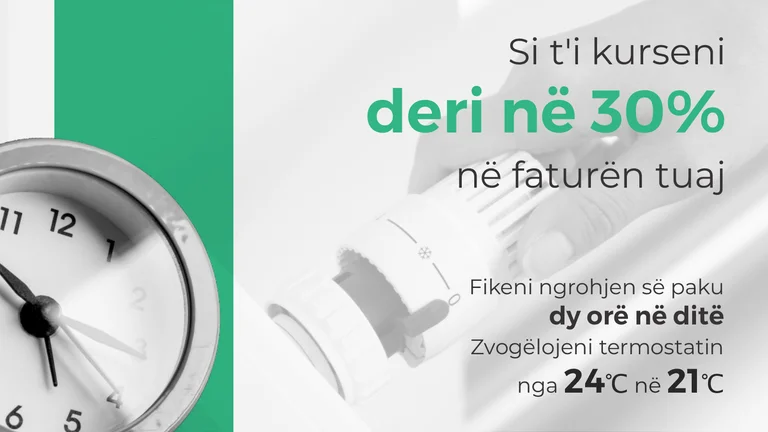
The first step should be to lower the temperature in your furnace thermostat. If you lower it from 24 degrees Celsius to 21 degrees Celsius, our experts ensure that you save up to 30 percent of your bill. Various countries have set even lower maximum limits, even reaching 19 degrees Celsius, as is the case of Great Britain. In such cases, you would save even more, since it is known that if you warm yourself with electricity, heat will participate at a minimum of 70 percent of your monthly consumption.
In various lands, complete halting is also practiced for two hours, since it is estimated that it does not cool the environment at all. Consumers can do this at a certain time during the day so that the load of the electromagnetic system can be eased and their bill saved directly. If this ban is practiced every day, then it is estimated that you will save 30-70 euros of your monthly bill. This is a strategy that is known in international terms as Win-win, so where the winners are all.
We stick to this simple rule for everyone's benefit. Together we can do it!