21 minutes ago
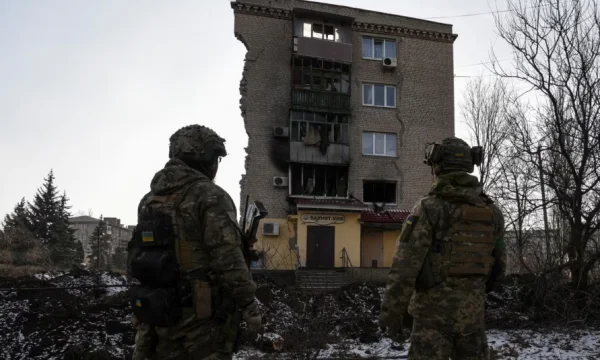
Russia attacks Bahmut
Periskopi(3 years ago)
(3 years ago)The Ukrainian Army said Russian forces are increasingly using air strikes as they continue to advance in the strategic town of Bahmut. This city is located in the eastern Ukrainian region of Donbas. Across the country, 27 air strikes and 55 grants were reported on January 21st, the Ukrainian Army General Staff said. [...]
The Ukrainian Army said Russian forces are increasingly using air strikes as they continue to advance in the strategic town of Bahmut.
This city is located in the eastern Ukrainian region of Donbas.
Across the country, 27 air strikes and 55 grants were reported on January 21st, the Ukrainian Army General Staff said. Staff added that the use of kamikaze and missile drones continues to remain a threat to all of Ukraine.
Near Bahmut, where there has been intense fighting for weeks, Russian forces “are increasing the intensity of aviation use”, but if “saves themselves” in some areas in Ukraine, the Ukrainian Army said on January 22nd.
More than 11 months since the unprohibited Russian invasion of Ukraine has begun, fighting has centered in Bahmut, near the town of Kermina in the northeast, and in the southern region of Zaporija.
Kiev has called on its Western partners to offer more weapons, including heavy tanks, as Russia appears to be preparing for a large-scale operation that will go beyond the Donbas region.
Given recent reports of military reform, Moscow is also preparing to expand the conventional military threat beyond the war in Ukraine, British intelligence has said.
Britain's Defence Ministry made that assessment in January, when it commented on Russian Defence Minister Sergei Shoigu's announcement that the reforms would add 1.5 million military personnel within three years and two military districts would be restored to Russia.
Plans “signal that the Russian leadership will most likely assess that an expanded conventional military threat will last for many years, beyond the current war in Ukraine”, British intelligence said.
However, Britain added that “Russia will most likely have trouble finding staff and equipment to realise this enlargement”. / REL