20 minutes ago
“Let's see, negotiations don't start.
Periskopi(3 years ago)
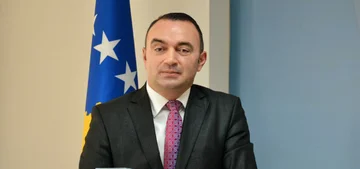
(3 years ago)Kosovo Prime Minister Albin Kurti said the European proposal for an agreement with Serbia included universal concepts that make the agreement stable but, according to him, Belgrade has not indicated it is willing to accept. He risks that the deal for the Serb majority municipalities' Association is the only one that does not [...]
He reiterated that the agreement on the Serb majority municipalities' Association is the only one who has not passed the Constitutional Court test, but did not disclose any plans about implementing this agreement on meeting which pressure has increased to it.
In an interview with Voice of America, Prime Minister Kurti stresses that his government made no concessions for the removal of blockades in the country's north, established last month by Belgrade-backed Serb citizens' groups.
Kosovo left behind a challenging year, what do you expect to be the new year for it?
Albin Kurti: Of course, there will be challenges we inherit from last year, but at the same time there may be new challenges. We are at a time when the European continent is at war, and on the other hand, our northern neighbour is closer than ever and wider than ever to the Russian Federation, which committed military aggression and invasion in Ukraine. On the other hand, within our country we have had undeniable successes, for 17 countries we have risen to Transparency International in terms of fighting corruption, then even in terms of freedom of media according to Reporters Without Borders and also for the second time we are the first in the Balkans in terms of rule of law and second in the world in terms of improvement in rule of law. We have moved from Group C to Group B in terms of digitisation-focused governance, applied for membership in the Council of Europe on 12 May to the European Union on 15 December, and are preparing to apply for NATO membership as well. Kosovo's image has improved, and this has affected citizens of the Republic of Kosovo from January 2024 to no visa regimes in the area of KENgen '%s'. The 2023 budget is the largest in Kosovo's history, 3.2 billion that is 17 percent higher than last year's budget, and economic growth is 4 percent after inflation is lifted, we have not banned this increase for the state but distributed it into society. The economic resurrection package was approximately 4 percent gross local product in 2021, and in 2022 we added the package to the total of about 5 percent gross domestic product inflation. We've had free university for the first time for all students, so without charge, except for those who do Ph.D., and Bachelor and master are free at public university. At the same time, we have continued with help, with support for the lehoons and for the children, already for all children until the age of 16, so under the age of 16, they will receive additions for children, and about 30,000 lehones or young mothers will also receive financial support from the government, totaling about 260 thousand. Even in terms of energy last year we have had a huge success with the Millennium Challenge Corporation, $202 million grant compact program and also 105 megawatts with the wind park in Selaca and 70 megawatts with the heating solar park. Energy efficiency is on the rise, with what cases we've subsidized families who've used power-saving devices, in November of the year that went by 15 percent less households than a year ago. So in many ways we're better and I believe that they'll continue to succeed in 2023, but there will definitely be difficulties.
The difficulties come in a manner inherited from the year we left behind and tensions that coincided with the second half of 2022 as if peaked in northern Kosovo in December. They softened, at least temporarily, with the removal of blockades. How did this become possible, and what did you offer in exchange for their removal?
Albin Kurti: We have offered our genome to KFOR, which required a little more time to remove them without our police intervention. Our police would intervene before the new year unless the barricades were removed. We gave KFOR the time it asked because, of course, it is better to remove without intervention. So it's not that we enjoyed police intervention, we wanted KFOR, which for 23 years has consistently affirmed freedom of movement, to secure it and it was good for those who put the barricades and removed them. My powerful conviction is that because of fear they have been determined and removed from fear.
So there wasn't a deal?
Albin Kurti: There was no deal.
But did Mr. Prime Minister have communication during that time?
Albin Kurti: There have been with the American Embassy, there have been with Quinn's ambassadors and especially with KFOR and EULEX, but we haven't offered anything in return except additional time for KFOR. Also, it was clear that those barricades were established by Serbia's illegal structures that became criminal gangs just when we agreed to postpone elections in four municipalities in the north for April 2023. So somehow just when we made a conclusion, they set up the barricades because they were left without excuses.
You in the second part of last year several times have discussed with the international community, especially with American diplomacy, the demand for postponement has been made, then you initially refused, as the opposition says, in the end by damaging even relations with American diplomacy. Why has this been the case, Mr. Prime Minister?
Albin Kurti: It is being asked of us to postpone 12 months or 10 months because the one-year period under the Brussels agreement said it has not been consumed yet, but that is not true. By mid - January 2018, the KM, PR, GL, and others from the time of (Slo Slobodan) Milosevic would not have to be produced or released or renewed. So it is the position of the government of the Republic of Kosovo that the 12-month period of this license agreement made in Brussels has been consumed, so we cannot accept these deadlines that are already consumed. On the other hand, we were told we should give them 12 months because we haven't informed enough about our campaign. I guess that doesn't stand either. We made some videos of government members, campaigns on our televisions, and I don't think there's anyone left uninformed. It was required that we make this postponement at the time when the cars of Serbs converting KM plates into those RKS that are legal and legitimate, so somehow we couldn't accept that the state is failing to launch RKS plates for those who want to convert and on the other hand we couldn't accept an alternative explanation for Brussels' agreements. What have we done? We haven't cancelled our decision, but we've made sequences and differentials in its implementation, we started with warnings of nearly two thousand rebukes and no complaints of any incident, and we didn't do the fine afterwards because we agreed to give them until next spring of next year the agreement for full normalisation of relations, which would have mutual recognition centralized. So it was not an annulment of the decision but sequence and differentiation in action, it is still there and shows the good will of the government of the Republic of Kosovo, we are the government of a sovereign state.
But during this period of tensions often overestimated, have there been times when you might have said it was not worth driving plates to strain the situation so much?
Albin Kurti: I don't believe I've had a moment like this because I don't expect from such autocratic Serbia which doesn't distance itself from the past either from Milosevic or from the present, Putin, to change its approach to Kosovo. So I don't believe that we need within ourselves to find defects, we need to understand that in the north we have an enemy state that doesn't change the Constitution and which is very aggressive towards our country with those 48 offensive bases, 28 army and 20 gendars. It would be a big mistake if anyone in Kosovo now tries to enter the self-pity thesis when we have a pro-Russian and aggressive Serbia as rarely before.
But you had requests from American diplomats who have given powerful guarantees for Kosovo's security and sovereignty, but that required specific deadlines such as Mr. (Derek) Chollet, who at one point expressed disappointment that you did not listen to him.
Albin Kurti: I am prime minister of the government of the Republic of Kosovo, and the president (Joe) Biden has said the Kosovo government is the government of a sovereign state. Never has partnership, alliance, co-operation with the United States of America been compromised, has been endangered, but you must understand that the United States of America has only recognized us as mediating between Pristina and Belgrade, and in that sense often come to us with a request that is presented as the idea of compromise. If we consider it reasonable as a government then and we do, but never has our right to decide for ourselves, end is the meaning of February 14, 2021, yet not two years of the greatest democratic victory in post-war Kosovo.
But your critics, especially those from the opposition, say they observe a kind of punitive approach of the United States of America against your government. Do you feel that?
Albin Kurti: I don't feel that, on the contrary, I have regular meetings with the American ambassador every week and we are constantly in contact and communication and we almost always agree, but not always, because I cannot represent the United States of America, the American ambassador, nor the Secretary of State or State Department can represent Kosovo. We are led by American ideals, but this is Kosovo and we have to protect our country, our people, our history even more than anyone else does. So, we cannot expect that the United States of America will protect Kosovo in discours even more than ourselves, but we have to ask Kosovo for more than anyone else, even more than the United States of America.
Mr. Prime Minister, tensions in the north sparked concerns of renewed conflict between Kosovo and Serbia. Did you have fear, fear, and danger of doing so?
Albin Kurti: I'm not afraid. I'm worried, I'm careful, I'm worried because this is also part of my job description, but I'm not afraid?
But was there danger?
Albin Kurti: It's dangerous. There is danger, because it is Serbia. Not because it's me. The danger is because it is Serbia on the other hand, which has not repented of crimes, does not change its attitude towards Kosovo, and in the year we left behind has made three very important agreements with Russia. The first is for buying the freest gas in Europe, the second is for co-ordination in foreign policy between (Nikola) Selakovic and (Sergey) Lavrov in New York in the UN's AP margins. And the third is that the most pro-prorus man in Serbia -- the most pro-prorus politician in Serbia -- was held by Chief Secret Service Aleksandar Vulin, otherwise known as vice president of Milosevic's wife's (Slo Slobodan) party. I mean, I don't know what needs to happen more to figure out what Serbia is dealing with. And in this situation we need to team up against such a Serbia that is more aggressive and hostile than ever since we've declared independence, rather than looking at the imperfect one within much-suffered Kosovo, which is finally developing economic and democratic, despite Serbia's non-recognition. So we want mutual recognition, but while we have no mutual recognition, we must develop.
Mr. Prime Minister Prime Ministers, especially after the crisis in the north, said they firmly said that all related agreements with particular emphasis should be met on the Association of Serb majority municipalities, calling on negotiations for its implementation to begin. Has any step been taken by your government for him? I know you said you didn't have anything new about this association, but the new one is that the pressure focused on it. Have you taken any steps?
Albin Kurti: In the decade before I become prime minister, 33 agreements have been made in Brussels. Only one did not pass the Constitutional Court test. And that's exactly what Serbia insists on. Two-thirds of the agreements have not been implemented by Serbia, although it has signed them. She insists only on it. But, you've seen it in December, Serbia has no mind about the community of municipalities, but has its mind on the association of barricades. This means that the barricades take over the municipalities. The 80th article of the Constitution of Serbia envisions association for minorities, but voluntary association of individuals in cultural and educational terms...
Can you make such a model?
Albin Kurti: Yeah. I told you in Brussels. Because Serbia's president was praised for treating minorities in Serbia. While we know that ethnic cleansing that takes place in Medvedja, but also Bujanoc and Presevo, with the elimination of addresses. If they believe they're behaving very well and minorities, we're taking their model, they're the National Councils. The National Council of Albanians, Bosniaks, Hungarians and so on. On the other side of Kosovo, 92 per cent are Albanians, minorities are 8 per cent and not forget not only Serbs. We have Bosniaks, Turks, Ashkali, Egyptian, Roma and Gorani. All of them accept independence. Even the overwhelming majority of Serbs accept independence. Those on Serbia's payroll do not accept independence. But they are minority Serbs. While in Serbia about 80 per cent are Serbs, about 20 per cent are not Serbs. So we have much less minorities than Serbia. And we are taking their model with the National Councils as well as in Kosovo. Reciprocity is the sound principle of good neighbourly relations. On the other hand, if they believe that the Constitution of the Republic of Kosovo, which is considerably written by former President (Mart) Ahtisaari, as mediator with many privileges for Serbs, we have articles from 57 to 62 of the third chapter for minorities let the Constitution of Serbia be changed and let them take these six articles. So since we have minority rights, let them do in Serbia. O we're doing that under 80 of them, National Councils of Minority, or let them take our six articles.
But these issues are not part of the agreements, they are not part of the trunk that has been voted on in Kosovo's parliament. It's an association. There is a Constitutional Court ruling, and American diplomats are saying that they do not dare to affect the Constitution or the functionality of the state, but that there must be models in the world without affecting the country's legitimacy and constitutionality. Is there a solution?
Albin Kurti: I understand you mean that ratification that was made in June 2013 of the April 19th agreement that year. But that agreement, it's interesting, has a 14th point that Kosovo says and Serbia will not interfere with European integrations. Serbia has violated this point. By 15 December in Prague, the Czech Republic, I submitted the official app of the Republic of Kosovo to membership in the European Union. Serbia's president wrote letters to EU states, in particular to five non-recognising countries, against Kosovo's EU membership. So, that deal Serbia has so much to enjoy, it itself was violated in the third week of December. So it cannot be called to an agreement that on one side has not ratified in Serbia's assembly and on the other violated itself.
Mr. Prime Minister is expected to visit Kosovo next week, including American State Department adviser Chollet, but also the American European envoy, as well as the envoys of France and Germany, and is expected to be a new period of efforts in light of the proposal that was first recognised as the German Franco proposal for normalising relations between the two countries. You've named it a good basis for discussion, but is it a good basis for choice?
Albin Kurti: Of course, discussions should lead to resolution, I have particularly enjoyed the fact that this is not an agreement that is made within it to call the ideology of the problem's solution, where we consider each problem unique within Kosovo and then with complicated agreements with an ocean of details that no one has any interest in learning about details. I've welcomed the fact that we have notions, universal concepts like the introduction of this proposal, territorial integrity, sovereignty, independence, equality, rule of law, democracy, self-determination, so that all of these are mentioned there and universal language adds to principle, but it also gives stability to the agreement. It appears that this has mostly prevented Belgrade, and just to maintain the rejection of this proposal, they resigned from institutions in Kosovo in the north of Ibri, and with these barricades on one side, they wanted to territorialise the issue inside of homesickness for the so-called territorial exchange that has failed as a project but has not died as an idea, and on the other hand, wanted to stifle the political pluralism of the Serb community, which is in fact giving birth to Nenad Rassic and Rada Trajkovic. If you look at the media in Serbia, these two people are almost even more hated than I am, so it is Serbia's ongoing attempt not to allow their pluralism. I believe that their attempt had also led to Oliver Ivanovic's murder five years ago. I consider the French German or European Union proposal, supported by the United States, a good basis, but from the Security Council meeting in Belgrade in early November, their foreign minister came up, otherwise Milosevic party spokesman, and said we have rejected such a proposal. I believe we all have to deal with them and not with me, but with the sequence of the application of the decision for the license plates.
However, there is an impression that pressure is more focused in Pristina and less in Belgrade.
Albin Kurti: I also have the impression that the bad things that Belgrade continues to do would have to have a much greater pressure there, and why it isn't, I guess I shouldn't have to answer.
Mr. Prime Minister, however, the German franc proposal does not mention mutual recognition, though in the past the United States has said a solution should focus on mutual recognition and now as if it is not time for that. Did they not make this proposal more as an intermediate solution?
Albin Kurti: Depends on the negotiations, I don't think that the outcome can be known before the start of negotiations, but the form of that result and form is clearly the full normalisation of relations because we have abnormal relations, with mutual recognition in the centre. Now let's start discussions and let's see, we want mutual recognition at the centre, Belgrade wants the Association of municipalities as preconditions. But you want association as a prerequisite not because you love association, but because you don't want the agreement, you don't want peace, you don't want the normality of our relationships. We have shown both willingness and will and interest, we have been creative, constructive and committed, the reason why we have no agreement is in Belgrade.
When do you expect talks to begin on this?
Albin Kurti: In January we expect to have visits of all Ethiopians, Europeans, Americans, Berlin and Paris with cʹrast, I believe we need a new momentum of dialogue for agreement which on the one hand was placed as the first point of the day's agenda at the August 18th meeting in Brussels, and on the other side was followed after three weeks on September nineth by the visits of Lajcak, Bonn and Pristina here and then to Belgrade. Now it's up to them to intensify the effort as mediators that they are, I'm always ready and open.