5 minutes ago
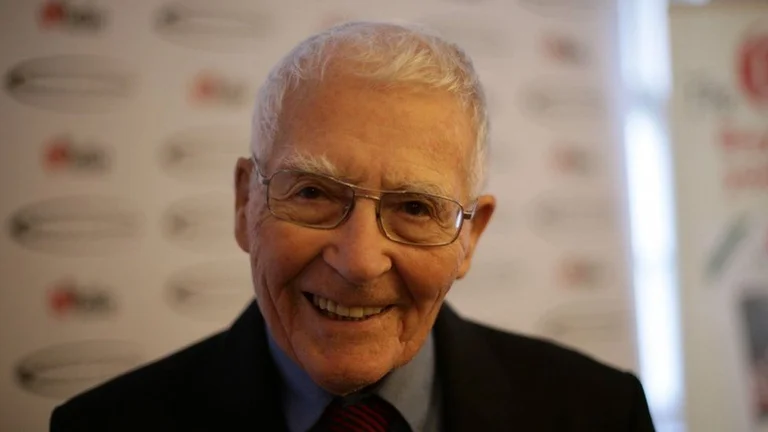
Scientist James Lovelock dies at 103
Periskopi(4 years ago)
(4 years ago)James Lovelock, the environmental scientist who proposed Gaia's first hypothesis, died on his 103rd birthday. His contribution to environmental science includes the development of a device to measure chlorofluorocarbons that destroy the ozone in the atmosphere and pollutants in the air, land and water. Hippothesia Gaia, proposed for the first time [...]
His contribution to environmental science includes the development of a device to measure chlorofluorocarbons that destroy the ozone in the atmosphere and pollutants in the air, land and water.
The first proposed Hippothesis Gaia in the 1970 ' s presented the earth as a complex, self - regulatory system that created and preserved living conditions on the planet.
The theory was formed by Lovelock and co-developed by microbiologist Lynn Margulis in the 1970s, reports Daily Mail.
At first, he was despised by scientists but is now being seriously studied by Earth scientists and scientists in other disciplines, observing how the evolution of life has contributed to the stability of temperature and ocean salinity.
The theory also inspired various political and religious movements with many interpreting the hypothesis as a claim that the Earth is actually alive.