a minute ago
A new global order is emerging, but will it be liberal or un liberal?
Periskopi(4 years ago)
(4 years ago)By Marc Saxer “Inter Press Service” Abcnews. Al with the invasion of Ukraine, Russia has de facto destroyed the European order of peace. Now, Europe has to find the way to curb its aggressive neighbour, while its traditional defender, the United States, continues to shift attention to the Indo-Peacemaker region. However, this task is done [...]
By Marc Saxer “Inter Press Service”
Abcnews. al
With the invasion of Ukraine, Russia has de facto destroyed the European order of peace. Now, Europe has to find the way to curb its aggressive neighbour, while its traditional defender, the United States, continues to shift attention to the Indo-Peacemaker region.
However, this task becomes impossible when China and Russia are standing in each other's arms, because the key to ending the war in Ukraine is Beijing. China is reluctant to drag itself into this European war, as the biggest questions are to the superpower
in development: Will Silk Road be destroyed by an Iron new curtain? Will it adhere to Russia's <x0) unlimited coalition”? What about the territorial integrity of sovereign states? In short, for China, the world order is at stake.
The unipolal moment after the triumph of the West in the Cold War is over. The war in Ukraine clearly marked the end of the Pax Americana. Russia and China are openly challenging the American hegemony. Russia may have shown a <x0-gigan with mud legs”, and it has unwittingly strengthened the unity of the West.
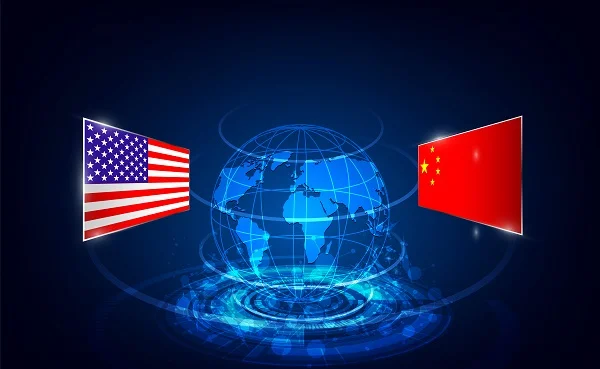
But shifting the global balance of power in East Asia is not over. In China, the United States has encountered a rival worthy of global domination. But Moscow, New Delhi and Brussels also aspire to become power centres in the future multi-pollar order.
So, are we witnesses to the end of history? And what comes next? To better understand how world order rises and falls, a quick look at history can be valuable. During the 19th century, a grouping of great powers provided stability in a multipolar world.
In view of the newborn state of international law and multilateral institutions, several conventions were needed to carefully calibrate the balance between the different spheres of interest. Of course, relative peace within Europe was defeated by the aggressive expansion of its colonial powers.
This order was destroyed at the beginning of World War I. What followed were three decades of turmoil, accompanied by wars and revolutions. Not far from today, the conflicting interests of the great powers crashed directly, at a time that local institutions could not ease the devastating social cost of the Great Reformation.
With the establishment of the United Nations and the Universal Declaration of Human Rights after World War II, the foundation of a liberal order was laid. As the Cold War began, however, this experiment was soon faced with great challenges. Locked between the two Antagonist blocks, the United Nations remained in a rage for decades.
From the Hungarian Revolution, Prague Spring, to the Cuban Missile Crisis, peace among nuclear powers was preserved through recognition of exclusive areas of influence. After Western triumph in the Cold War, American hyperpower quickly announced a new order for an already unipolar world.
In this liberal world order, breaking rules was punished by “world police officer”. Supporters of the liberal world order supported the rapid spread of democracy and human rights worldwide. But behind humanitarian intervention, critics saw imperial motives. Progressives also base their hopes on expanding international law and multilateral co-operation.
Now that the West has plunged into crisis, global co-operation is again paralyzed by systematic rivalry. From the war in Georgia, the annexation of Crime and until the crackdown on Hong Kong's autonomy by the regime in Beijing, recognition of exclusive areas of influence has returned as a tool of international policy.
After a short peak, the liberal elements of world order have again been blocked. China has begun to lay the foundations of a non-liberal multilateral architecture. But how will the competition of great powers develop? Over the next decade, rivalries between major powers are likely to continue with constant momentum.
The ultimate goal of this race of great power is a new world order. Currently, there are five different scenarios. First, the liberal world order can survive the end of the American uniform moment. Second, a number of wars and revolutions can lead to a total collapse of order.
Third, a grouping of great powers can ensure a relative stability in a multipolar world, but on the other hand, fail to address the great challenges facing mankind. Fourth, a Cold New War may partially block the multilateral system based on rules, but allow for limited co-operation on issues of common interest.
And finally, a non liberal order with Chinese features. What is the most likely scenario? Many analysts and experts believe democracy and human rights should be promoted more decisively. However, after Kabul's fall, even liberal centrists such as Joe Biden and Emmanuel Macron have claimed that the era of humanitarian intervention is over.
If another Isolationist nationalist like Trump or others similar to him were to ascend to power in Washington, London or Paris, protecting the liberal world order would be permanently off the agenda. Berlin risks missing allies for new, values-based foreign policy.
In all Western capitals, there is a vast majority throughout the ideological spectrum, which requires strengthening resistance in systematic rivalry with China and Russia. But the global response to the Russian occupation shows that the rest of the world has very little <x0orks” for a new confrontation between democracies and autism.
Support for Russia's attack on the sovereignty and territorial integrity of Ukraine has values that the smaller countries firmly defend should not be read as sympathy for a order led by Russia or China, but as deep disappointment to the American Empire.
From South Global perspective, the not too liberal world order was simply an excuse for military interventions, structural adjustment programs, and moral excellence. Now, the West is realizing that to dominate the geopolitical level, it needs co-operation with undemocratic powers, from Turkey to the Persian Gulf monarchs, from Singapore to Vietnam.
Are rivalries between the great powers that develop in the background of the war in Ukraine, coups in West Africa, and protests in Hong Kong, just the beginning of a new period of wars, coups, and revolutions?
The ancient Greek philosopher Tukidis knew that competition among the rising and declining great powers can cause great wars. So are we entering a new period of disorder? Not only in Moscow and Beijing but also in Washington, there are thinkers who seek to ease these destructive dynamics of the multipolar world through a new set of great powers.
Co-ordination of the interests of great powers at forums like G7 and G20 could be the initial phase for this new form of international governance. Recognition of exclusive areas of influence may help alleviate the conflict. However, there is reason to worry that democracy and human rights will be the first victims.
The European Union, an entity based on rule of law and permanent harmonisation of interests, can especially find it difficult to thrive in such a world. There are some people, and not only in Moscow, who dream of a resurrection of imperialism, who deny smaller nations the right to self - determination.
This dissolute mixture of technological surveillance from the inside, and of endless wars across third sides from the outside, remembers the frightening “198418x1> of George Orwell. It remains only to be hoped that this nonliberal neo-imperialism will be destroyed during the war in Ukraine.
Russia's recognition of the separatist provinces of a sovereign state has alarmed Beijing. What can happen if Taiwan follows this pattern and declares its independence? At least in rhetoric, Beijing has returned to its traditional line of support for national sovereignty and condemnation of colonial intervention in internal affairs.
In Beijing, there are debates today, whether China should support a weakened state, and retreat after a new Iron curtain, or whether it would benefit more from an open and regulated global order. So what is this “Chinese multheatralism” promoted by the latest think school there?
On the one hand, it is a commitment to international law and co-operation to address the major challenges facing humanity, from climate change on ensuring trade routes to preserving peace. But China is willing to accept any framework for co-operation, only if it is in equal positions with the United States.
That is why Beijing takes the United Nations Security Council seriously, but on the other hand, it tries to replace the World Bank and the International Monetary Fund with its institutions as the Asian Investment Bank in Infrastructure.
If China's appeals for equality are rejected, Beijing could form its geopolitical bloc with allies in Eurasia, Africa and Latin America. In such a non liberal order, there would still be co-operation based on rules, but no longer any institutional norms for democracy and human rights.
Which order will dominate at the end, this will be determined by fierce competition among the major powers. However, who is willing to gather around the flag of each different model is markedly different. Only a narrow coalition of Western states and a small portion of the partners worth in Indo-Peacekeeping will emerge in defense of democracy and human rights.
If this Western-led coalition of democracies loses the power struggle against so-called authorities' axis, the result could be a non-liberal world order with Chinese characteristics.
Taken by Cutback
Note: Marc Saxer, co-ordinator for Asia-Peacemaker issues at the German foundation Friedri ch-Ebert-Stiftung (FES).