7 minutes ago
Entermining how many Albanians live in Serbia
Periskopi(4 years ago)
(4 years ago)Representatives of the Albanian minority in Serbia have decided to invite citizens to participate in the upcoming population census, viewing it as a chance to determine the real number of Albanians in this country. After a year's delay, due to the coronary pandemic, the census in Serbia will take place [...]
After a year's delay, due to the coronary pandemic, the census in Serbia will take place in October, as will households and dwellings. This is the largest statistical poll, conducted every ten years.
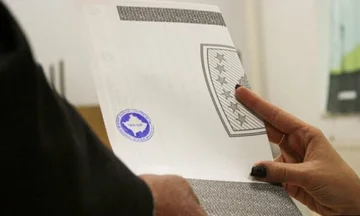
The previous census in Serbia, conducted in 2011, has been boycotted by the Albanian community, because forms have been printed in the Serbian language, with Cyrillic alphabet.
As additional reasons, community representatives have also cited unresolved problems and unfulfilled state obligations in Serbia's part, where the Albanian minority lives mainly.
Changes From the Last Record
Representatives of the municipalities of Bujanovac, Presevo and Medvedja in southern Serbia, leaders of political parties and representatives of the National Council of Albanians have signed an agreement on July 25th at a meeting held in Bujanoc with which they have confirmed their reconciliation to participate in the upcoming population census.
Sali Salih, head of cabinet of the municipality of Bujanoc chairman Nagip Arifi, tells Radio Free Europe that the document has been signed by leaders of all Albanian parties.
He, too, says there will soon be a joint call for Albanian citizens to respond to the call for registration.
Ragmi Mustaf, chairman of the Democratic Party of Albanians, says Albanians have boycotted the latest census even for the fact that, according to him, the two previous censuses in the municipalities of Bujanoc, Presevo and Medvedja have been manipulated, to reduce the number of Albanians.
“concerned with 2011 census, conditions have improved markedly. First of all, new forms include the address book on nationality. Formulators are bilingual and printed in Albanian language as well, which was no earlier”, Mustaf told Radio Free Europe.
He adds that there are a large number of Albanians among the recorders. But according to him, it is possible for all citizens to participate in the census, whether they have identification or not.
Mustaf says his party is very interested in determining the exact number of Albanians living in the municipalities of Presevo, Bujanoc and Medvedja.
Clearing the evidence reduced the number of Albanians
According to him, Albanian diaspora will also be included in the upcoming census, but citizens whose local police have checked or erased their residential addresses.
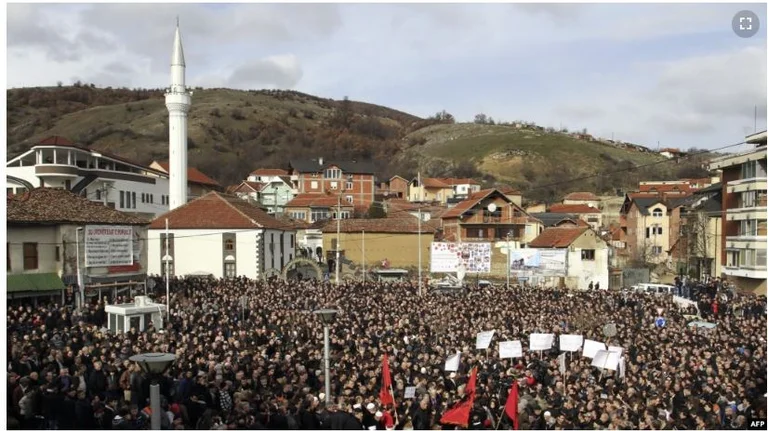
Albanians in the Presevo Valley, including municipalities where they live, have long complained of disrespect for their rights by Serbian officials.
According to them, authorities in Serbia scan Albanian addresses, or erase the settlements of those who claim to no longer live in those locations.
That way, according to authorities in Kosovo, more than 6,000 Albanians have lost the right to vote in Serbia's elections.
Official Belgrade has dismissed the accusations, claiming that searches on the ground have proved that the deleted Albanians no longer live in those addresses.
Less Number, Greater Discrimination
Ragmi Mustafi says Albanians have been discriminated against in the past 11 years, due to the boycott of the last census. As a result of the very small number of Albanians counted, he says the means for funding of the Presevo municipality, but also for the work of the National Council of Albanians have been significantly reduced.
For 11 years, the Republic [of Serbia] has not increased money transfers to municipalities: Touché, Bujanoc of Medvedja. Despite continued gross domestic production growth, these tools have not increased by even 1 percent”, says Mustaf.
According to him, this has been done in order to further poverty the area and cause financial uncertainty in local populations.
According to international community estimates, some 60,000 members of the Albanian national minority live in Serbia, mostly in the municipalities of Presevo, Bujanoc and Medvedja, south of Serbia.
However, official data from the census that Albanians have boycotted say there are less than 6,000.
The census is prepared, organised and implemented by the Republika Statistics Institute, through 161 registration commissions. Commissions have already been formed in all municipalities, including municipalities in southern Serbia: Bujanoc, Presevo and Medvedja.
O SEU expects census by European standards
Serbia's Ambassador to the Organisation for Security and Co-operation in Europe (OSBE), Jan Bratu, has said during a visit to Bujanoc that the census in Serbia will be in full compliance with European standards. According to him, there will be no reason for boycotting by the Albanian minority.
He has said that no documents will be needed for the census, and that family members will also be able to provide recorders with information about other members.
Importance for Community and State
Three years ago, the National Council of Albanians has sent a letter to the Republika Statistics Institute, Government, relevant ministries and state institutions, urging them to remove all obstacles, which the Albanian community has said has boycotted population registration in 2011.
“With the support of the OSCE, the Ministry of Human and Minority Rights, in co-ordination with us, has managed to provide optimum conditions for the Albanian community to be part of the” census, says Mustaf, also chairman of the National Council of Albanians in the Valley.
According to him, the state has accepted all the requirements for correcting shortcomings, and representatives of all political parties have confirmed this with the decision to invite citizens to participate in the census.
Mustaf says defining the exact number of Albanians in Serbia is important, as well as for the state of Serbia, not only for political reasons, but for pragmatic reasons.
Subsequent budgetary networks for local self-government and national councils are determined proportionally to the number of national minorities. Because of the grossly lower number of citizens of Albanian nationality, compared with the real situation, funds have been reduced to 30 to 40 percent”, Mustafi says.
Three municipalities expect specific changes in financing
Due to the boycott of registration by Albanians in 2011, international community experts have made an assessment of the number of residents in three municipalities in southern Serbia. According to this assessment, the Bujanoc municipality in the year of the census had 38,300 inhabitants, the Presevo Community 29.600 and the Medvedja Community 7,442.
For their jobs, state bodies and institutions have relied exclusively on official data from the census, under which only 5,800 members of the Albanian national minority have lived throughout Serbia.
Cameron Sadriu, director of the nongovernmental Centre for Monitoring and Research in Presevo, estimates the conditions for the upcoming census are much better than 11 years ago. He stresses that preparations are more transparent and that Albanians are involved in the whole process.
This means that when there is good will, any problem can be solved. In the case of the census, the state has heard and accepted objections from the Albanian community”, Sadriu says of Radio Free Europe.
He adds that the census could become a model for resolving other issues, which are of vital importance to the citizens of Presevo, Bujanoc and Medvedja. He also says that citizens expect concrete changes in the financing of these municipalities, after census.
The Constitutional Court is expected to return to Bujanoc, to increase the number of advisers in the National Council, to increase transfers to municipal budgets, so that these three municipalities can invest in economic development, health, education, culture... Simply, those that have other municipalities in Serbia -- neither less, nor more”, Sadriu says.
During the census in Serbia, between October 1st and October 31st, electronic questionnaires will be used for the first time, while preliminary results are expected to be known by the end of November.
In the latest census in Serbia, in 2011, an estimated 7.2 million people were registered. However, according to data from the State Statistics Institute, in 2019 the number has dropped to seven million [6.982,604] ʹ for the first time in 53 years.