16 minutes ago
Credit interest rate expected to rise, banks remain silent
Periskopi(4 years ago)
(4 years ago)Any citizen and business in Kosovo that plans to take credit will soon face higher interest rates. This is expected to happen after the European Central Bank, for the first time in 11 years, has decided to increase interest rates in efforts to control the growth of inflation in the Eurozone. [...]
This is expected to happen after the European Central Bank, for the first time in 11 years, has decided to increase interest rates in efforts to control the growth of inflation in the Eurozone.
As this institution has announced on July 21st, key interest rates have currently increased by 0.5 percent to 0.0 percent, while further growth is planned during the year.
According to the European Central Bank, when prices in the economy rise rapidly - that is, when inflation is too high - interest rates help restore inflation to the target of 2 percent over the medium term.
This is why we have increased interest rates: to send the message that we will not allow inflation to stand above 2%”, says the European Central Bank's explanation.
Increasing these standards is a situation that is not in favor of citizens.
The financial expert in Kosovo Milazizim confirms this. It envisions that banks operating in Kosovo, very soon to increase interest rates on loans they give to citizens and businesses.
“Of course there will be an increase in interest by commercial banks in Kosovo, probably not much, but there will be an increase of”, he says.
Furthermore, Abazi adds, increasing interest will affect not only the new loans, but also those given earlier.
This is because the European Central Bank's decision, July 21, has also increased the so - called Eurybor rate.
Eurbor is the average interest rate, under which European banks receive funds from one another.
For example, a lender has earlier received a commercial credit bank with 3 percent interest, plus Euribor. So far, it [Euribor] has been zero and now will be 0.5 or 1 per cent and, automatically, even old loans will be expensive for 1 per cent. So those loans that are contracted with this base”, Abazi explains.
In Kosovo, 11 commercial banks operate and the value of loans in them has reached 4 billion euros.
Based on the laws and regulations in force, commercial banks in Kosovo individually define interest rates based on their business policies.
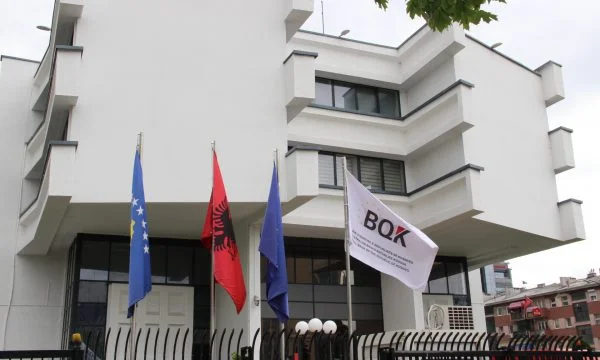
Kosovo Central Bank data shows that the average interest rate in loans in January was 5.66%; in February 5.9%; in March 580%; in April, 5.77%; and in the month of May 5.82%.
According to the Statistics Agency, the inflation rate in Kosovo has reached over 14 percent in June, compared to the same period last year.
Increasing inflation elsewhere in the world has greatly contributed to the pandemic of the Coronaviurs and Russia's war in Ukraine.
After the European Central Bank's announcement, Radio Free Europe has asked several commercial banks in Kosovo which categories will be affected by increased interest rate and what will be the eventual increase.
None of the major banks, including: ProCredit Bank, Raiffeisen Bank, TEB Bank, National Trade Bank and Bank NLB, they haven't answered.
But there will be increased interest in loans from commercial banks in Kosovo, says University of Pristina economics professor Majid Bektashi.
The growth rate of interest by the European Central Bank will automatically affect the euro area, to increase interest rates, with the aim of preventing the increase in inflation”, Bektashi tells Radio Free Europe.
He adds that in Kosovo it is impossible for financial institutions to set a ceiling of the maximum interest rate. According to him, countries with their currency can do this.
In the Western Balkans, only Kosovo and Montenegro use the euro as a payment tool, while Albania, Northern Macedonia, Serbia and Bosnia and Herzegovina have their currency.
Some of these countries have already warned or increased interest rates for credit.
In Bosnia, growth is expected to be between 0.7 and 0.9 percent, from 4.2 percent to 4.9 percent respectively.
The executive board of the People's Bank of Serbia, which is responsible for national monetary policy, has raised the reference rate of interest at 2.75 per cent on 7 July.
On 12 July, the People's Bank of Northern Macedonia has increased the basic interest rate to 2.5 percent.
On July 6th, the Bank of Albania has raised the basic interest rate to 1.25 per cent.
The average interest rate in Montenegro has been 5.54 per cent in May.