12 minutes ago
Alleged kidney transplant, Croatian state declared in case reported to include Kosovo
Periskopi(4 years ago)
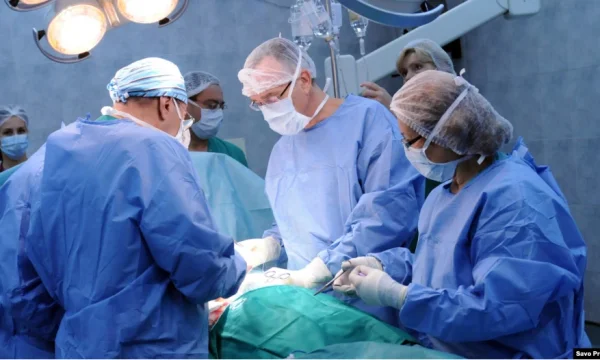
(4 years ago)Health Minister in Croatia Willy Beros said Wednesday that after investigations by the Prosecutor General's Office, they have concluded that the two kidney transplant cases had nothing to do with organ trafficking, but have found some irregularities in the process. The two donors, a baker from Kosovo and a truck driver from [...]
The two donors, a baker from Kosovo and a truck driver from Serbia, had donated kidneys two years earlier to a Zagreb hospital and organ recipients were men from Croatia. In 2019, one of the hospitals in Zagreb had refused to perform organ transplantation, so that the transplant was conducted at another hospital of the Croatian head centre.
After the allegations, Croatia's Health Ministry had temporarily banned the kidney transplant programme from living donors at the Zagreb Hospital Centre.
“Transplanting organs is the procedure that is highly developed in the Republic of Croatia, especially when it comes to transplantation, unfortunately, organs from deceased donors. This specific problem is related to organ transplantation by live donors who are not connected with the receiver, which are extremely rare. There is no doubt about the authorities at present [for these two cases]. The health inspectorate conducted a deep analysis and uncovered some irregularities in the process itself”, Beross said.
The suspicious kidney transplant cases were uncovered by journalist Natasa Sharicic. Commenting on the Ministry of Health's statement, she indicated that in 2019 when organ transplantation occurred because of these two suspicious transplants were collected transplant teams from the Zagreb Hospital Centre and the Health Ministry.
There have been allegations that there may be violations of ethical norms in organ transplantation, which are altruism and financial dependence. In other words, there have been doubts about organ trafficking”, she told Radio Free Europe.
Croatian Radio-Television (HRT) had reported that two organ donors from Kosovo and Serbia were “with the lowest social status”.
Free Europe Radio has been addressed with questions to the Kosovo State Prosecutor if they were aware of the case being investigated by Croatia, but no response has been received from this institution.
Meanwhile, Josip Periq, of the Croatian Association for Patients' Rights, told Radio Free Europe that the fact that these two transplants were refused to be performed at a hospital in Zagreb, and later conducted in another, raised doubts about organ trafficking.
If nothing happened, why did they stop the whole process? These procedures and regulations are questionable, where we see special regulations at every hospital and standards are not harmonised. Then there are big mistakes regarding ethics, morality, the code of medical ethics and, of course, patients” himself, he said.
In Croatia, transplantation of organs by living donors, which have no connection with the receiver, is possible.
The controls are strict and donors must undergo specific psychological tests, approval by experts from the transplant centre, and the health institution's ethics commission where transplantation is conducted.
The advertising of availability or the need for organs is sentenced to prison for up to three years.
According to Croatian Radio and Television, Croatia, with more than 100 kidney transplants annually, is among the world's leading countries. /rel