a few seconds ago
Modern Fear War on the Front
Periskopi(4 years ago)
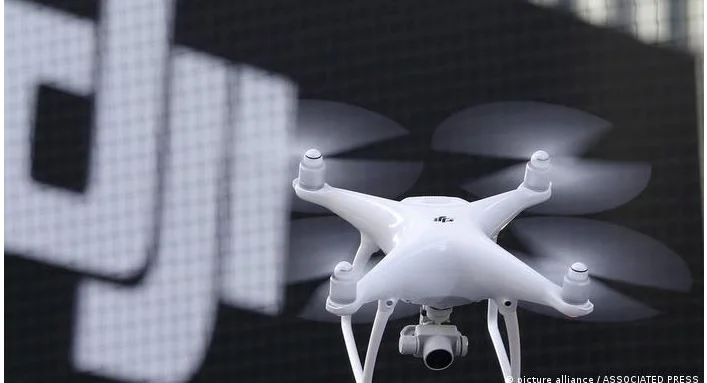
(4 years ago)The Ukrainian war is clearly showing that the fears are part of the modern war. Drons perform various tasks from air surveillance to missile launching. According to reports from the U.S. Pentagon, it developed a new type of fears that respond to the demands of the Ukrainian Army and that will continue to adapt [...]
According to US Pentagon data, it developed a new type of fears that respond to Ukrainian Army demands and will continue to adapt further: “Phoenix Ghost” is called the flying device. In conversation with Ukrainians about their demands, we concluded that this special device responds very well to their demands, especially to eastern Ukraine,” said Pentagon spokesman John Kirby.
The development of this fears has begun before the development of the Ukrainian war and will be further developed to accommodate Ukrainian demands. More than 120 such fears will be sent to Ukraine, under US military assistance of 800 million US dollars. Since it became known this is being discussed on Phoenix Ghost specifications: What does it look like? What's the difference with the weapons systems so far?
Many things are unknown. There's no photo. Phoenix Ghost was developed by the American Army Company, Aveex Aerospace in collaboration with the American Air Force, who also did not provide details. Minimal training is needed to work with fear, Pentagon spokesman Kirby said further.
The new Drone resembles the so-called Switchblads, produced by AeroVironment, as well as American. It was developed to be used by US Special Units in Afghanistan. In 2012, the American army equipped its troops with them.
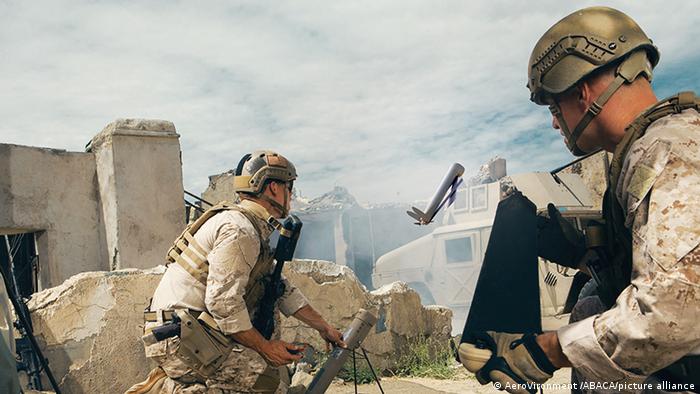
Dron kamikaze “Switchblade”
Switchblade-type Drones, afraid of being held in the backpack, are part of the “Loitering Munition” or “Loitering Weapon”, which means something like <x4-munition or weapons left around and that are not in use”.
“They are a kind of rocket mix and drone”, explains about Deutsche Welle, Arthur Holland Michel, Autor and a member of the Carnegie Council for Ethics on international issues in Barcelona.
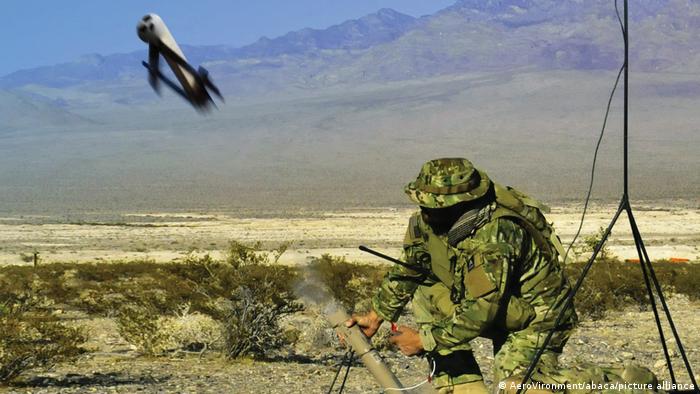
Loitering Munition, or Loitering Weapons, is called remote control weapons and initially flares without a specific target but is launched into the target region, where they are hanging around for a long time until through a land operator link, assigned to a target you fear and hit. Depending on the model, according to the sensor system, the targets that appear can be detected, classified, and attacked autonomously.
The concepts Loitering Munich or Loitering Weapon are not yet very widespread. This arms category first became known in the Bergkarabach 2020 war, when Azerbaijan introduced large quantities of them.
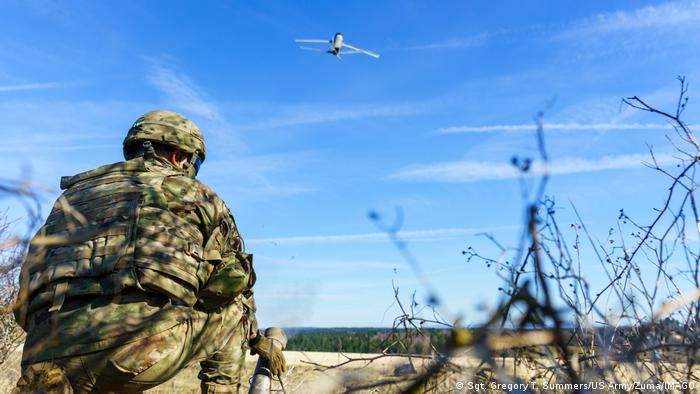
The Switchblade Drons, which Albanian would translate like a spring knife, exist in different variations. The smallest model weighs two pounds [2.5 kg], has a radius of ten miles [10 km], and can circle in the air in 15 minutes. The largest variation weighs 50 pounds [15 kg] and has 20 miles [40 km] of action and time flight 40 minutes.
Dobia: “compared to the major fears, this guy doesn't need aerodrome or a lot of infrastructure to run it,” says Michel. “And unlike rockets, there's more time to identify the target, create an image for the situation and launch the drone missile, as it were, or shoot the target with the help of a target difference. This is how both weapons systems are combined.” The Switchblade Drons, they're also called kamikaz fears, because during the attack they destroy themselves.
Improved: Phoenix Ghost
Phoenix Ghost Drones have similar abilities, but they are not exactly the same, Kirby says. David Deptula, retired general, dean of Mitchell Institute for Space Studies and a member of the Aeex Aerospace enterprise leadership, gives to “Politico” some more information which has not been confirmed so far.
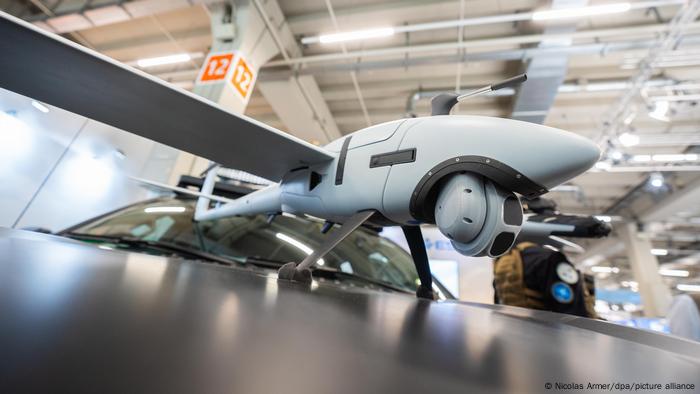 Quantum-System
Phoenix Ghost, according to him, also fears one use, but with six hours of flying can stay in the air much more than other drones. They also move vertically, so they save many seats, and they can operate even at night through infrared sensors, Deptula says. This is effective to use against „Earth's semi heavy tanks”.
Flagkeeper “B2”
In the category of the largest <x0drodine” on which Michel talks, those Turkish fighters and Bayraktar-type TB2 are part of. They too are in use in the Ukrainian war. Turkish word “Bayr” means German “Fahenträger”, Albanian Flamurtar.
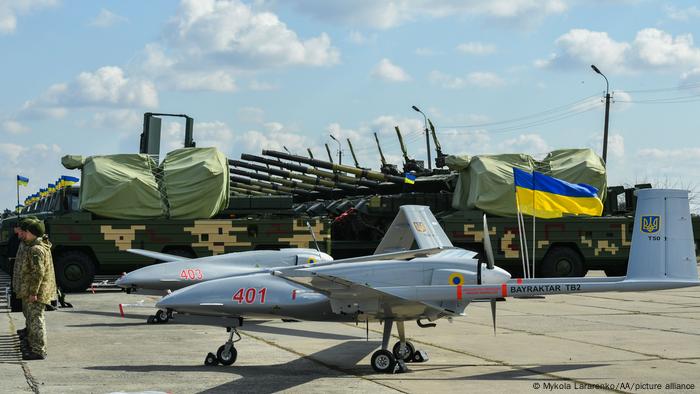
This fears were developed in 2014 by Baycar firm. Bayraktar TB2 is 6.50m long, 12m wide, and weighs 420 kilograms. It is fully autonomous, can stay in the air for 24 hours without rest, reaches the altitude of 7300 feet [7300 m], and has maximum speed of about 120 miles [220 km] an hour. In an autonomous fashion, it can be ignited without the direction of any coordinator on earth, it can fly toward a programmed target, make discoveries, go back and land completely independent. The maximum range of action is 150 kilometers.
“Dector”: German Technology for Ukraine
For intelligence missions, Ukraine's armed forces can now use the discovery fears of the bavarese firm Quantum Systems. Our first “Drons are actually in Ukraine,” says firm chief Florian Seibel speaking of the editors-Netzwerk Deutschland (RND). Other supplies are planned. Even the London newspaper “The Times” has written about it.
It took five days from establishing the first contact to signing the contract, and shortly after three Ukrainian warriors sent a cell phone seat to Bavari, with heavy drones. Drohni's name is “Vector” and costs about 180,000 euros. The purchase price has been paid by Ukrainian multimillionrs from their own pocket, such as „for helping territorial command to protect Dnipros,” says in the article written in the RND.
The link between the fighters and the firm in Bhavari was established by the Ukrainian Consulate in Munich. German Dron, Vector, is not a weapon in the true sense. He can't bomb because he's not meant for this. But if the corresponding digital connection becomes, it can be turned into part of a weapons system, writes the RND.
Vector is very popular, because there are very advanced technologies in flight and video transfers. Ukrainians want with the help of the drones to organize their artillery better, for example against the approaching Russian tanks.
For that, Vector is perfect: It can be assembled without tools, despite three meters of Vector width there is no need for starting track, as it rises vertically, respectively, as does Phoenix Ghost. Vector sends in real time high-quality video for an area over 15 kilometers and stays in the air for up to two hours. Even US special units have ordered Vector stands at the value of 7m euros, and the German Army has ordered eight, says the head of the firm Seibel for RND.
Ukraine: International fleet of fears
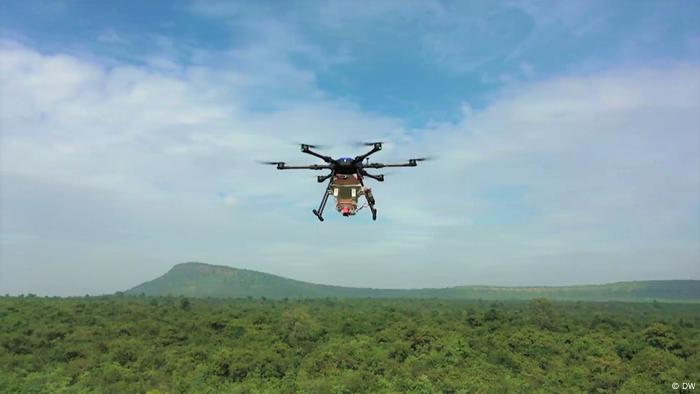
Japan has also sent fears to Ukraine. According to the Japanese Defence Ministry at Ukraine's request, fears, masks and protective clothing have been sent there. But Ukrainian soldiers also use local fears. The most popular of them is Leleka-100. The 5kg flying device is produced by the Deviro firm with headquarters in Dnipro, central Ukraine. “Leleka” in Ukraine's language means stork.
Russia does not seem to use much of its fears, meanwhile. The Orlan 10, (Albanian/10), a small threat of discovery and observation, produced at the Sant Petersburg Special Technology Centre. With a length of 3.10 feet [3.10 m], it flies up to 60 miles [100 km] and can be used to detect artillery. The intelligence system is built very simply: The Canon Air Film Camera - EO S-D- as well as camera and thermal cameras.
An ethical horror scenario
But despite these ongoing steps, the challenges and risks stemming from increasing the autonomy of the weapons system should not be overlooked, says fears expert Arthur Holland Michel in a twitter message. For example:
Do users have enough conscience in a certain situation to make the decision to use violence? Do guns offer guns to users enough control to be cautious during the attack? Are guns manipulable or sensitive to hacker attacks, which can lead to accidents and unpredictable damage? If the system causes unpredictable damage, are there clear channels for people to take responsibility for such damage? How can risks be avoided and safety standards respected? How can civilians be protected?
Any additional autonomous function given to such weapons multiplies concerns. So I want to encourage people to focus on the specific functions of automation of these systems and on specific risks that may arise if these functions don't work,” says Michel. Developing weapons systems that are remote or autonomous weapons moving fast, worries remain. Autonomous combat is an ethical horror scenario.