3 minutes ago
The chronicles of a imagined event: Ukrainian legal doctor who couldn't perform his wife's autopsy
Periskopi(4 years ago)
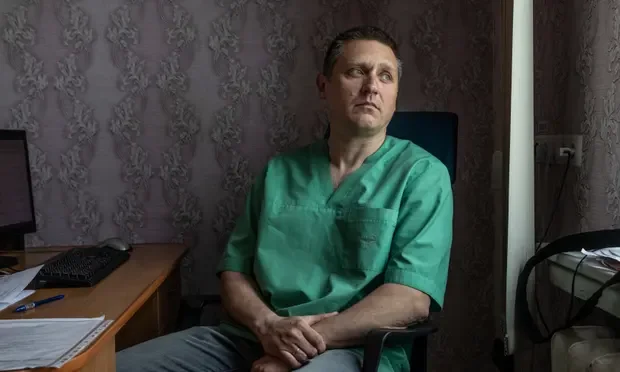
(4 years ago)Over the weeks of the war, Yuri Fenenko, a legal doctor in the besieged Ukrainian city of Chernihiv, has become familiar with the way war tears up troops, determining the damage caused by sharp chips, crushing bombs and bullets. The 44-year-old feared the day he knew he would certainly come when [...]
The 44-year-old feared the day he knew he would certainly come, when the body of someone who was once close to him would behave there. But he wasn't prepared that the body would be of someone he knew so well.
He was the body of an honored friend and wife of one of my best friends”, Fenenko said in an interview at the weekend, burst into tears over memory. “The device she was driving hit a land mine while she was trying to leave the village where she lived in the vicinity of Chernihiv, which was occupied by Russians”.
Before the war, Fenenko examined, on average, four bodies a day -- most of whom died from disease, or in some cases, traffic accidents or after gun attacks.
Everything changed when Vladimir Putin ordered the invasion of Ukraine on February 24th, and Russian forces from Belarus began shelling the city. By March 19th, Chernihiv was surrounded by Russian forces, closing 150 thousand inhabitants in the area. Today, Fenenko examines up to 15 bodies a day.
“initially, no one understood what was happening”, he said. It was scary, you didn't know what to expect. Then in a few days, the first troops began being sent to our lab. And the numbers increased from day to day”.
The area in the area of the Chernihiv mortars was lost, which are meant to hold 30 bodies and corpses filled the refreezing trucks. Fenenko did his job in a room without power because of the bombing. An oil aggressor produced poor light.
Before the war, I had seen bodies completely torn by accidental explosions. But never in such a number”, he says.
Fenenko postmortem reports are being forwarded to prosecutors investigating alleged war crimes committed by Russian forces in Ukraine.
“In the midst of torture signs, we found hands tied behind the back of the bodies of people living in villages occupied by Russia, with their eyes tied and limbs shot around and beyond”, he says. Another rocket hit a bunch of people standing outside a grocery store. Thirty people were killed and they were all brought to my lab”.
Fenenko has extracted hundreds of projectors and sharp objects from troops, but also fragments of crushed bombs, explosives designed to launch dozens of smaller bombs called submunitions in a larger area. Crushing bombs are prohibited under an international law of 2008 following an agreement signed by more than 100 countries.
You see these little cylinders? They come from a crushed” bomb, he said. I found them in civilian bodies. Some of them explode when they hit the ground, and some of them explode into the air. That's why they hit a lot of people”.
Fenenko said the most unusual thing he had found in the bodies was flexiblesSmall metal arrows stored in tanks and field shells. Every shell can hold up to 8,000 flexibles. Once released from the shells, they are distributed into a bow about 30m wide and 100 long. In contact with the victim's body, the four - winged arrow often breaks apart, causing a second wound.
Early in April, Ukrainian forces freed dozens of villages occupied by the Russians. At the end of the siege, more than 700 troops were found in the Chernihiv region. Before abandoning the faces, the Russians had placed thousands of mines that continue to cause injuries and death, while each day Ukrainian authorities find more bodies buried in ruins.
As a legal doctor with more than 20 years of experience, Fenenko said he had learned earlier to remove his emotions before an autopsy began, but on the day police brought his old friend's body to the lab, that was impossible.
There were two other experts working with me that day. So I let them perform the autopsy. I just couldn't do that”, he said.
♪ Sokol Berisha, Periscopi