8 minutes ago
Muhamet Alidaj pleads innocent for war crimes in the village of Izbica, where 130 people were killed
Periskopi(4 years ago)
(4 years ago)Indictee Muhamet Alidaj has been declared innocent of the charge of war crimes against the civilian population in the village of Izbica. He is charged that during 1999, along with other members of the Serbian police and military forces, they violently divide women and children and violently force them to head towards Albania, while men [...]
He is charged that during 1999, along with other members of the Serbian police and military forces, they violently divide women and children and violently force them to go towards Albania, while the remaining men execute them with automatic weapons, killing 130 people, of whom 114 victims were identified, while 12 civilians survived execution, where they exhumed the same troops with excavators and drove them out by carrying some trucks in the unknown direction. While, after the war ended the victims' bodies were found in mass cemetery in Batajnica, Serbia, in the village of Suhodol in Mitrovica, and in the village of Novovan in Vushtrri.
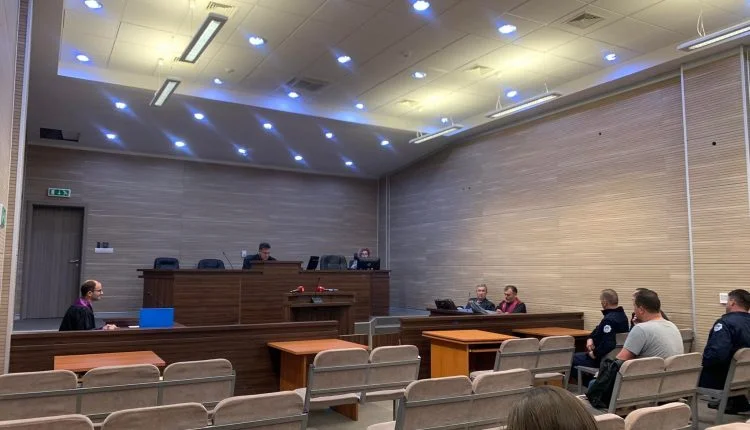
The statement about guilt, accused Alidemaj, made at Friday's session at the Constitutional Court in Pristina, following reading the indictment by special prosecutor Ilir Morina, reports “The Justice Vow “.
The statement of the accused Alidemaj was supported by his protector, lawyer Vasilije Arsic.
After that, the court judge, Vesel Ismaili, informed the accused and his defender that they had the right to apply for the drop of the indictment and the opposition to the evidence, within the previous 30-day legal term.
According to the indictment compiled on 29 March 2022, Muhamet Alidaj is being charged that during the 24 March 1999 period of March, June 11th, during the armed conflict in Kosovo, as a member of Serbian police and military forces, he has seriously violated the rules of international law during the time of the war against the civilian population and their property.
According to the indictment, Alidemaj on March 28, 1999, in the village of Izbica, has participated in and contributed to the murder of the civilian population, so that in the early hours of the morning at the site called Stjevcit”, on the hill of Krnjen '%stipa Street, along with Serb military and police forces in which they participated Ivo Obradovic, Stanoje Shkrik, Sasa Vidiq, Milen Miletic, Savaerkik Shkkikkik, Shkkikhokkogoljub Mileq, Vidic, and other people still identified as well.
As said in the indictment of Alidemaj, together with other members of the Serbian police and military forces, go to the meadow where the civilian population of Izbica and other surrounding villages were gathered, violently divide women and children under the age of 12 and violently force them to head toward Albania.
While the remaining men are said to divide them into three groups, sending each group to a certain location and executing them with automatic weapons, killing 130 people, of whom 114 victims were identified, whose names were displayed in the appendix 1 of this charge, and 12 civilians survived execution, whose names found in the annex 2 of this act, so that whose troops were buried after 2-3 days were buried by villagers.
The attack, according to the indictment, reportedly nearly two months later in 1999, accused Alidemaj along with other members of the Serbian police and military forces returned to the village, exhumed the bodies with excavators and drove them out with a few trucks in an unknown direction, while after the end of the war the bodies of the victims were found in mass graves in Serbian Batajnica, in the village of Suhodol in Mitrovica and in the village of Novoan in Vushtrria.
Furthermore, in the indictment it is said that the accused Alidaj, along with members of Serbian police and military forces, has taken part in in in inhuman treatment, violation of body and health integrity, displacement, robbery and the destruction of the civilian population of Izbica village and surrounding villages, so that they initially forced Albanian civilians to flee their homes by threatening them with weapons and gathered them in a meadow in the middle of the village.
With regard to him, accused Alidemaj reportedly along with some other people still unknown, called for the injured Jamie Osmanaj to come out of the crowd where they had gathered, initially under the threat of the gun, taken 1,000 German marks, then under the gun barrel on her back, forced her to lead during her house's search.
Later, the indictment says defendant Muhamet Alidaj slapd his face at the door of the house and ordered him to go to the crowd of civilians gathered in the meadow, while other civilians were confiscated from all their valuable personal belongings, beat some of the men, forced women and children to leave in the direction of Kline, telling them to go to Albania, and under threat of weapons were robbed of everything with monetary value and destroyed at the end and burned the homes of the village of Izbica.
In this regard, it is charged that in co-ordination, the criminal work was carried out by “the crime crime crime crime against the civilian population”, currently sanctioned by Article 142 in terms of Article 22 of Yugoslavia's Criminal Law, as a law in force at the time of the conduct of the criminal work, currently sanctioned according to the criminal act “the violations of the war in the grave violation of Article 3 for the Geneva” conventions, by Article 146, concerning the 31st Penal Code of the Republic of Kosovo.