12 minutes ago
Kosovo criticised for slow progress in judging war crimes
Periskopi(4 years ago)
(4 years ago)Only one indictment was filed last year for war crimes committed in the 1998-1999 conflict, and only two suspects have been arrested, said a new report by the Fund for Humanitarian Law in Kosovo. Under suspicion of war crimes, this report also states that five cases are [...]
Only one indictment was filed last year for war crimes committed in the 1998-1999 conflict, and only two suspects have been arrested, said a new report by the Fund for Humanitarian Law in Kosovo.
Under suspicion of war crimes, the report also reportedly five cases are under way in courts.
Kosovo Special Prosecutor's Department of War Crimes chief Drita Hajdari said the investigation and prosecution of war crimes remain a challenge because many suspects are not in the country.
The procedure has handled cases and filed charges in cases where we secured the defendant's physical presence. We cannot file charges in cases where we do not have the presence of authors”, Hajdari said.
Hajdari added that although Kosovo's law allows judgment in absentia, decisions are almost unmet in such cases. She added that over 1,000 war crimes cases are pending.
The most recent act accused an ethnic Albanian, identified only by the M.A. initials, of involvement in war crimes against civilians in the village of Izbica on 28 March 1999, when Serb forces killed a total of 147 Kosovo Albanians.
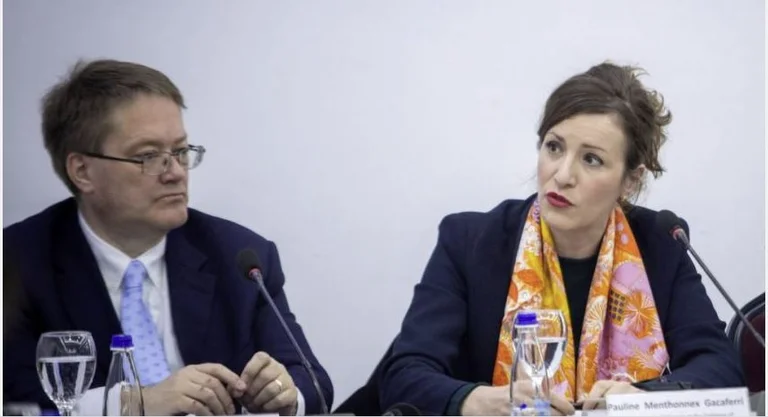
British Ambassador to Pristina Nicholas Abbott, in presenting the report, said investigating war crimes in Kosovo could be accelerated if there is judicial co-operation between Kosovo and Serbia.
Abbott said a major challenge is that many of the perpetrators are now dead, or not in Kosovo, as suspect M.A., who lives in Belgrade. Serbia does not recognise Kosovo's independence and extradites suspects to Pristina.
Abbott added that an additional problem is that “many survivors are dead, or many elderly people to testify to”.
From 2000 to 2008, war crimes in Kosovo have been investigated by the United Nations Mission in Kosovo, UNMIK. After 2008, the EU's mission to rule of law EULEX was responsible for investigating war crimes.
EULEX completed the process of handing over war crimes files to the Kosovo prosecution and courts in 2018, and such cases are now in the hands of the local judiciary/balkannisight.