4 minutes ago
Ukrainians receive wings open in Poland
Periskopi(4 years ago)
(4 years ago)Every Ukrainian refugee in Poland has access to the labour market as well as to the health and social systems. There are long lines in front of the registration offices. But the future of new migrants is uncertain. For Ukrainian refugees in Poland, the magic word these days is “PASEL” It's a shortcut to the Polish social security number. [...]
Every Ukrainian refugee in Poland has access to the labour market as well as to the health and social systems. There are long lines in front of the registration offices. But the future of new migrants is uncertain.
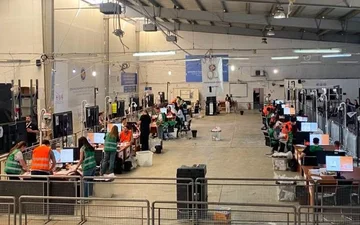
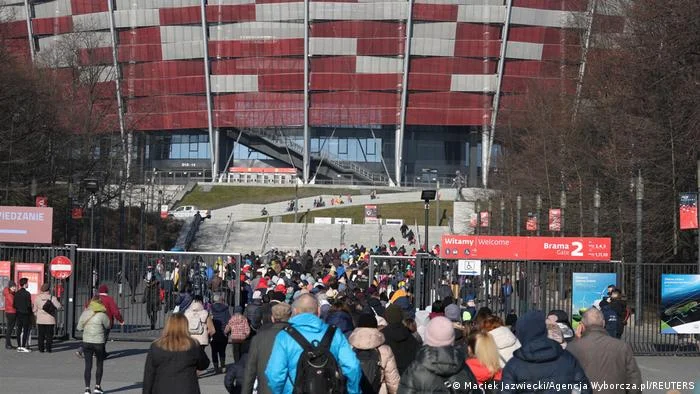
For Ukrainian refugees in Poland, the magic word these days is “PASEL” It's a shortcut to the Polish social security number. The Polish government has promised all war refugees from neighbouring Ukraine a stay of up to 180 days and access to the labour market, health system and social benefits. All of this is made available by PESEL. Largest registration table where refugees can apply for a number P ESEL has been on Saturday (March 19th) at the National Stadium in Warsaw.
Long lines were created the day before. Hot tea terms were made available at the stadium gate. I'll wait here as long as necessary. I need a job permit, I need to get a job and as soon as possible,” told DW Victoria, 24.
The next morning, about 9: 00 a.m., Kiev's IT specialist is able to enter the stadium. During the night, she would take turns with her friends and sleep in the car in the big parking lot in front of the stadium. Number P ESEL is expected to receive it within days. Those who arrived at the stadium after 7: 00 a.m. had no chance of serving the same day. The volunteers had made purple bracelets and distributed it to those who were guaranteed the next day.
Challenge for Polish Administration
Over two million Ukrainian refugees are currently in Poland. On Wednesday and Thursday, the first days of the registration operation, 123 thousand of them were registered. Additional registration points like the one at the national stadium and registration buses going to refugee housing centres must speed up the operation. Municipal and municipal services that usually set social security numbers are overloaded.
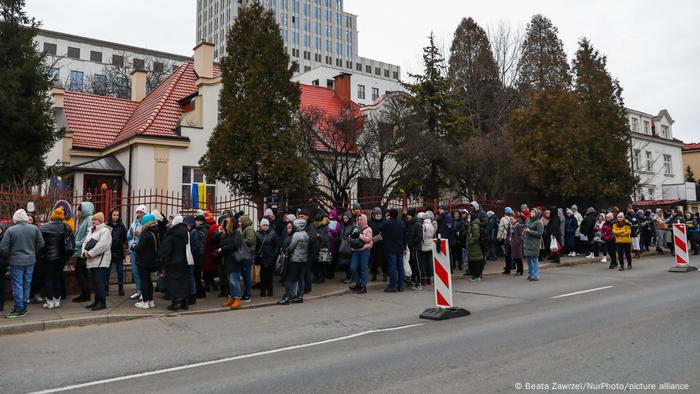
In the Polish town of Przemiesl, near the Ukrainian border, the municipal office is working at full capacity, but with only four fingerprints taken and seven civil servants total waiting times are long here. Oxana Kolesnyk worked as a bank official. I don't speak Polish and maybe it won't be possible to work at some bank I expect this. But I have to get a job soon to guarantee my life and my son's,” she says. When she left, she received her passport, which facilitates formalities. For those who left the war without ID documents, procedures are longer. They too are welcome in Poland, although their identity cannot be fully verified.
Uncertainty in the New Place
The special law recently adopted by Parliament guarantees to people who have left the country access to the labour market, health care and social benefits, including monthly household payments of 110 euros per child. The newcomers receive 70 euros in welcoming compensation, after which they must be organised to support themselves. A special law further guarantees to Polish citizens who expect the equivalent of 9 euros a day for spending.
Alexander Stefanev of Lviv sits in the waiting room, her Polish relative Leon Bortnik helps her apply. The logistics entrepreneur from Przemysl cares for his Ukrainian parents in a recently inherited apartment, which so far was still empty. I received a call from my mother's sister, who lives in Ukraine. She asked if I would welcome her and her future family. There's only one good answer for this,” Bortnik told DW.
He wants to help Alexandra get a job, he knows a lot of people in the area. For this 46-year-old woman, her future is a question. I'm lost, I have no idea what I'm going to do in Poland. Should I look for a job? But I still hope the war ends soon and I can get home,” she says. Her husband stayed in Lviv, and she herself had never planned to emigrate from Ukraine.
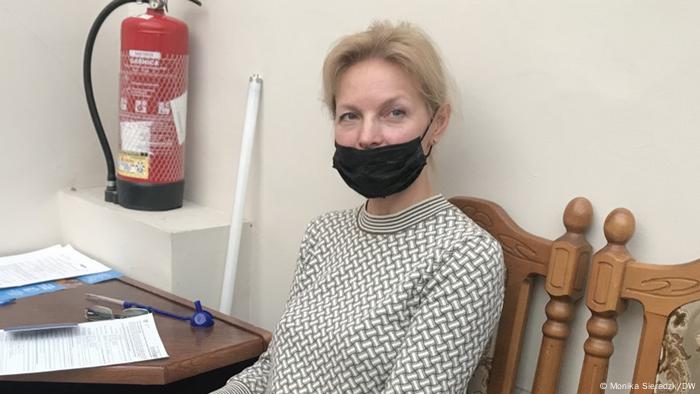 Alexander Stefanev
The Great Migratory Wave
Since the beginning of the war, 3.3 million Ukrainians have emigrated to Poland. Before that, Poland, with 38 million inhabitants, had more than a million Ukrainian immigrants who had left their country since the Crimea annexed 2014.
In 2021, 90% of respondents in a poll by the Center for Prejudice Research at Warsaw University said they accept Ukrainians as colleagues and neighbours. In recent decades immigrants to Poland were a small part of society. Apart from Ukrainian immigrants since 2014, there are no groups of migrants of comparable size.
Compared to other EU countries, Poland is closed to immigrants. The current wave of refugees is a completely new phenomenon. After more than three weeks of mutual assistance, during which Ukrainian war refugees were welcomed with open arms, the question of how the already overloaded social and health care system will serve millions of other people is increasingly common. In some parenting councils, dissatisfaction with the prospect of overcrowding school classes is increasing.
The Polish Society Challenged
Dr. Agnieszka Lada-Conepha, deputy director of the German Institute of Poland in Darmstad, speaks of a major challenge for administration and society, which will certainly transform the country. “The Polish must learn to live with people who are a little different.
Many Polish people have had this experience with Ukrainians in recent years, and this experience has been positive”, she explains about the DW. This is also true of schoolchildren who will have classmates from different languages and cultures but also difficult war experiences.” Children and young people will have to agree. They will have to learn to live with others, to open up. It means development”
But some parts of society may feel overwhelmed by the huge wave of migration. It is difficult to say whether he will be able to accept this and learn to live with it if they are high and crisis and war last for a long time”. Politologist warns that Ukraine's migration wave can be used by populists to spread hate and disgust “. DW