12 minutes ago
Saltova peace production restored to the north
Periskopi(4 years ago)
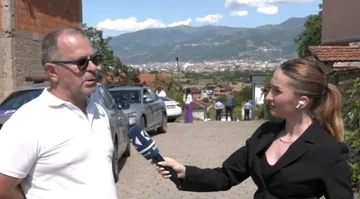
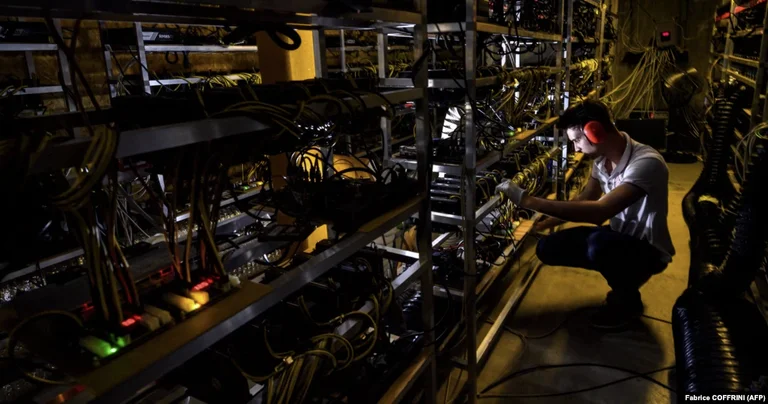
(4 years ago)N. A [recognised name for editorialism] citizen of North Mitrovica tells Radio Free Europe that it, as if most in that part of Kosovo, are continuing with the production of cryptovalus. She says her family is continuing to deal with the event as the electricity supply is stable [...]
N. A [recognised name for editorialism] citizen of North Mitrovica tells Radio Free Europe that it, as if most in that part of Kosovo, are continuing with the production of cryptovalus.
She says her family is continuing to deal with the event, since the power supply is stable in that part, as well as after Kosovo Police shares have been reduced to confiscating cryptovalut production equipment. The devices that produce cryptovatlutes consume large amounts of electricity.
The recent action of seizures of equipment reported by Kosovo Police is on February 1st. In this action, in Lipjan, 127 graphic cards were seized.
The only problem is that we can't use the Internet of [company] ) MTS d.o.o., maybe detects how many computers are locked in”, she relates.
She says that some of the cryptova peace makers have changed internet service providers, without giving any details about which bidder, but she points out, in that part, besides HINA MTS d.o. There are several other internet providers.
MTS d.o. Oʹ is a company founded in 2015, under the Brussels Agreement between Kosovo and Serbia, and Telekom of Serbia is a founder, with a 100 per cent turnout.
Salttoll production In northern Mitrovica, it became tempting in recent years because citizens of that part do not pay for the electricity they spend.
State comment on operations
The production of cryptovatlutes was banned by Kosovo institutions on December 29th, 2021, after Kosovo Assembly deputies voted overwhelmingly to put emergency measures in electricity supply.
The halt to the production of cryptovatolus was made because the equipment they are produced consumes large amounts of electricity.
The ban on kryptopovalout production was assessed as one of the energy consumption reduction measures, as Kosovo too was threatened with regular electricity supply due to the global energy crisis.
The cause of the crisis, new electricity tariffs have also entered into force in Kosovo.
The operation of equipment for the production of cryptovatlutes, in addition to the non-reprise northern municipalities, is currently unfavourable in other parts of Kosovo's territory, due to increased electricity prices.
But the decision to stop the production of cryptova peaces on the entire territory of Kosovo is still in effect.
Since the ban on cryptova peace production, Kosovo Police have reported over 600 seized equipment and graphic cards.
Asked by Radio Free Europe if any action has recently been conducted to identify the equipment for bribery in northern municipalities, deputy commander of the Kosovo Regional Police Directorate in Northern Mitrovica, Besim Hoti, has confirmed that such shares have not been developed recently.
Hoti has confirmed that two shares have been held in the north so far.
Meanwhile, wondering if any new action is being planned, Hoti, has said that “what it would be if we made it public”.
The REL has also asked the Kosovo Police Central Directorate whether shares are currently under way for identifying and confiscating equipment used to produce cryptova peaces, but no details have been given in response to this institution, nor the figure of confiscated equipment.
Continued production of cryptova peaces in northern municipalities has not even commented on it at the Kosovo Ministry of Internal Affairs.
Customs: We confiscated every device we encountered without documentation
In a response to the REL, Kosovo Customs has said that during the joint shares of institutions for preventing krypovatulut production, they have confiscated all those devices that have no evidence that they were unencumbered.
According to Dogana, during 2022, some equipment has been confiscated in southern Mitrovica for producing cryptovatlus with 67 graphic cards in Pristina, such devices with 39 graphic cards. And in Leposavich, 272 have been confiscated. Antminera [freedom for production of the popular Bitcoin cryptovalut].
The Leposaviq event was among the largest held in Kosovo, as one, as it is known, offered to produce cryptova peaces.
While, during 2021, Kosovo Customs says 34 have been seized Rigga [freedom to produce cryptova peaces] with graphic cards in Pristina on December 33th in Gjilana with graphic cards.
Earlier, Kosovo Customs had told the REL that during 2021, Antminer equipment [freedom for the production of Bitcoin cryptovalut] was imported in Kosovo, worth about 3,000 euros, while the graphic card was imported worth 583 thousand euros.
According to this institution, Kosovo's citizens' greatest interest in investing in equipment for the production of cryptovaltua has been in 2017-2018.
Just for this period of time, Kosovo's System, Transition and Electricity Market operator (KOSTT) had reported over 20 per cent increase in electricity consumption in northern Kosovo municipalities: Northern Mitrovica, Zvecan, Leposaviq and Zubin Potok.
Internet providers know who produces cryptovaluta
Even though MTS tell Radio Free Europe they can't confirm who uses the Internet for cryptovaluta, others who deal with similar work say otherwise.
Petar Gvozdenovic, owner of a company that offers internet services in northern Mitrovica, says it is possible to identify the people who use his company's internet to produce cryptovaluta, but adds that if it did, then users' rights would be violated.
And I think that Internet service providers should not do that”, says Gvozdenovic.
Gvozdenovic further says that the control of cryptova peace production can be done in other ways, such as the blocking of ports, blocking protocols, or blocking access to cryptovalus or even mine servers.
Asked if they do so now, Gvozdenovic says no at the moment.
Granit Cardolli, who has been dealing with the production of cryptova peacets, has clarified for Radio Europe the simplest ways of identifying people who are violating the Government's decision to stop the production of cryptovalutes.
According to him, there are two possibilities: through the amount of energy spent, as well as through internet service providers.
The “is automatically known by electricity spending, because they are large, but then you can know from internet services providers that give them internet in that part, where the state of Kosovo has access. As far as I know, there are Kosovo internet providers, but there are also those of Serbia [who are producing cryptovaluta] can also use the internet from other links they receive from Serbia”, says Cadoll.
This, according to him, makes it difficult to identify those who may still have equipment in operation.
But, Kadolli also says what is noted at various forums is also the fact that those dealing with this event in other parts of Kosovo have stopped the equipment even because they have no profit because the price of electricity has increased significantly.
What are cryptovalus?
Crytovalta is digital, decentralised money based on technology “blockchain” (Albanian: chain blocks).
“Blockchain” is an open, distributed book that records digit transactions.
Currently, the trade in equipment for the production of cryptova peaces is smaller and mainly occurs through various profiles on social networks.
In practice, it is somewhat like a commercial book that is distributed on endless computers around the world.
Unlike the U.S. euro or dollar, there is no central authority that manages and preserves the value of a cryptovalute.
These tasks are widely distributed among users of a cryptovalute, via the Internet.
Bitcoin was the first krypovaluta, proposed by Satoshi Nakamoto, in a 2008 document titled “Bitcoin: Electronic system, no middleman, available money”.
The production of cryptovalutes consumes a lot of electricity because it includes computers that do calculations to verify transactions. / REL